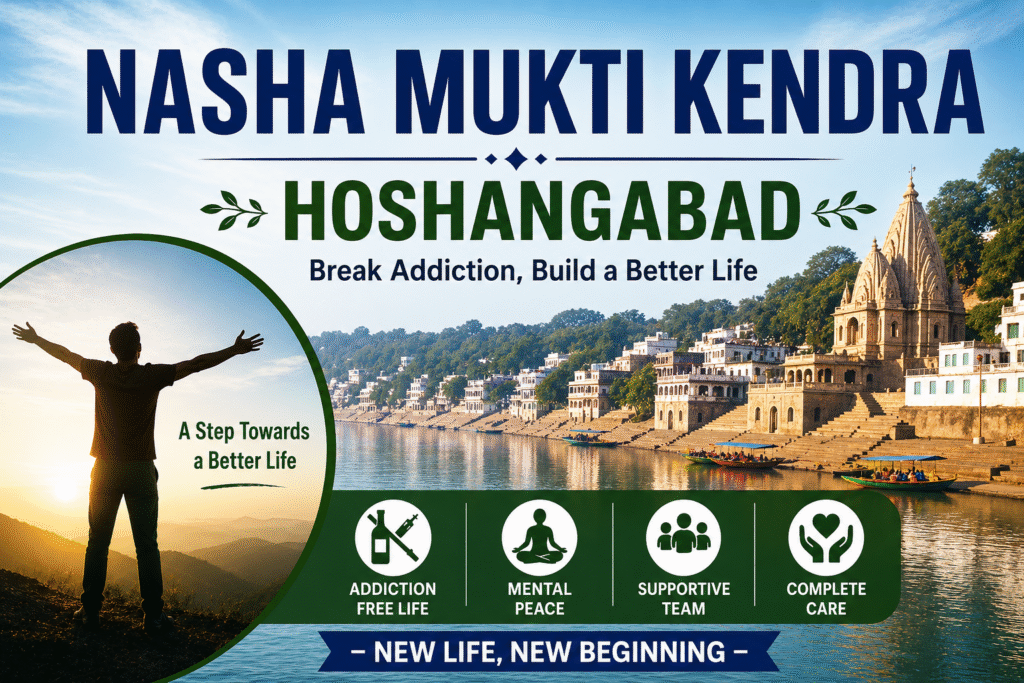
Nasha Mukti Kendra in Hoshangabad | Sanchit Rehab – Trusted De-Addiction Centre
If you are searching for a reliable Nasha Mukti Kendra in Hoshangabad, Sanchit Rehab provides structured de-addiction treatment including medical detox, individual counselling, group therapy, and family support. With over 6,000 documented recoveries and a government-registered facility, Sanchit Rehab is a trusted name in addiction recovery across Madhya Pradesh. Best Nasha Mukti Kendra in Hoshangabad for Alcohol & Drug Recovery Addiction is quietly destroying thousands of lives and families in Hoshangabad, a city known for its calm banks along the Narmada river. Whether it is alcohol, prescription drugs, or other substances, the need for a reliable Nasha Mukti Kendra in Hoshangabad has never been greater. Sanchit Rehab is a professionally managed rehabilitation centre that provides compassionate, medically supervised care to help individuals break free from addiction and rebuild their lives. If someone you love is struggling, reaching out to a professional de-addiction centre is the most important step you can take today. Why Addiction is Becoming a Concern in Hoshangabad Hoshangabad, now officially known as Narmadapuram, is a district that blends urban growth with rural traditions. While this transition brings economic opportunities, it also brings new stressors that can trigger substance use. Young people face peer pressure and unemployment. Working adults deal with financial stress and family conflicts. Easy availability of alcohol and cheap drugs has made the problem worse. Lack of mental health awareness means many people suffer in silence for years before seeking help. Social stigma around addiction further prevents families from approaching a Nasha Mukti Kendra. Understanding these local realities is essential to addressing addiction effectively in this region. Learn more about how drug addiction affects youth and why early action matters. Signs That Someone Needs Professional De-Addiction Help Recognising the warning signs early can save a life. Here are common signs that someone urgently needs help from a Nasha Mukti Kendra in Hoshangabad: Physical signs: Sudden weight loss, bloodshot eyes, poor personal hygiene, tremors, slurred speech, or unexplained injuries. Behavioural signs: Lying about substance use, hiding alcohol or drugs, neglecting work or studies, becoming secretive and withdrawn. Emotional signs: Extreme mood swings, aggression, depression, anxiety, paranoia, or feelings of worthlessness without the substance. Family and social problems: Frequent fights at home, financial problems due to spending on substances, isolation from friends and family, loss of job or academic failure. If you notice these signs of addiction in a loved one, do not wait. Early intervention can make recovery much easier. Treatment Program Offered by Sanchit Rehab Sanchit Rehab follows a structured, step-by-step recovery program designed to address addiction from every angle — physical, psychological, emotional, and social. 1. Assessment and Admission The recovery journey begins with a thorough initial consultation. Our experienced team assesses the type and severity of addiction, the person’s physical health, mental health history, and family background. Based on this assessment, a personalised treatment plan is created so that care is effective and appropriate for each individual. 2. Medical Detoxification Detoxification is the process of safely removing harmful substances from the body under medical supervision. Withdrawal from alcohol or drugs can cause dangerous physical symptoms, which is why detox must never be done alone at home. At Sanchit Rehab, our medical team monitors every patient during detox treatment to ensure their safety and comfort throughout the process. 3. Counselling and Therapy Once the body is stable, the mind needs healing too. Our counsellors provide individual therapy to help patients understand the root causes of their addiction. Group therapy sessions allow patients to share experiences and support each other. Cognitive Behavioural Therapy (CBT) and motivational techniques are used to build emotional strength and coping skills. Counselling for alcohol issues is a core part of our program. 4. Family Counselling Addiction affects the entire family, not just the individual. Sanchit Rehab includes structured family counselling for addiction as part of the treatment. Family members are educated about addiction, taught how to support recovery without enabling, and helped to heal the emotional wounds caused by years of substance abuse in the household. 5. Relapse Prevention Recovery does not end when a patient leaves the centre. Our aftercare and relapse prevention program provides ongoing support through follow-up counselling sessions, helpline access, and community support groups. Patients are equipped with practical tools to handle stress, cravings, and life challenges without returning to substance use. Why Choose Sanchit Rehab for Nasha Mukti Treatment? There are many reasons why families across Madhya Pradesh choose Sanchit Rehab as their trusted Nasha Mukti Kendra: Government-registered rehabilitation centre with full legal compliance Experienced psychiatrist-led treatment team with years of expertise Structured recovery program that addresses physical, mental, and emotional health Safe, clean, and supportive residential environment Dedicated family counselling support throughout the treatment Over 6,000 documented successful recoveries across Madhya Pradesh Non-judgmental, compassionate approach to every patient Benefits of Choosing a Professional Rehab Centre Many families in Hoshangabad try to manage addiction at home, often with limited success. A professional rehab centre provides something that home care simply cannot — a safe, structured, and medically supervised environment designed specifically for recovery. Medical safety during detox prevents life-threatening withdrawal complications. Daily structure and discipline break the cycle of addiction. Emotional support from trained counsellors helps patients process trauma and rebuild self-worth. Peer support from others in recovery reduces isolation and shame. And a well-planned relapse prevention strategy helps patients maintain sobriety long after leaving the centre. Choosing professional help is not a sign of weakness — it is the wisest decision a family can make. Start Recovery with Sanchit Rehab – Nasha Mukti Kendra in Hoshangabad If you or someone you love is struggling with alcohol or drug addiction in Hoshangabad, please do not wait any longer. Every day of delay makes recovery harder. Sanchit Rehab is here to help with compassionate, expert care that has transformed thousands of lives across Madhya Pradesh. Our team is available to answer your questions, guide you through the admission process, and support your family every step of the way. Reach out to us today — because