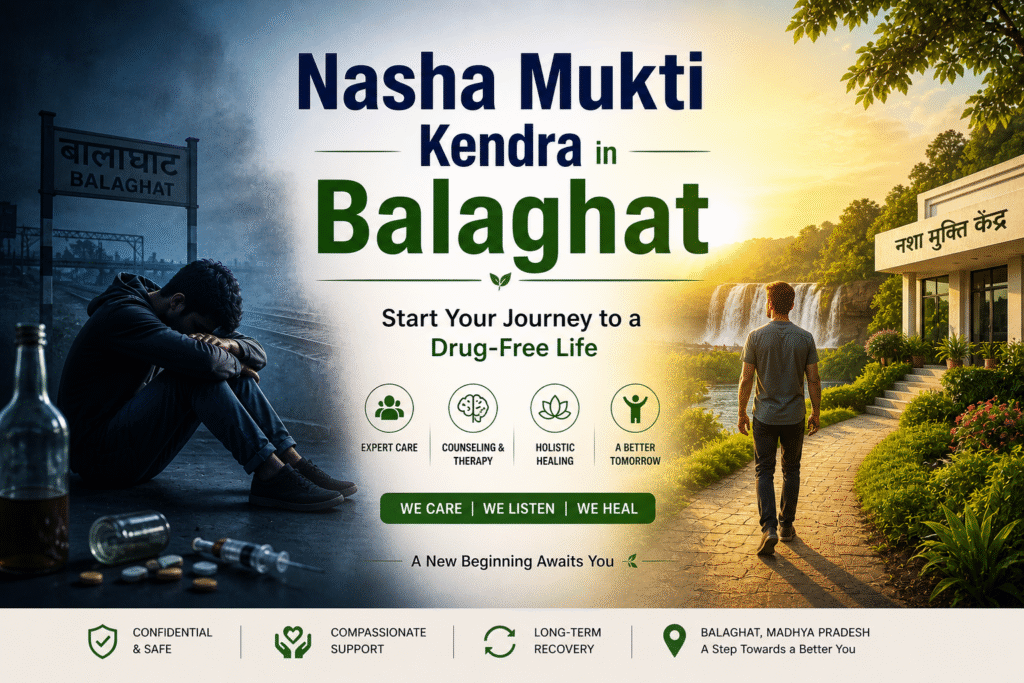
Nasha Mukti Kendra in Balaghat – Trusted De-Addiction Centre
A Nasha Mukti Kendra in Balaghat offers medically supervised addiction treatment including safe detoxification, behavioural therapy, and family counselling. Sanchit Rehab serves individuals from Balaghat with a structured recovery program, experienced psychiatrists, and over 6,000 documented success stories across Madhya Pradesh. Nasha Mukti Kendra in Balaghat | Trusted Rehab Centre Nestled in the Satpura range of Madhya Pradesh, Balaghat is known for its copper mines, dense forests, and rich culture. But beneath its peaceful surface, many families in Balaghat are quietly struggling with the consequences of addiction. If you are searching for a dependable Nasha Mukti Kendra in Balaghat, you have come to the right place. Sanchit Rehab is a trusted rehabilitation centre in Madhya Pradesh that offers compassionate, evidence-based treatment for alcohol and drug addiction. We understand that each person’s journey into addiction is different, and so our treatment approach is personalised to meet individual needs. Our mission is to help individuals in Balaghat and across the state reclaim their lives from the grip of substance dependency. Why Addiction is Becoming a Concern in Balaghat Balaghat district, while rich in natural resources, faces significant socio-economic challenges. Many workers in the mining sector face hazardous working conditions, financial uncertainty, and limited social support systems. These stressors, combined with easy availability of alcohol and other substances, create conditions where addiction can take root quickly. Among the youth, peer pressure, academic stress, and a lack of positive recreational outlets push many toward experimentation with substances. What often starts as curiosity or a coping mechanism can spiral into a serious dependency within months. Additionally, tribal and rural communities in Balaghat district often have limited access to mental health information, making it harder for families to identify addiction early or know where to turn for help. The need for a professional drug addiction treatment facility that understands these local realities is stronger than ever. Sanchit Rehab is committed to bridging this gap with accessible, culturally sensitive care. Signs That Someone Needs Professional De-Addiction Help Recognising addiction early can save lives. Here are the key warning signs that indicate a person needs professional help from a de-addiction centre: Physical signs: Rapid weight changes, yellowing of eyes or skin (especially with alcohol), slurred speech, poor coordination, sweating, shaking, or nausea when not using substances. Behavioural signs: Spending excessive time obtaining or using substances, neglecting responsibilities, unexplained financial problems, social isolation, or secretive behaviour. Emotional signs: Intense mood swings, periods of deep depression or euphoria, paranoia, increased aggression, or an inability to feel normal without substances. Family and social problems: Frequent fights at home, inability to maintain employment, broken friendships, and children in the family showing signs of neglect or distress. If you are seeing these signs in a loved one, do not ignore them. Contact a professional Nasha Mukti Kendra for guidance on the next steps. Treatment Program Offered by Sanchit Rehab Sanchit Rehab follows a structured, five-stage treatment approach designed to address every dimension of addiction — from the body to the mind to the family unit. 1. Assessment and Admission The treatment journey at Sanchit Rehab begins with a detailed assessment by our psychiatrist. This involves reviewing the patient’s medical history, substance use patterns, mental health status, and family dynamics. The assessment helps us design a personalised treatment plan that addresses both the addiction and any co-occurring conditions such as depression or anxiety. Admission is handled with complete confidentiality and sensitivity. 2. Medical Detoxification Detox is the first physical step in recovery. Our medically supervised detoxification treatment ensures that patients withdraw from substances safely, with medical professionals monitoring vital signs and managing symptoms around the clock. Withdrawal from alcohol or opioids can cause dangerous physical reactions, and having qualified medical support makes this phase safer and more manageable for the patient. 3. Counselling and Therapy After detox, our team of counsellors and therapists work closely with patients to explore the psychological roots of their addiction. Sessions include individual therapy, group discussions, and cognitive behavioural therapy (CBT). Patients learn to identify emotional triggers, challenge distorted thinking, and develop practical strategies for handling stress, cravings, and difficult social situations without resorting to substance use. 4. Family Counselling Addiction creates deep wounds within families. Our family counselling for addiction program brings family members into the healing process. We educate families about the nature of addiction, help them process their own feelings of anger or grief, and teach them communication strategies that support rather than hinder recovery. A supportive family is one of the strongest protective factors against relapse. 5. Relapse Prevention Our comprehensive relapse prevention program prepares patients for the challenges of life after rehab. Patients learn to recognise early warning signs of relapse, create personal safety plans, build a sober support network, and engage in meaningful activities that replace the role substances once played in their lives. Follow-up care continues after discharge to ensure sustained recovery. Why Choose Sanchit Rehab for Nasha Mukti Treatment? Government-registered rehabilitation centre operating transparently and ethically across Madhya Pradesh. Experienced psychiatrist-led treatment for medically safe, clinically sound care at every stage. Structured recovery program covering detox, therapy, family involvement, and long-term aftercare. Safe and supportive environment free from judgment, where patients can focus entirely on healing. Family counselling support that repairs relationships and prepares the home environment for recovery. 6,000+ documented recoveries demonstrating consistent results and genuine commitment to patient wellbeing. Benefits of Choosing a Professional Rehab Centre Attempting to overcome addiction without professional help is rarely successful and can be physically dangerous. A structured alcohol addiction treatment program at a professional rehab centre provides the medical supervision needed to handle withdrawal safely, the therapeutic support needed to address emotional roots of addiction, and the community environment that reduces shame and isolation. Professional rehab also provides accountability and structure — two things that are often absent when someone tries to quit on their own. The combination of discipline, routine, medical care, therapy, and family support creates a comprehensive safety net that dramatically improves outcomes. Patients who complete a professional program