
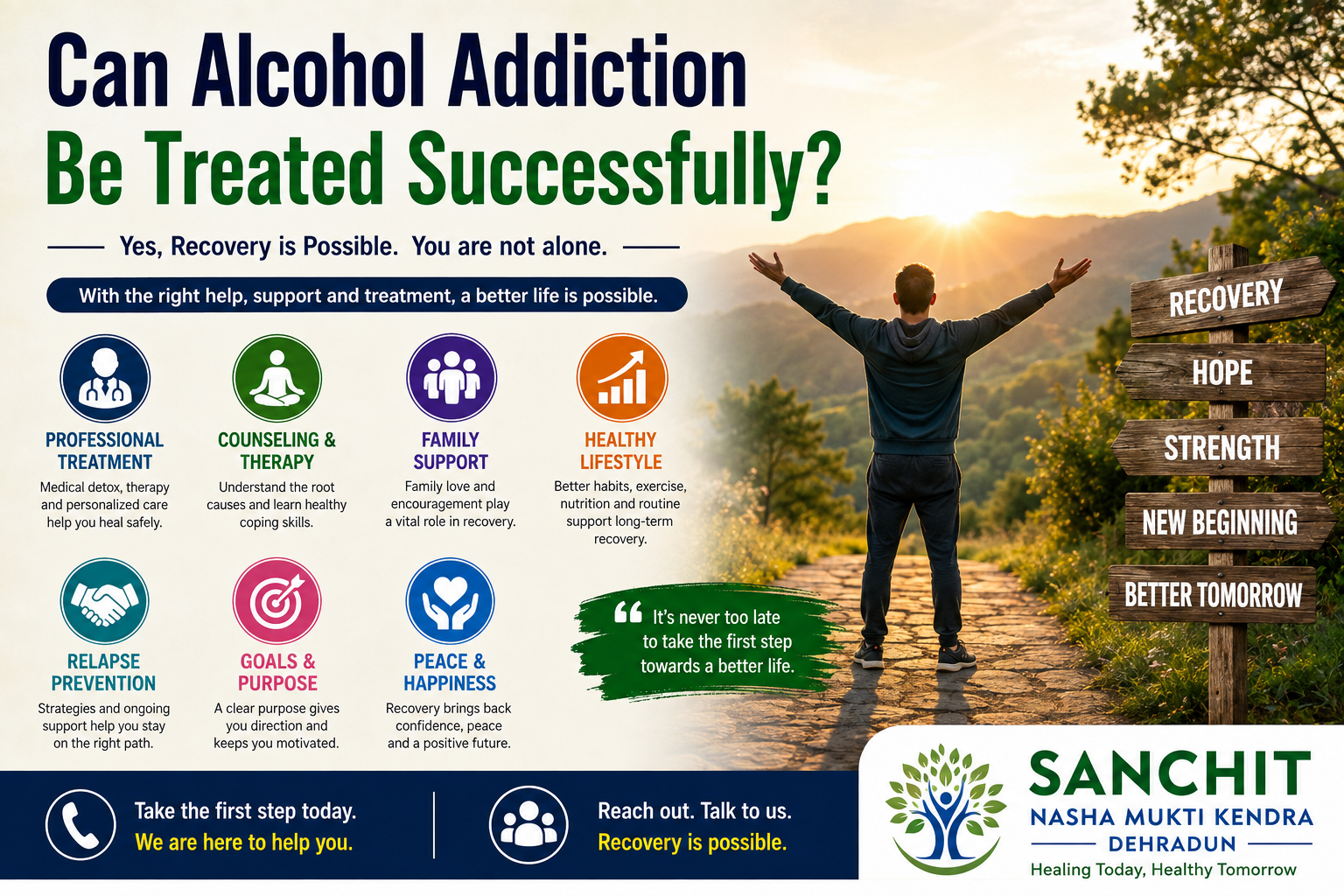
Can Alcohol Addiction Be Treated Successfully?, Yes. Alcohol addiction can be treated, and many people are able to achieve meaningful, long-term recovery with appropriate treatment, ongoing support, and a commitment to healthier habits. Recovery does not necessarily happen overnight, and there can be setbacks along the way, but treatment can help a person reduce or stop alcohol use, understand the reasons behind their drinking, develop healthier coping skills, and rebuild important areas of life.
Alcohol addiction, also called alcohol use disorder (AUD), is more than simply drinking too much occasionally. It can affect physical health, emotional well-being, relationships, work, finances, and everyday decision-making. Because of this, effective treatment should address the whole person rather than focusing only on stopping alcohol consumption.
At Sanchit Nasha Mukti Kendra in Dehradun, alcohol recovery can be approached through structured rehabilitation, counseling, behavioral support, family involvement, and aftercare. The right treatment plan depends on the individual’s drinking pattern, health, personal circumstances, and recovery needs.
Important: Alcohol withdrawal can sometimes be medically dangerous, particularly after prolonged or heavy drinking. A person who may be physically dependent on alcohol should seek guidance from a qualified healthcare professional before suddenly stopping alcohol.
Can Alcohol Addiction Be Treated Successfully?
The question “Can Alcohol Addiction Be Treated Successfully?,” is often asked by individuals and families who have watched drinking gradually affect someone’s life.
The answer is encouraging: yes, treatment can help.
However, successful treatment does not mean that every person has exactly the same recovery journey. Some people may require medically supervised withdrawal and residential rehabilitation, while others may benefit from outpatient counseling, medication, mutual-support programs, or a combination of approaches.
Treatment can help a person:
- Understand their relationship with alcohol
- Identify situations that contribute to drinking
- Develop healthier coping strategies
- Improve emotional regulation
- Repair damaged relationships
- Establish a stable daily routine
- Reduce the risk of relapse
- Build a meaningful life without depending on alcohol
Recovery is best viewed as a process rather than a single event.
Understanding Alcohol Addiction
Alcohol addiction can develop gradually. A person may begin drinking socially and eventually find that alcohol has become a regular way to deal with stress, sadness, loneliness, anxiety, or difficult circumstances.
Over time, the brain and body can adapt to repeated alcohol exposure. This can make stopping difficult, particularly for people who have developed physical dependence.
Possible signs of alcohol use disorder include:
- Drinking more or for longer than intended
- Repeated unsuccessful attempts to cut down
- Strong cravings for alcohol
- Spending significant time obtaining, drinking, or recovering from alcohol
- Continuing to drink despite relationship or health problems
- Neglecting responsibilities because of drinking
- Developing tolerance
- Experiencing withdrawal symptoms when alcohol use decreases
Having one or more symptoms does not mean that someone should diagnose themselves. A qualified professional can assess the situation and recommend appropriate care.
Why Alcohol Addiction Treatment Is More Than Simply Stopping Drinking
One of the most important points about Alcohol Addiction Treatment, is that stopping alcohol use is only one part of recovery.
If drinking has been used to manage stress or emotional pain for years, simply removing alcohol without developing alternative coping skills can leave the person vulnerable.
Effective treatment may address:
Emotional Health
Counseling can help people explore emotions, experiences, thought patterns, and behaviors connected with drinking.
Behavioral Patterns
Individuals can learn to recognize situations that encourage alcohol use and develop healthier responses.
Physical Health
Long-term alcohol use can affect multiple body systems. Appropriate medical evaluation can help identify health concerns that require attention.
Family Relationships
Alcohol addiction can create conflict, mistrust, financial difficulties, and emotional distance. Family-focused support can help begin the process of rebuilding communication and trust.
Daily Lifestyle
Healthy sleep, nutrition, exercise, meaningful activities, and structured routines can support a more stable recovery environment.
The Role of Detoxification in Alcohol Addiction Treatment
For some individuals, treatment begins with alcohol detoxification.
Detoxification is the process through which the body adjusts after alcohol use is reduced or stopped. Withdrawal can range from mild to severe.
Possible withdrawal symptoms include:
- Anxiety
- Shaking
- Sweating
- Nausea
- Restlessness
- Difficulty sleeping
- Increased heart rate
Severe alcohol withdrawal can involve serious complications, including seizures or delirium. Because of this, people with significant alcohol dependence should not attempt to manage potentially severe withdrawal without medical guidance.
A professional assessment can help determine whether medically supervised detoxification is appropriate.
Detox is not the same as complete addiction treatment. It addresses the immediate physical effects of stopping alcohol, while rehabilitation and ongoing care address the longer-term behavioral, psychological, and social aspects of recovery.

Counseling and Behavioral Therapy
Counseling is an important component of many Alcohol Addiction Treatment, programs.
A counselor or qualified mental health professional can help an individual explore:
- Why they drink
- What situations trigger cravings
- How they respond to stress
- How alcohol has affected their relationships
- What changes they want to make
- How they can handle future challenges
Behavioral approaches can teach practical skills for recognizing risky situations and choosing healthier responses.
For example, someone who regularly drinks after a stressful workday may learn to replace that pattern with exercise, relaxation, a supportive conversation, or another healthy activity.
Family Support in Alcohol Recovery
Alcohol addiction rarely affects only the person drinking. Family members may experience worry, frustration, financial stress, broken trust, and emotional exhaustion.
For this reason, family involvement can be valuable when appropriate.
Family members can help by:
- Encouraging professional treatment
- Avoiding judgment and humiliation
- Supporting healthy routines
- Learning about addiction
- Setting appropriate boundaries
- Encouraging continued treatment
- Recognizing warning signs
- Supporting positive lifestyle changes
Family support does not mean taking responsibility for another person’s recovery. The individual remains responsible for their treatment decisions, while family members can provide encouragement and appropriate support.
Developing Healthy Coping Skills
A major goal of Alcohol Addiction Recovery, is learning how to deal with difficult situations without returning to alcohol.
Healthy coping strategies may include:
Physical Activity
Walking, yoga, sports, or other appropriate exercise can provide a constructive way to manage stress.
Mindfulness and Relaxation
Breathing exercises, meditation, and mindfulness may help people become more aware of thoughts and emotions without immediately reacting to them.
Social Connection
Talking to a trusted family member, friend, counselor, or support group can reduce isolation.
Hobbies
Creative activities, reading, gardening, music, cooking, or other interests can provide healthy alternatives to drinking.
Structured Routines
A predictable routine can provide stability and reduce unplanned periods that may increase cravings.
Identifying Alcohol Triggers
Understanding triggers is an important part of Alcohol Addiction Treatment.
A trigger is something that increases the desire or urge to drink. Triggers vary from person to person.
Common examples include:
- Stress
- Arguments
- Loneliness
- Certain friends or social environments
- Financial difficulties
- Workplace pressure
- Celebrations involving alcohol
- Memories associated with drinking
- Emotional distress
Once triggers are identified, a person can develop a plan for dealing with them.
For example, someone who associates Friday evenings with heavy drinking might plan an alternative activity such as spending time with family, exercising, attending a support meeting, or pursuing a hobby.
Can Alcohol Addiction Be Treated Successfully Without Relapse?
Can Alcohol Addiction Be Treated Successfully?, does not mean that relapse can never happen.
Addiction recovery is not always a straight line. Some individuals may experience setbacks. A setback should be taken seriously, but it does not mean that treatment has permanently failed.
The appropriate response is to understand what happened and seek support.
Possible steps after a setback may include:
- Acknowledging the situation honestly.
- Identifying what triggered the drinking.
- Contacting a healthcare or addiction professional.
- Reviewing the recovery plan.
- Strengthening support systems.
- Returning to healthy routines.
- Addressing underlying emotional or environmental issues.
Early support can be especially important.
The Importance of Relapse Prevention
Relapse prevention is an ongoing part of recovery.
A relapse-prevention plan may identify:
- Personal triggers
- Early warning signs
- Healthy coping strategies
- People to contact during difficult situations
- Places or situations to avoid when necessary
- Professional resources
- Emergency plans
The goal is not to live in fear of relapse. Instead, the goal is to develop enough awareness and preparation to respond effectively when challenges occur.

Lifestyle Changes After Alcohol Rehabilitation
Successful Alcohol Rehabilitation, often involves changes beyond treatment sessions.
A healthier lifestyle may include:
- Regular sleep
- Balanced nutrition
- Physical activity
- Meaningful work
- Supportive relationships
- Stress management
- Continued counseling
- Personal hobbies
- Avoidance of high-risk environments when necessary
These changes can provide structure and purpose.
For some people, returning to work is an important milestone. Employment can provide financial independence and a sense of responsibility, but it is also important not to overload oneself with excessive work-related stress.
The Importance of Aftercare
Treatment should not necessarily end when a person leaves a rehabilitation centre.
Aftercare can provide continued support during the transition back into everyday life.
Depending on individual needs, aftercare may involve:
- Follow-up counseling
- Support groups
- Family counseling
- Relapse-prevention planning
- Regular professional check-ins
- Lifestyle guidance
At Sanchit Nasha Mukti Kendra, families can explore available Services and discuss suitable recovery support according to individual circumstances.
Rebuilding Relationships After Alcohol Addiction
Alcohol addiction can damage trust. Family members may have heard promises that were not kept or experienced repeated disappointments.
Rebuilding trust takes time.
A person in recovery can begin rebuilding relationships through:
- Honest communication
- Consistent behavior
- Keeping commitments
- Taking responsibility for past actions
- Respecting boundaries
- Allowing family members time to heal
Trust is generally rebuilt through repeated actions rather than words alone.
Returning to Work After Alcohol Rehabilitation
Returning to work can be an important step in Alcohol Addiction Recovery.
Employment can provide:
- Financial stability
- Daily structure
- Social interaction
- Professional goals
- A sense of purpose
- Increased self-confidence
However, work can also introduce stress.
Individuals should consider maintaining:
- A regular sleep schedule
- Healthy meals
- Time for recovery activities
- Appropriate breaks
- Supportive relationships
- Stress-management strategies
If workplace stress becomes overwhelming, discussing it with a qualified professional may be helpful.
How Sanchit Nasha Mukti Kendra Can Support Recovery
At Sanchit Nasha Mukti Kendra in Dehradun, the recovery journey can be approached through a combination of structured support, counseling, lifestyle guidance, family involvement, and continued recovery planning.
Every individual’s situation is different. A person may need different levels of support depending on their drinking history, physical health, emotional well-being, family situation, and previous treatment experiences.
A professional assessment can help determine the most appropriate approach.
Families who want to learn more can visit the centre’s About Us, Services, and Contact Us sections for information about available programs and guidance.
How Families Can Encourage Alcohol Addiction Treatment
Sometimes the person struggling with alcohol may not immediately accept that they need help.
Family members can approach the subject carefully.
Helpful approaches include:
- Choosing a calm time to talk
- Speaking about specific behaviors rather than attacking the person’s character
- Expressing concern honestly
- Encouraging professional evaluation
- Avoiding shame or public embarrassment
- Setting healthy boundaries
- Seeking professional family guidance when necessary
Instead of saying, “You have ruined everything,” a family member might say, “We are concerned about how drinking is affecting your health and relationships, and we want to help you find appropriate support.”
Can Alcohol Addiction Be Treated Successfully in the Long Term?
Long-term recovery is possible, but maintaining it usually requires continued attention.
A person who has completed treatment can continue working on:
- Healthy coping skills
- Emotional well-being
- Relationship building
- Stress management
- Relapse prevention
- Personal goals
- Physical health
Recovery becomes stronger when healthy choices become part of everyday life rather than temporary activities performed only during treatment.
A Message for Alcohol Addiction Treatment
Alcohol Addiction Treatment, can be the beginning of a meaningful change, but asking for help is not a sign of weakness.
If alcohol has started affecting your health, relationships, work, finances, or ability to control your drinking, professional support can provide a way forward.
Recovery does not require perfection. It requires honesty, willingness to change, appropriate treatment, and patience.
For families, remember that your loved one’s recovery may take time. Encourage treatment, offer support, maintain healthy boundaries, and take care of your own well-being too.
At Sanchit Nasha Mukti Kendra, the focus should be on helping individuals understand their addiction, develop healthier coping mechanisms, reconnect with supportive relationships, and build a stable life beyond alcohol.
Frequently Asked Questions
1. Can Alcohol Addiction Be Treated Successfully?
Yes. Alcohol addiction is treatable. Different people may benefit from different combinations of medical care, counseling, behavioral therapies, medication, support groups, rehabilitation, and aftercare.
2. Is alcohol addiction curable?
Alcohol use disorder is generally considered a treatable condition rather than something that can be described with a simple “cure.” Many people achieve sustained recovery and live healthy lives without alcohol.
3. Is detoxification enough to treat alcohol addiction?
No. Detoxification addresses withdrawal and physical dependence but does not by itself address the psychological, behavioral, and social factors associated with addiction. Ongoing treatment is often important.
4. Can alcohol withdrawal be dangerous?
Yes. Withdrawal can sometimes become medically serious, especially after prolonged or heavy drinking. Anyone who may be physically dependent should seek professional medical advice before stopping alcohol suddenly.
5. How long does Alcohol Addiction Treatment take?
There is no single treatment duration that works for everyone. The appropriate length depends on individual needs, health, drinking history, treatment response, and available support.
6. Can family members help with recovery?
Yes. Supportive family involvement can encourage treatment, healthy routines, communication, and continued recovery. However, family members should also maintain appropriate boundaries.
7. What happens if someone relapses?
A relapse should be treated as a signal that additional assessment or support may be needed. Contacting a qualified professional promptly can help identify what contributed to the setback and strengthen the recovery plan.
8. Can someone return to work after alcohol rehabilitation?
Yes. Many people return to employment as part of rebuilding their lives. Maintaining a balanced routine and managing workplace stress can help support recovery.
9. Is counseling necessary after rehabilitation?
Continuing counseling can be beneficial for many people, especially when managing stress, relationships, cravings, or other challenges. The need for ongoing counseling should be determined according to individual circumstances.
10. How can I find appropriate alcohol rehabilitation support?
Start by speaking with a qualified healthcare or addiction professional who can assess the situation and recommend an appropriate level of care. Families can also contact a reputable rehabilitation centre to discuss available services.
Conclusion
Can Alcohol Addiction Be Treated Successfully?, Absolutely, treatment can make a meaningful difference, and long-term recovery is possible for many people. However, successful recovery is more than simply stopping alcohol consumption for a short period.
Effective treatment may involve appropriate medical care, detoxification when needed, counseling, behavioral support, family involvement, healthy lifestyle changes, relapse prevention, and aftercare.
At Sanchit Nasha Mukti Kendra in Dehradun, individuals and families can seek information about rehabilitation and recovery support the Best Rehab Centre in Dehradun, suited to their circumstances. The journey may have difficult moments, but with appropriate professional guidance and consistent support, a person can move toward healthier relationships, improved well-being, meaningful work, and a life not controlled by alcohol.
The most important step is often the first one: recognizing that help is available and being willing to seek it.