Author name: Anshika Saini

When Is It Time to Seek Professional Addiction Treatment?
Blog

When Is It Time to Seek Professional Addiction Treatment?

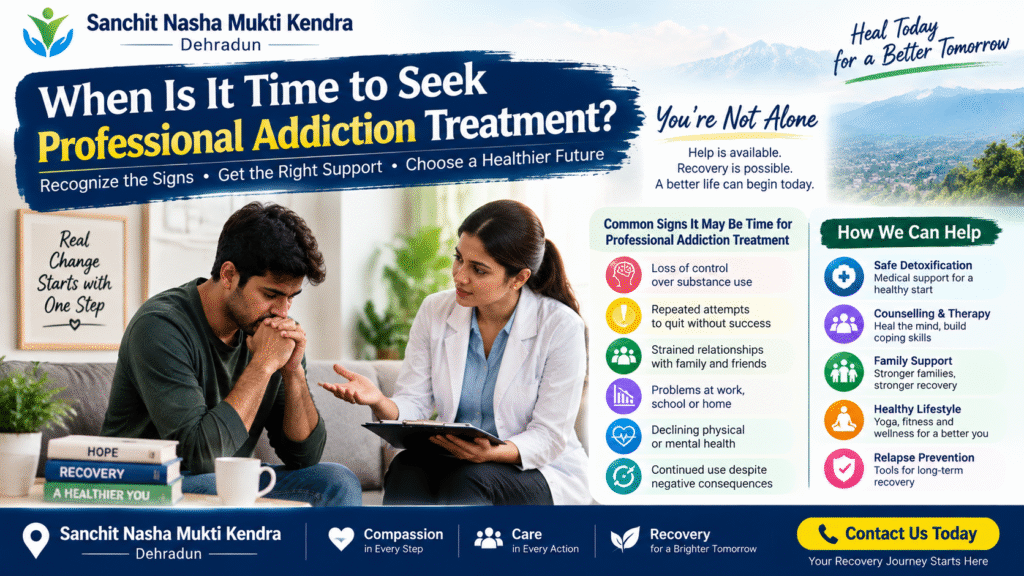
Addiction rarely begins with a person deciding that they want to lose control of their life. For many people, alcohol or drug use starts casually, socially, or as a way to deal with stress. Over time, occasional use can become a repeated habit, and eventually the person may find it difficult to stop even when they genuinely want to. This raises an important question for families: When is it time to seek professional addiction treatment? There is no single moment that applies to everyone. However, repeated substance use, increasing tolerance, withdrawal symptoms, damaged relationships, declining work or academic performance, financial problems, and unsuccessful attempts to quit can all indicate that professional help may be necessary. Professional Addiction Treatment, provides structured support for people who are struggling to control their use of alcohol or drugs. It can address not only physical dependence but also the emotional, psychological, behavioral, and social factors associated with addiction. At Sanchit Nasha Mukti Kendra in Dehradun, individuals and families can explore treatment options designed to support recovery in a structured and supportive environment. Understanding the warning signs early can make it easier to seek help before addiction causes further damage. What Is Professional Addiction Treatment? Professional Addiction Treatment, refers to organized care provided by qualified healthcare and addiction-recovery professionals to help a person overcome problematic substance use. Treatment can vary depending on the person’s needs. Some people may require medically supervised detoxification before rehabilitation, while others may benefit from counselling, behavioral therapy, family support, or structured residential care. A comprehensive treatment approach may include: Initial assessment Detoxification support Medical monitoring when required Individual counselling Group therapy Family counselling Behavioral therapy Craving-management strategies Relapse-prevention planning Healthy lifestyle activities Aftercare support The goal is not simply to make someone stop using a substance for a few days. The larger goal is to help the individual develop healthier ways to manage emotions, stress, relationships, responsibilities, and everyday challenges. Why Is It Difficult to Know When to Seek Professional Addiction Treatment? Many people wait because they believe their substance use is not “bad enough” to require treatment. A person may say: “I can stop whenever I want.” “I only drink on weekends.” “Everyone I know drinks.” “I have never had a serious health problem.” “I will quit next month.” “I just need more self-control.” These thoughts can delay treatment. Addiction is not always obvious from the outside. Someone may continue going to work, attending college, maintaining relationships, or appearing socially active while privately struggling with substance use. The important question is not simply how much someone uses. It is also whether alcohol or drugs are beginning to control important areas of life. When substance use repeatedly causes problems and the person cannot make lasting changes independently, Professional Addiction Treatment, may be worth considering. 1. You Cannot Stop Even When You Want To One of the clearest warning signs is repeated unsuccessful attempts to quit. A person may decide to stop using alcohol or drugs on Monday, make it through several days, and then return to substance use. This cycle may happen repeatedly. They may genuinely want to quit but find themselves unable to maintain the decision. This does not mean they are weak. Addiction can create powerful physical and psychological patterns that make stopping difficult. If repeated attempts to quit have not worked, Professional Addiction Treatment, can provide structure, accountability, counselling, and appropriate support. 2. Your Substance Use Is Increasing Another warning sign is increasing frequency or quantity of use. Someone who previously drank occasionally may gradually start drinking several times a week. A person who used drugs socially may begin using alone or more frequently. Tolerance can also develop. The person may need more of a substance to achieve the same effect. Increasing use should not be ignored simply because serious consequences have not happened yet. Early intervention can sometimes prevent the situation from becoming more severe. 3. You Experience Withdrawal Symptoms Withdrawal can be a strong indication that the body has become accustomed to a substance. Depending on the substance and individual circumstances, withdrawal may involve: Tremors Sweating Anxiety Irritability Nausea Headaches Sleep difficulties Restlessness Muscle discomfort Mood changes Strong cravings Some withdrawal syndromes can become medically serious, particularly after heavy or prolonged use of certain substances. If withdrawal symptoms occur when a person tries to stop, seeking professional medical advice is important. Professional Addiction Treatment, can help determine whether medically supervised detoxification or another level of care is appropriate. 4. Alcohol or Drugs Are Affecting Your Relationships Addiction does not affect only the person using substances. It can create tension between: Parents and children Husbands and wives Siblings Friends Colleagues Arguments may become more frequent. Trust can decrease. Promises may repeatedly be broken. Family members may start worrying about the person’s behavior, safety, finances, or health. If substance use is repeatedly damaging important relationships, it may be time to consider Professional Addiction Treatment. Family counselling can also help loved ones understand addiction and learn healthier ways to support recovery. 5. Work or Studies Are Being Affected A person’s performance at work, school, or college can provide another important warning sign. Addiction may contribute to: Frequent absences Poor concentration Missed deadlines Reduced productivity Falling grades Conflicts with colleagues Loss of motivation Disciplinary problems Sometimes the person continues performing adequately for a while, but it requires increasing effort to hide their substance use. When alcohol or drugs begin interfering with responsibilities, professional support should be considered. 6. You Are Hiding Your Substance Use Secrecy is another common warning sign. Someone may begin hiding bottles, deleting messages, lying about where they have been, or giving false explanations about how much they have consumed. They may use substances privately because they know family members or friends would be concerned. Occasional privacy is normal, but repeated deception surrounding substance use can indicate that the behavior has become difficult to control. This can be an appropriate time to explore Professional Addiction Treatment, rather than waiting for a major crisis. 7. You Need
Can Alcohol Addiction Be Treated Successfully?
Blog

Can Alcohol Addiction Be Treated Successfully?

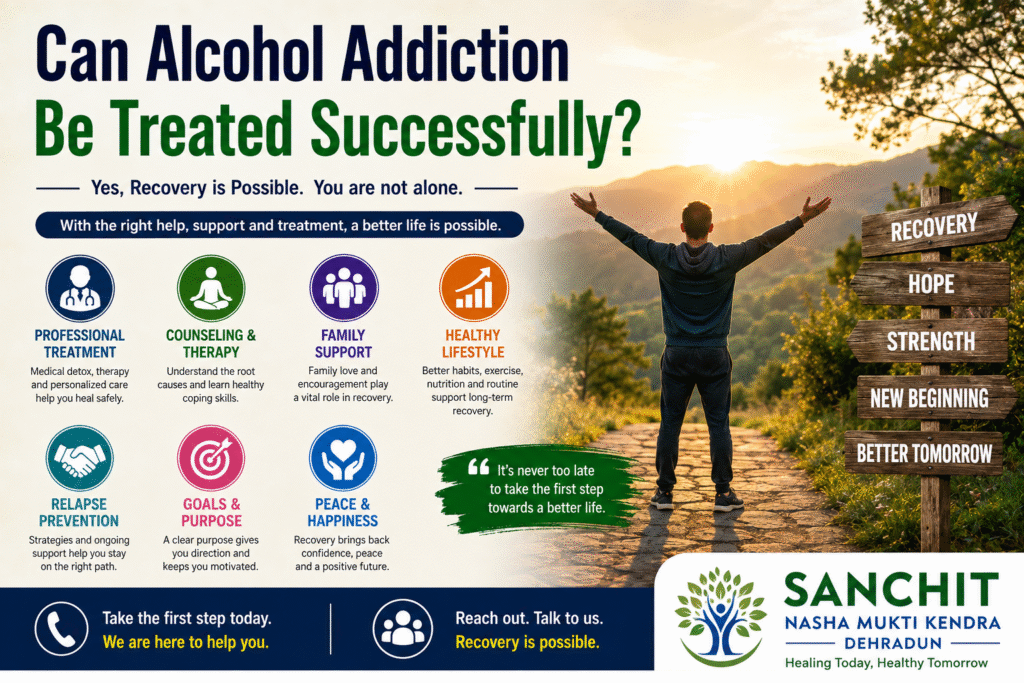
Can Alcohol Addiction Be Treated Successfully?, Yes. Alcohol addiction can be treated, and many people are able to achieve meaningful, long-term recovery with appropriate treatment, ongoing support, and a commitment to healthier habits. Recovery does not necessarily happen overnight, and there can be setbacks along the way, but treatment can help a person reduce or stop alcohol use, understand the reasons behind their drinking, develop healthier coping skills, and rebuild important areas of life. Alcohol addiction, also called alcohol use disorder (AUD), is more than simply drinking too much occasionally. It can affect physical health, emotional well-being, relationships, work, finances, and everyday decision-making. Because of this, effective treatment should address the whole person rather than focusing only on stopping alcohol consumption. At Sanchit Nasha Mukti Kendra in Dehradun, alcohol recovery can be approached through structured rehabilitation, counseling, behavioral support, family involvement, and aftercare. The right treatment plan depends on the individual’s drinking pattern, health, personal circumstances, and recovery needs. Important: Alcohol withdrawal can sometimes be medically dangerous, particularly after prolonged or heavy drinking. A person who may be physically dependent on alcohol should seek guidance from a qualified healthcare professional before suddenly stopping alcohol. Can Alcohol Addiction Be Treated Successfully? The question “Can Alcohol Addiction Be Treated Successfully?,” is often asked by individuals and families who have watched drinking gradually affect someone’s life. The answer is encouraging: yes, treatment can help. However, successful treatment does not mean that every person has exactly the same recovery journey. Some people may require medically supervised withdrawal and residential rehabilitation, while others may benefit from outpatient counseling, medication, mutual-support programs, or a combination of approaches. Treatment can help a person: Understand their relationship with alcohol Identify situations that contribute to drinking Develop healthier coping strategies Improve emotional regulation Repair damaged relationships Establish a stable daily routine Reduce the risk of relapse Build a meaningful life without depending on alcohol Recovery is best viewed as a process rather than a single event. Understanding Alcohol Addiction Alcohol addiction can develop gradually. A person may begin drinking socially and eventually find that alcohol has become a regular way to deal with stress, sadness, loneliness, anxiety, or difficult circumstances. Over time, the brain and body can adapt to repeated alcohol exposure. This can make stopping difficult, particularly for people who have developed physical dependence. Possible signs of alcohol use disorder include: Drinking more or for longer than intended Repeated unsuccessful attempts to cut down Strong cravings for alcohol Spending significant time obtaining, drinking, or recovering from alcohol Continuing to drink despite relationship or health problems Neglecting responsibilities because of drinking Developing tolerance Experiencing withdrawal symptoms when alcohol use decreases Having one or more symptoms does not mean that someone should diagnose themselves. A qualified professional can assess the situation and recommend appropriate care. Why Alcohol Addiction Treatment Is More Than Simply Stopping Drinking One of the most important points about Alcohol Addiction Treatment, is that stopping alcohol use is only one part of recovery. If drinking has been used to manage stress or emotional pain for years, simply removing alcohol without developing alternative coping skills can leave the person vulnerable. Effective treatment may address: Emotional Health Counseling can help people explore emotions, experiences, thought patterns, and behaviors connected with drinking. Behavioral Patterns Individuals can learn to recognize situations that encourage alcohol use and develop healthier responses. Physical Health Long-term alcohol use can affect multiple body systems. Appropriate medical evaluation can help identify health concerns that require attention. Family Relationships Alcohol addiction can create conflict, mistrust, financial difficulties, and emotional distance. Family-focused support can help begin the process of rebuilding communication and trust. Daily Lifestyle Healthy sleep, nutrition, exercise, meaningful activities, and structured routines can support a more stable recovery environment. The Role of Detoxification in Alcohol Addiction Treatment For some individuals, treatment begins with alcohol detoxification. Detoxification is the process through which the body adjusts after alcohol use is reduced or stopped. Withdrawal can range from mild to severe. Possible withdrawal symptoms include: Anxiety Shaking Sweating Nausea Restlessness Difficulty sleeping Increased heart rate Severe alcohol withdrawal can involve serious complications, including seizures or delirium. Because of this, people with significant alcohol dependence should not attempt to manage potentially severe withdrawal without medical guidance. A professional assessment can help determine whether medically supervised detoxification is appropriate. Detox is not the same as complete addiction treatment. It addresses the immediate physical effects of stopping alcohol, while rehabilitation and ongoing care address the longer-term behavioral, psychological, and social aspects of recovery. Counseling and Behavioral Therapy Counseling is an important component of many Alcohol Addiction Treatment, programs. A counselor or qualified mental health professional can help an individual explore: Why they drink What situations trigger cravings How they respond to stress How alcohol has affected their relationships What changes they want to make How they can handle future challenges Behavioral approaches can teach practical skills for recognizing risky situations and choosing healthier responses. For example, someone who regularly drinks after a stressful workday may learn to replace that pattern with exercise, relaxation, a supportive conversation, or another healthy activity. Family Support in Alcohol Recovery Alcohol addiction rarely affects only the person drinking. Family members may experience worry, frustration, financial stress, broken trust, and emotional exhaustion. For this reason, family involvement can be valuable when appropriate. Family members can help by: Encouraging professional treatment Avoiding judgment and humiliation Supporting healthy routines Learning about addiction Setting appropriate boundaries Encouraging continued treatment Recognizing warning signs Supporting positive lifestyle changes Family support does not mean taking responsibility for another person’s recovery. The individual remains responsible for their treatment decisions, while family members can provide encouragement and appropriate support. Developing Healthy Coping Skills A major goal of Alcohol Addiction Recovery, is learning how to deal with difficult situations without returning to alcohol. Healthy coping strategies may include: Physical Activity Walking, yoga, sports, or other appropriate exercise can provide a constructive way to manage stress. Mindfulness and Relaxation Breathing exercises, meditation, and mindfulness may help people become more

How Family Support Helps You Return to Work
Blog

How Family Support Helps You Return to Work

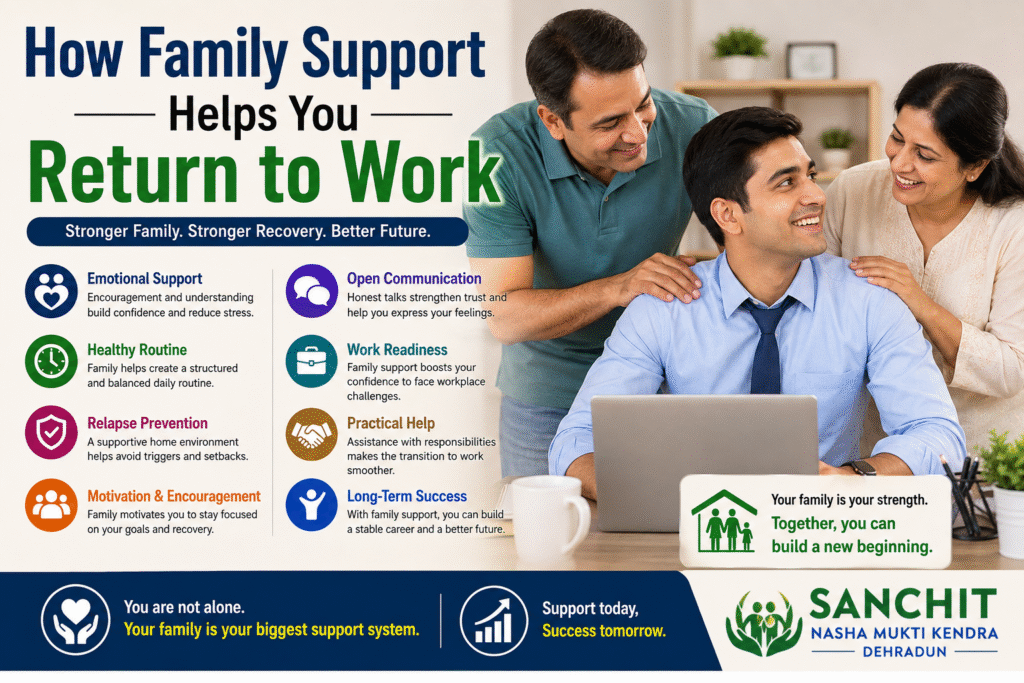
How Family Support Helps You Return to Work, is an important topic for people completing addiction rehabilitation and preparing to rebuild their professional lives. Returning to employment can bring confidence, financial independence, routine, and a renewed sense of purpose. At the same time, the transition may feel challenging. A person may worry about workplace stress, meeting responsibilities, rebuilding confidence, or maintaining sobriety in a new routine. Family support can make this transition easier. A caring and understanding family can provide encouragement without creating unnecessary pressure. They can help a recovering individual maintain healthy habits, prepare for work responsibilities, recognize warning signs, and remain connected to professional support. At Sanchit Nasha Mukti Kendra, recovery is viewed as a continuing journey rather than something that ends when a person leaves rehabilitation. Family involvement, aftercare, counseling, healthy routines, and a supportive environment can all contribute to a stronger transition into everyday life. How Family Support Helps You Return to Work After Rehabilitation How Family Support Helps You Return to Work, becomes clearer when we understand what happens after rehabilitation. Completing treatment is a major achievement, but returning to normal responsibilities can take time. Work may involve deadlines, communication, financial responsibilities, commuting, social situations, and unexpected stress. Family members can provide stability during this period. Their role is not to control every decision but to create an environment where the recovering individual feels respected, understood, and encouraged. For example, a family member might help someone establish a regular morning routine before their first week at work. Another family member may simply listen after a difficult day without judging them. These small actions can make a meaningful difference. The goal should be support rather than pressure. Why Family Support Matters During the Return-to-Work Process Returning to work after addiction recovery can affect several areas of life. A person may experience excitement one day and uncertainty the next. This is normal. Family support can help by providing: Emotional encouragement A stable home environment Help with maintaining routines Positive communication Motivation to continue recovery Assistance during stressful periods Encouragement to attend aftercare Support for healthy lifestyle choices Understanding during difficult days A sense of belonging and purpose A supportive family can remind the individual that they are not defined by their past addiction. Recovery gives them an opportunity to build a different future. Building Confidence Before Returning to Work One of the biggest challenges after rehabilitation can be a lack of confidence. Someone may wonder whether they can handle their previous responsibilities or whether colleagues will judge them. Family members can help rebuild confidence gradually. Instead of saying, “You need to get back to normal immediately,” a family member might say, “Take one step at a time. You have already made significant progress.” This kind of encouragement acknowledges the person’s effort without creating unrealistic expectations. Small Achievements Matter Family members can encourage individuals to recognize everyday achievements, such as: Maintaining a healthy routine Attending counseling Preparing for work Completing a difficult task Managing stress without using substances Successfully completing the first week of work Celebrating these milestones can strengthen self-confidence. Creating a Stable Home Environment A peaceful home environment can make returning to work easier. After rehabilitation, individuals may benefit from having predictable routines and fewer unnecessary sources of conflict. Family members can contribute by creating reasonable household expectations and encouraging healthy habits. A stable routine may include: Consistent sleeping and waking times Regular meals Time for exercise Work preparation Counseling or aftercare appointments Family time Relaxation Adequate sleep The objective is not to create a rigid schedule. Instead, the routine should provide enough structure to make daily life manageable. Family Support Helps You Return to Work by Reducing Unnecessary Stress Workplace stress can become difficult when someone is still adjusting to life after rehabilitation. Family members can help by ensuring that home remains a place where the individual can relax and communicate openly. This does not mean eliminating every problem. Instead, families can encourage healthy ways of dealing with challenges. For example, after a stressful workday, a person might benefit from: Taking a short walk Talking with a trusted family member Practicing relaxation techniques Listening to music Having a healthy meal Getting enough rest Speaking with a counselor when needed Healthy coping mechanisms can become an important part of long-term recovery. Encouraging a Healthy Work-Life Balance Returning to work does not mean that recovery should be ignored. Some individuals may become overly focused on proving themselves after returning to employment. They might accept excessive responsibilities, work long hours, or avoid taking breaks because they want to demonstrate that they are doing well. Family members can gently encourage balance. A healthy work-life balance may include: Reasonable working hours Adequate sleep Regular meals Exercise Family time Social activities Relaxation Continued recovery support Family encouragement can help individuals remember that professional success and personal well-being should develop together. Supporting Continued Counseling and Aftercare Rehabilitation provides important tools for recovery, but continuing support can be valuable after treatment. Family members can encourage the individual to continue appropriate: Counseling Follow-up appointments Support groups Aftercare programs Relapse-prevention planning They should avoid treating these activities as punishment or evidence that the person is “still failing.” Continued support is a normal part of maintaining recovery. For information about available rehabilitation and recovery services, families can explore the Services section of the Sanchit Nasha Mukti Kendra website and choose support according to individual needs. Helping Manage Workplace Triggers Returning to work can introduce situations that were not present during residential treatment. These may include stressful meetings, difficult colleagues, workplace celebrations, social pressure, or long periods of fatigue. Family members can help the individual prepare for these situations. A useful conversation might include: What situations could become stressful? What healthy coping strategy can be used? Who can be contacted if support is needed? What should be done if cravings become difficult to manage? When should professional help be sought? The purpose is preparation, not fear. Recognizing Warning Signs Family members can sometimes notice changes before

Scroll to Top