
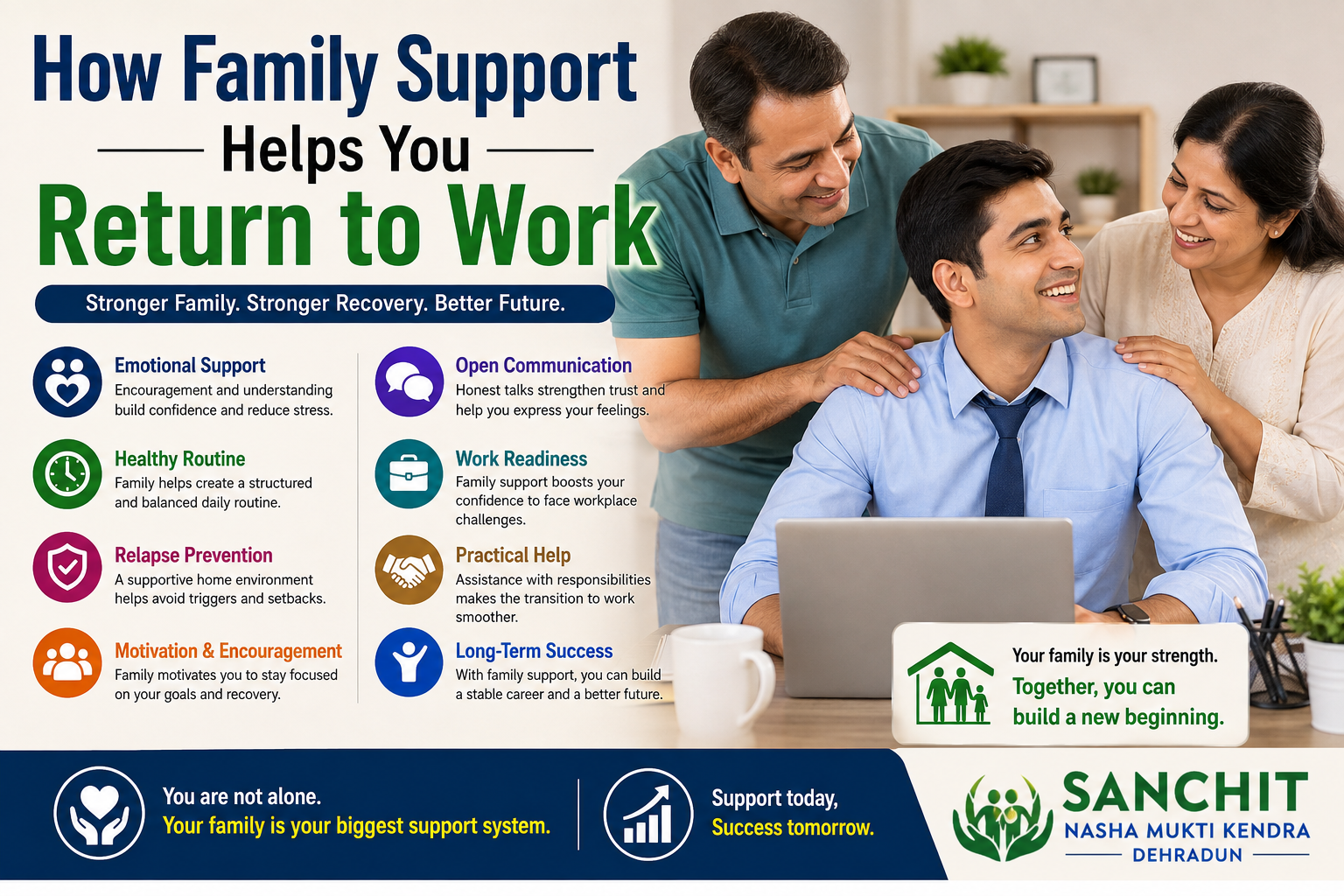
How Family Support Helps You Return to Work, is an important topic for people completing addiction rehabilitation and preparing to rebuild their professional lives. Returning to employment can bring confidence, financial independence, routine, and a renewed sense of purpose. At the same time, the transition may feel challenging. A person may worry about workplace stress, meeting responsibilities, rebuilding confidence, or maintaining sobriety in a new routine.
Family support can make this transition easier. A caring and understanding family can provide encouragement without creating unnecessary pressure. They can help a recovering individual maintain healthy habits, prepare for work responsibilities, recognize warning signs, and remain connected to professional support.
At Sanchit Nasha Mukti Kendra, recovery is viewed as a continuing journey rather than something that ends when a person leaves rehabilitation. Family involvement, aftercare, counseling, healthy routines, and a supportive environment can all contribute to a stronger transition into everyday life.
How Family Support Helps You Return to Work After Rehabilitation
How Family Support Helps You Return to Work, becomes clearer when we understand what happens after rehabilitation. Completing treatment is a major achievement, but returning to normal responsibilities can take time. Work may involve deadlines, communication, financial responsibilities, commuting, social situations, and unexpected stress.
Family members can provide stability during this period. Their role is not to control every decision but to create an environment where the recovering individual feels respected, understood, and encouraged.
For example, a family member might help someone establish a regular morning routine before their first week at work. Another family member may simply listen after a difficult day without judging them. These small actions can make a meaningful difference.
The goal should be support rather than pressure.
Why Family Support Matters During the Return-to-Work Process
Returning to work after addiction recovery can affect several areas of life. A person may experience excitement one day and uncertainty the next. This is normal.
Family support can help by providing:
- Emotional encouragement
- A stable home environment
- Help with maintaining routines
- Positive communication
- Motivation to continue recovery
- Assistance during stressful periods
- Encouragement to attend aftercare
- Support for healthy lifestyle choices
- Understanding during difficult days
- A sense of belonging and purpose
A supportive family can remind the individual that they are not defined by their past addiction. Recovery gives them an opportunity to build a different future.

Building Confidence Before Returning to Work
One of the biggest challenges after rehabilitation can be a lack of confidence. Someone may wonder whether they can handle their previous responsibilities or whether colleagues will judge them.
Family members can help rebuild confidence gradually.
Instead of saying, “You need to get back to normal immediately,” a family member might say, “Take one step at a time. You have already made significant progress.”
This kind of encouragement acknowledges the person’s effort without creating unrealistic expectations.
Small Achievements Matter
Family members can encourage individuals to recognize everyday achievements, such as:
- Maintaining a healthy routine
- Attending counseling
- Preparing for work
- Completing a difficult task
- Managing stress without using substances
- Successfully completing the first week of work
Celebrating these milestones can strengthen self-confidence.
Creating a Stable Home Environment
A peaceful home environment can make returning to work easier. After rehabilitation, individuals may benefit from having predictable routines and fewer unnecessary sources of conflict.
Family members can contribute by creating reasonable household expectations and encouraging healthy habits.
A stable routine may include:
- Consistent sleeping and waking times
- Regular meals
- Time for exercise
- Work preparation
- Counseling or aftercare appointments
- Family time
- Relaxation
- Adequate sleep
The objective is not to create a rigid schedule. Instead, the routine should provide enough structure to make daily life manageable.
Family Support Helps You Return to Work by Reducing Unnecessary Stress
Workplace stress can become difficult when someone is still adjusting to life after rehabilitation. Family members can help by ensuring that home remains a place where the individual can relax and communicate openly.
This does not mean eliminating every problem. Instead, families can encourage healthy ways of dealing with challenges.
For example, after a stressful workday, a person might benefit from:
- Taking a short walk
- Talking with a trusted family member
- Practicing relaxation techniques
- Listening to music
- Having a healthy meal
- Getting enough rest
- Speaking with a counselor when needed
Healthy coping mechanisms can become an important part of long-term recovery.
Encouraging a Healthy Work-Life Balance
Returning to work does not mean that recovery should be ignored.
Some individuals may become overly focused on proving themselves after returning to employment. They might accept excessive responsibilities, work long hours, or avoid taking breaks because they want to demonstrate that they are doing well.
Family members can gently encourage balance.
A healthy work-life balance may include:
- Reasonable working hours
- Adequate sleep
- Regular meals
- Exercise
- Family time
- Social activities
- Relaxation
- Continued recovery support
Family encouragement can help individuals remember that professional success and personal well-being should develop together.
Supporting Continued Counseling and Aftercare
Rehabilitation provides important tools for recovery, but continuing support can be valuable after treatment.
Family members can encourage the individual to continue appropriate:
- Counseling
- Follow-up appointments
- Support groups
- Aftercare programs
- Relapse-prevention planning
They should avoid treating these activities as punishment or evidence that the person is “still failing.” Continued support is a normal part of maintaining recovery.
For information about available rehabilitation and recovery services, families can explore the Services section of the Sanchit Nasha Mukti Kendra website and choose support according to individual needs.
Helping Manage Workplace Triggers
Returning to work can introduce situations that were not present during residential treatment. These may include stressful meetings, difficult colleagues, workplace celebrations, social pressure, or long periods of fatigue.
Family members can help the individual prepare for these situations.
A useful conversation might include:
- What situations could become stressful?
- What healthy coping strategy can be used?
- Who can be contacted if support is needed?
- What should be done if cravings become difficult to manage?
- When should professional help be sought?
The purpose is preparation, not fear.
Recognizing Warning Signs
Family members can sometimes notice changes before the individual recognizes them. However, they should approach these observations with care and avoid accusations.
Potential warning signs that deserve attention can include:
- Increasing isolation
- Major changes in sleep
- Sudden mood changes
- Increased irritability
- Avoiding recovery appointments
- Loss of interest in healthy activities
- Increasing secrecy
- Difficulty managing stress
- Strong cravings or discussions about returning to substance use
These signs do not automatically mean that relapse has occurred. They may simply indicate that additional emotional or professional support is needed.
Communication Is Essential for Family Support After Rehabilitation
Good communication can make the transition significantly easier.
Family members should try to:
Listen Without Immediately Judging
Sometimes a recovering individual needs someone to listen rather than immediately provide advice.
Avoid Constant Reminders of the Past
Repeatedly bringing up previous mistakes can damage confidence. Recovery should allow room for growth.
Ask Open Questions
Instead of asking, “Did everything go perfectly at work?” consider asking, “How did your day feel?”
Respect Personal Boundaries
Support does not mean monitoring every activity. Adults in recovery also need independence and responsibility.
Encourage Honest Conversations
Individuals should feel able to discuss stress, cravings, or workplace problems before those challenges become overwhelming.
Helping With Practical Work Preparation
Family support does not always have to be emotional. Practical assistance can also be valuable.
Before returning to work, family members might help with:
- Preparing work clothes
- Organizing transportation
- Planning meals
- Adjusting sleeping schedules
- Managing household responsibilities
- Preparing documents
- Organizing work-related items
- Creating a realistic morning routine
These simple steps can reduce unnecessary pressure during the first few weeks.
Supporting Financial Responsibility
Returning to work may provide renewed financial independence. However, financial management can sometimes become another source of stress.
Families can encourage responsible planning around:
- Monthly expenses
- Savings
- Household contributions
- Debt management
- Personal spending
- Future goals
Financial stability can contribute to confidence, but it is important to avoid placing excessive financial expectations on someone who is still adjusting to employment.
Encouraging Healthy Relationships Outside the Family
Family support is important, but recovery should not depend on one person alone.
Encourage the individual to develop healthy connections with:
- Trusted friends
- Counselors
- Support groups
- Mentors
- Positive colleagues
- Recovery communities
A broader support network provides additional resources when family members are unavailable.
How Family Members Can Support Sobriety at Work
Family members cannot control what happens at the workplace. However, they can encourage habits that strengthen recovery.
These may include:
- Getting adequate sleep before work
- Avoiding unnecessary workplace social pressure
- Taking appropriate breaks
- Managing stress early
- Continuing aftercare
- Maintaining healthy meals
- Staying connected with supportive people
- Seeking help when needed
The recovering individual remains responsible for their own recovery, but family encouragement can make healthy choices easier to maintain.
What Families Should Avoid
Good intentions can sometimes unintentionally create additional pressure.
Family members should avoid:
- Constantly checking or interrogating the individual
- Making unrealistic demands
- Shaming them for past behavior
- Comparing them with other people
- Expecting immediate career success
- Ignoring signs of emotional distress
- Treating every difficult day as a relapse
- Taking complete control of their decisions
Support works best when it combines compassion, boundaries, encouragement, and respect.
Returning to Work Gradually When Appropriate
Some people may be able to return directly to their previous position, while others may benefit from a gradual transition depending on their circumstances and professional advice.
A gradual return might involve:
- Reduced hours initially
- Fewer responsibilities
- Flexible scheduling
- Gradually increasing workload
- Regular check-ins
The appropriate approach depends on the individual’s health, job, workplace policies, and professional recommendations.
The Role of Family in Maintaining Motivation
Motivation can naturally change during recovery. A person may feel highly motivated before starting work but become discouraged after encountering difficulties.
Family members can help reconnect the individual with their reasons for recovery.
These may include:
- Building a stable career
- Supporting loved ones
- Achieving financial independence
- Improving health
- Rebuilding trust
- Developing personal goals
- Creating a meaningful future
A reminder of these goals can provide encouragement during difficult periods.
Family Support Helps You Return to Work With Greater Confidence
How Family Support Helps You Return to Work, is ultimately about creating a foundation for independence rather than creating dependence.
The healthiest family support says:
“We are here for you, but we also believe in your ability to manage your life.”
That balance is important. Individuals returning to employment need encouragement, but they also need opportunities to make decisions, solve problems, accept responsibilities, and develop confidence.
A Message for Family Support After Rehabilitation
Family Support After Rehabilitation, can become one of the most meaningful parts of a person’s recovery journey.
If your loved one is preparing to return to work, remember that recovery may not always look perfect. There may be difficult mornings, stressful workdays, moments of self-doubt, or days when motivation feels low. These experiences do not automatically mean that recovery is failing.
Offer encouragement without judgment. Listen when they want to talk. Celebrate progress without creating pressure. Encourage professional support when necessary. Most importantly, remind them that their past does not have to determine their future.
A family cannot complete recovery on behalf of another person, but it can create an environment where recovery becomes easier to protect.
At Sanchit Nasha Mukti Kendra, families can explore appropriate rehabilitation, counseling, and aftercare support through the centre’s Services and Contact Us sections. Professional guidance can help families understand how to provide support while respecting the individual’s independence.
Frequently Asked Questions
1. How does family support help someone return to work after rehabilitation?
Family support can provide emotional encouragement, practical assistance, healthy routines, and motivation. A supportive home environment can make the transition into employment more manageable.
2. Should family members constantly monitor someone after rehabilitation?
No. Excessive monitoring can create stress and reduce independence. Support should focus on communication, trust, appropriate boundaries, and encouragement.
3. What if the person feels anxious about returning to work?
Work-related anxiety can be discussed openly with family members and qualified professionals. Preparing gradually, maintaining routines, and using healthy stress-management strategies can help.
4. Can family members help prevent relapse?
Family members cannot guarantee relapse prevention, but they can encourage healthy habits, recognize concerning changes, support aftercare, and encourage professional assistance when necessary.
5. Should a person immediately return to full-time work?
Not necessarily. The appropriate return-to-work plan depends on individual circumstances, job requirements, recovery progress, and professional recommendations.
6. How can families rebuild trust after addiction?
Trust usually develops gradually through consistent actions, honest communication, reliability, and patience. Both the recovering individual and family members may need time to adjust.
7. What should families do if they notice concerning changes?
Approach the person calmly rather than making accusations. Encourage an open conversation and professional support if necessary.
8. Why is aftercare important after returning to work?
Aftercare provides continued support while individuals face everyday responsibilities. It can help reinforce coping strategies and maintain focus on long-term recovery.
9. How can families support work-life balance?
Families can encourage reasonable routines, adequate sleep, healthy meals, exercise, relaxation, and time for relationships rather than encouraging excessive work.
10. What is the most important thing families can provide after rehabilitation?
Consistent, respectful, and non-judgmental support is extremely valuable. Encouragement should be combined with healthy boundaries and respect for the individual’s responsibility for their own recovery.
Conclusion
How Family Support Helps You Return to Work, is an important part of understanding recovery beyond rehabilitation. Returning to employment can restore confidence, financial independence, structure, and purpose, but the transition may also bring stress and uncertainty.
Family members can make this period easier by creating a stable home environment, encouraging healthy routines, listening without judgment, supporting continued counseling and aftercare, and recognizing warning signs that may require additional help.
At the same time, family support should not become control. The recovering individual needs the opportunity to make decisions, manage responsibilities, and develop confidence in their own abilities.
With patience, professional guidance, healthy communication, and a strong support network, returning to work can become an important step toward a stable and meaningful life after rehabilitation. Family Support After Rehabilitation, the Best Rehab Centre in Dehradun, is not about expecting perfection; it is about providing encouragement while allowing the person to continue growing, rebuilding, and moving forward.