
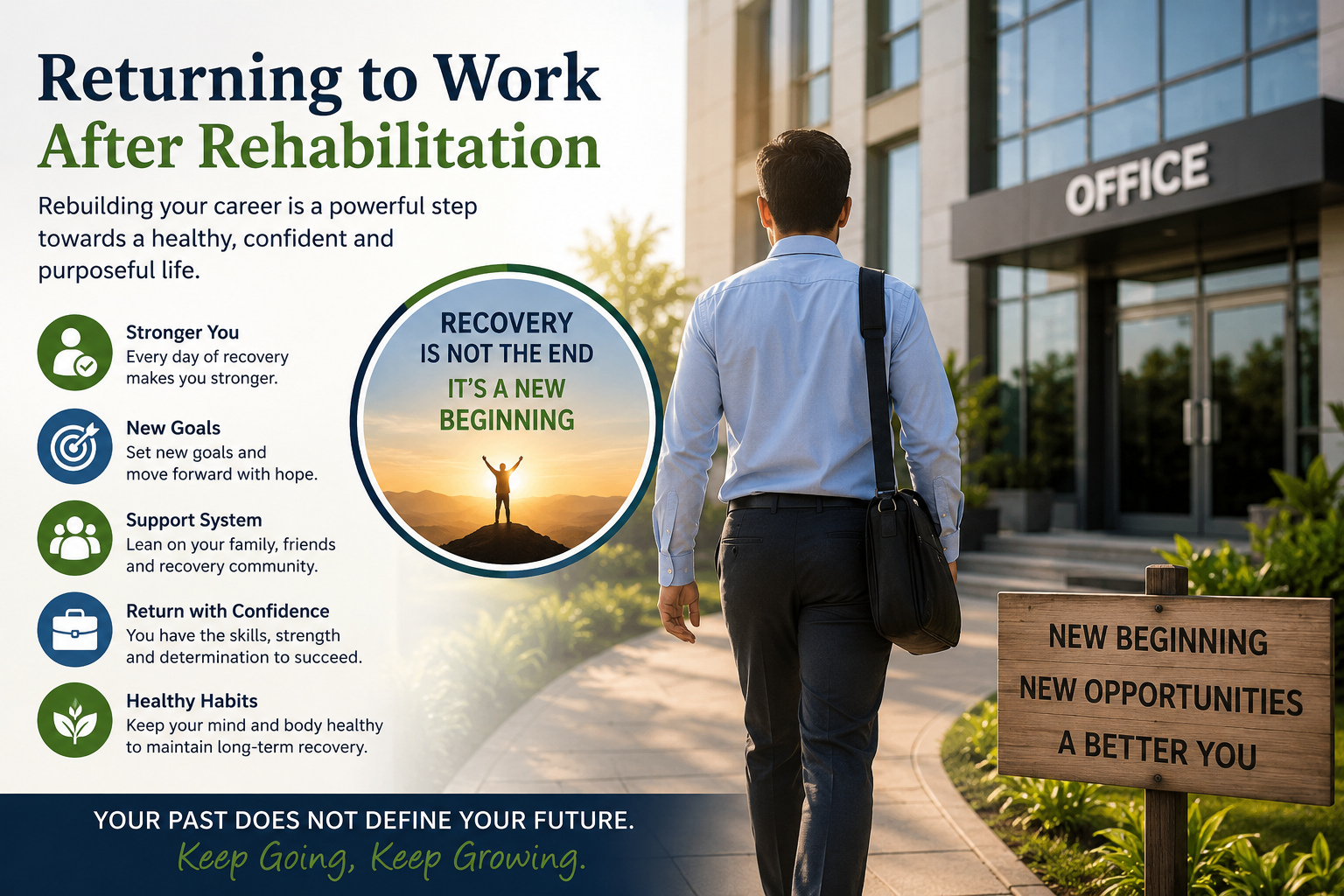
Returning to work after completing a rehabilitation program is an important milestone in the recovery journey. It represents a fresh beginning, renewed confidence, and the opportunity to rebuild both personal and professional life. However, this transition can also bring challenges such as managing stress, adjusting to workplace expectations, and maintaining sobriety.
Returning to Work After Rehabilitation is an important milestone that marks the beginning of a healthier, more independent, and productive life. After completing a rehabilitation program, many individuals look forward to rebuilding their careers, restoring confidence, and reconnecting with their professional goals. Although this transition can bring excitement, it may also come with challenges such as managing workplace stress, maintaining sobriety, and adjusting to daily responsibilities.
At Sanchit Nasha Mukti Kendra, we understand that recovery does not end when rehabilitation is completed. Long-term success depends on continued support, healthy habits, and a well-planned return to everyday responsibilities. Our rehabilitation programs are designed to help individuals develop the skills they need to live independently and confidently after treatment.
Whether you are recovering from alcohol or drug addiction, returning to work after rehabilitation is a significant step toward regaining stability and creating a brighter future.
Table of Contents
ToggleWhy Returning to Work After Rehabilitation Is Important
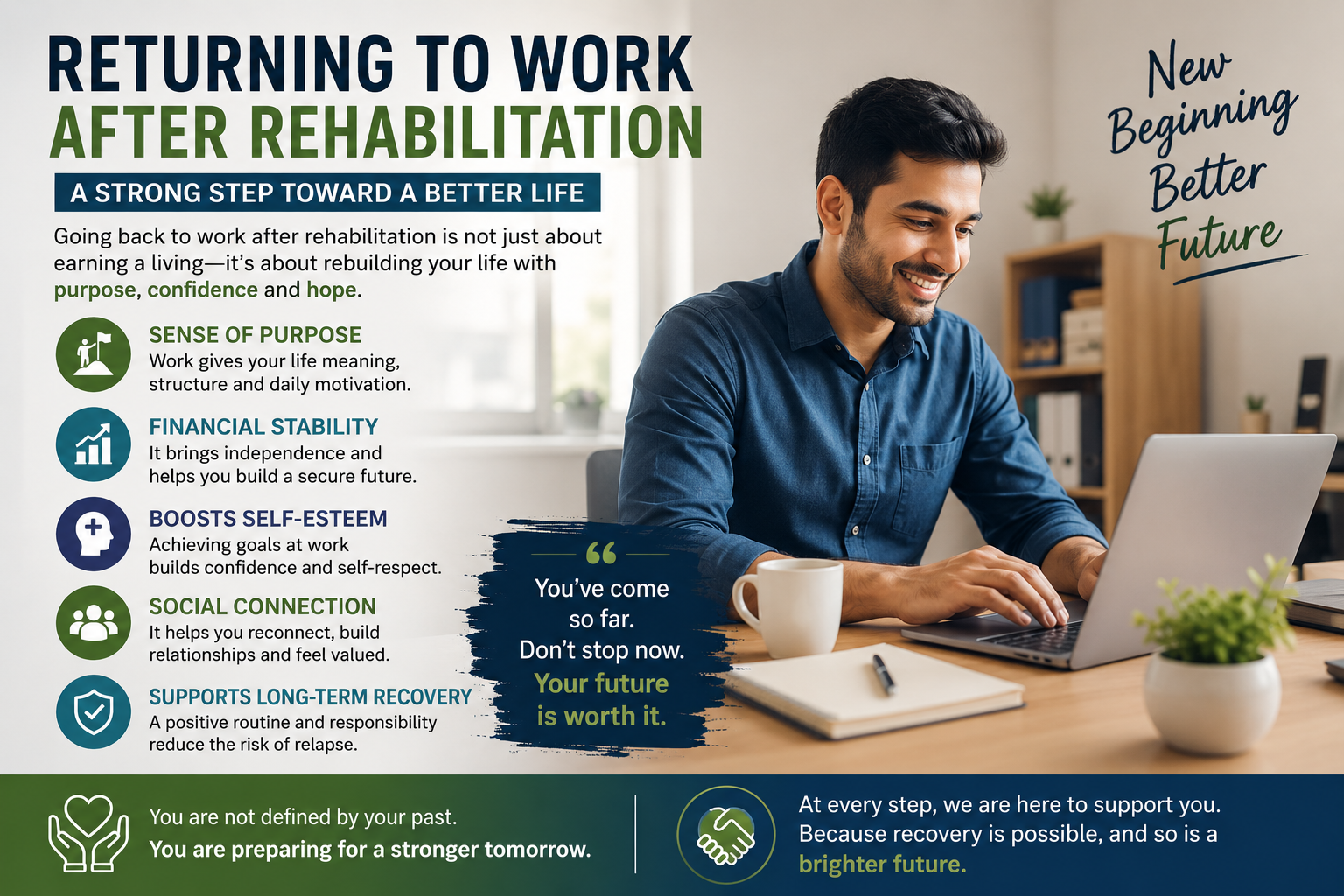
Employment provides more than just financial stability. It offers structure, purpose, social interaction, and opportunities for personal growth. Many people find that returning to work after rehabilitation helps them regain confidence and rebuild self-esteem.
Some benefits include:
- A structured daily routine
- Improved financial independence
- Better mental well-being
- Increased self-confidence
- Stronger social connections
- A renewed sense of purpose
Having meaningful work can support long-term recovery when combined with healthy coping strategies and ongoing support.
Preparing for Returning to Work After Rehabilitation
Returning to work should be a planned and gradual process. Taking time to prepare can reduce anxiety and help make the transition smoother.
Evaluate Your Readiness
Before returning to work, ask yourself:
- Am I emotionally ready?
- Can I manage workplace stress in healthy ways?
- Do I have a support system?
- Am I following my recovery plan?
Discussing these questions with your counselor or recovery team can help you make an informed decision.
Set Realistic Expectations
Recovery is a journey, and it is normal to need time to adjust.
Remember:
- You do not have to be perfect.
- It is okay to ask for support.
- Progress happens step by step.
Setting achievable goals helps reduce unnecessary pressure.
Build Healthy Daily Routines
Healthy routines play a major role in returning to work after rehabilitation.
Include habits such as:
- Waking up at a consistent time
- Eating nutritious meals
- Exercising regularly
- Practicing meditation or mindfulness
- Getting enough sleep
These routines improve both physical and emotional well-being.
Managing Workplace Stress
Stress is one of the most common relapse triggers. Learning healthy stress management techniques is essential.
Helpful strategies include:
- Taking short breaks
- Deep breathing exercises
- Time management
- Prioritizing tasks
- Speaking openly with trusted colleagues when appropriate
Healthy stress management reduces the risk of relapse.
Building Confidence at Work
Many people worry about returning to work after a long period away.
Confidence grows with time.
You can build confidence by:
- Celebrating small achievements
- Learning new skills
- Staying organized
- Maintaining a positive attitude
- Asking questions when needed
Every successful workday strengthens your recovery journey.
Maintaining Sobriety in the Workplace
One of the biggest concerns during returning to work after rehabilitation is maintaining sobriety.
Practical tips include:
- Avoid environments that encourage substance use.
- Stay connected with your recovery support group.
- Continue counseling sessions.
- Practice healthy coping skills.
- Have a relapse prevention plan.
Recovery is strengthened through consistency and self-awareness.
The Role of Family Support
Family encouragement can make the transition back to work much easier.
Family members can:
- Offer emotional support
- Encourage healthy routines
- Celebrate progress
- Help reduce stress at home
- Understand recovery challenges
Open communication creates a supportive home environment.
Workplace Communication
Not everyone chooses to share details about their recovery, and that decision is personal.
If you decide to speak with your employer:
- Be honest when appropriate.
- Focus on your readiness to work.
- Discuss any accommodations only if necessary.
- Maintain professionalism.
Respecting your privacy while seeking support can help you feel more comfortable.
Continue Professional Support
Returning to work does not mean recovery is complete.
Ongoing support may include:
- Individual counseling
- Group therapy
- Recovery meetings
- Family counseling
- Wellness activities
At Sanchit Nasha Mukti Kendra, we encourage continued care even after rehabilitation ends.
Healthy Lifestyle After Rehabilitation
Long-term recovery depends on maintaining healthy habits.
Focus on:
- Balanced nutrition
- Regular physical activity
- Quality sleep
- Positive relationships
- Stress management
- Personal hobbies
These habits support both recovery and workplace success.
Overcoming Challenges
Some common challenges include:
Workplace Pressure
Manage workloads realistically and avoid taking on too much too soon.
Social Situations
Politely decline invitations involving alcohol or drugs if they may affect your recovery.
Emotional Triggers
Recognize your triggers and use healthy coping strategies learned during rehabilitation.
Self-Doubt
Remember that recovery is a strength, not a weakness.

Life After Rehabilitation
Life after rehabilitation is an opportunity to create a healthier and more meaningful future. Recovery is not only about avoiding substances—it is about rebuilding confidence, strengthening relationships, pursuing career goals, and finding purpose in everyday life.
Returning to work, reconnecting with loved ones, and adopting healthy routines are all positive steps that contribute to long-term success. Every challenge overcome becomes proof of personal strength and resilience.
A Message for Life After Rehabilitation
Recovery is a journey filled with hope, determination, and new beginnings. There may be difficult days, but every positive choice you make brings you closer to the life you deserve.
Believe in your progress, celebrate your achievements, and never hesitate to seek support when needed. At Sanchit Nasha Mukti Kendra, we are committed to standing beside you throughout your recovery journey and helping you build a healthy, fulfilling, and addiction-free future.
Why Choose Sanchit Nasha Mukti Kendra?
At Sanchit Nasha Mukti Kendra, we provide compassionate, evidence-based care tailored to each individual’s needs.
Our services include:
- Personalized treatment plans
- Alcohol rehabilitation
- Drug detoxification
- Individual counseling
- Group therapy
- Family counseling
- Relapse prevention
- Aftercare support
To learn more, visit our About Us page, explore our Services, or reach out through our Contact Us page.
Frequently Asked Questions
1. Is it safe to return to work after rehabilitation?
Yes. Once you have completed treatment and your healthcare team believes you are ready, returning to work can support recovery and improve confidence.
2. How can I manage workplace stress during recovery?
Practice stress management techniques such as mindfulness, exercise, proper time management, and regular counseling.
3. Should I tell my employer about my rehabilitation?
This is a personal decision. Share information only if you feel comfortable or if workplace accommodations are needed.
4. Can returning to work reduce the risk of relapse?
Meaningful employment can provide structure and purpose, but continued recovery support is also essential.
5. What if I feel overwhelmed after returning to work?
Talk to your counselor, support group, or trusted family members. Early support can help prevent setbacks.
6. Does Sanchit Nasha Mukti Kendra provide aftercare services?
Yes. We offer ongoing support, counseling, and relapse prevention guidance to help individuals maintain long-term recovery.
Conclusion
Returning to work after rehabilitation is an important step toward rebuilding a healthy and independent life. Although the transition may bring challenges, it also offers opportunities for growth, confidence, and stability. With proper planning, ongoing support, and healthy habits, individuals can successfully balance work responsibilities while maintaining long-term recovery.
At Sanchit Nasha Mukti Kendra, we believe that rehabilitation is the beginning of a new chapter. Our team is dedicated to supporting every individual through treatment, aftercare, and life beyond recovery. If you or a loved one needs help, visit our Services page or Contact Us today to begin the journey toward lasting recovery and a brighter future.