
Why Peer Support Matters More Than You Think
Alcohol addiction doesn’t develop overnight—and recovery doesn’t happen alone. For school-going and college-going students, alcohol use often starts with curiosity, peer pressure, stress, or emotional challenges. When drinking turns into dependency, peer support in alcohol recovery becomes one of the strongest pillars of healing.
Support groups offer something that medicines and counselling alone cannot: real understanding from people who have walked the same path. This article explains why alcohol recovery support groups are so powerful, how they work, and why they are especially effective for young people seeking a fresh, healthy future.
Peer Support in Alcohol Recovery – Why Support Groups Matter
Understanding Peer Support in Alcohol Recovery
Peer support in alcohol recovery refers to guidance, encouragement, and emotional help provided by individuals who are either recovering from alcohol addiction or have successfully maintained sobriety. At Sanchit Rehab Centre in Gwalior, peer support is an integral part of the recovery process, helping individuals feel understood, supported, and motivated through shared experiences and collective healing.
Unlike traditional therapy, peer support is built on:
- Shared experiences
- Mutual respect
- Non-judgmental communication
- Collective motivation
This approach creates a sense of belonging that is essential for young individuals struggling with addiction.
Importance of Peer Support in Recovery
The importance of peer support in recovery lies in its ability to reduce isolation and increase hope. Many students feel misunderstood or judged by family or society. Support groups provide a safe space where no explanation is needed.
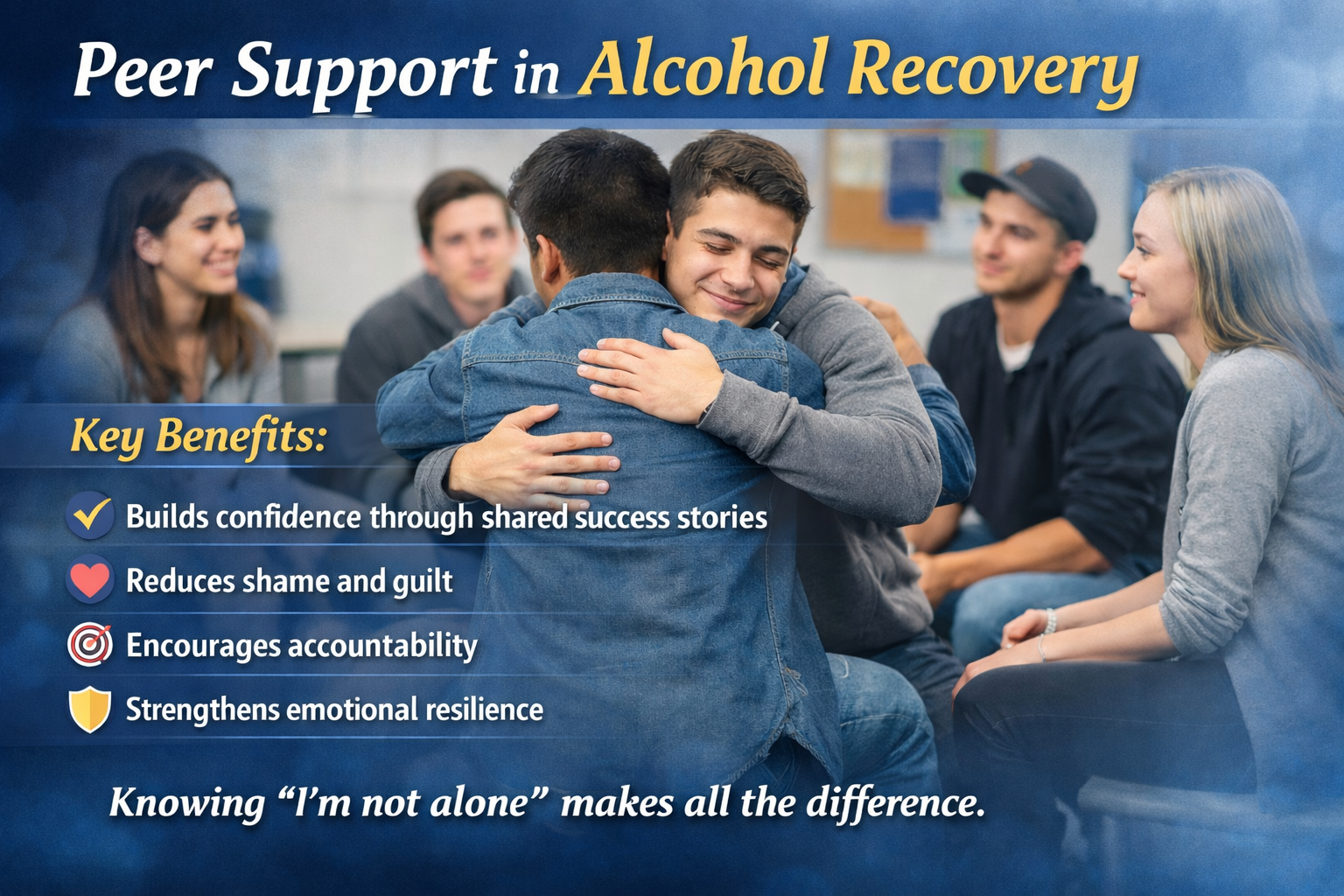
Key Benefits of Peer Support in Alcohol Recovery
- Builds confidence through shared success stories: Peer Support in Alcohol Recovery allows students to see real examples of progress, helping them believe that change is possible for them too.
- Reduces shame and guilt: Through Peer Support in Alcohol Recovery, individuals realize their struggles are shared, which lowers self-blame and emotional burden.
- Encourages accountability: Peer Support in Alcohol Recovery motivates students to stay committed by learning from and being responsible to their peers.
- Strengthens emotional resilience: Regular participation in Peer Support in Alcohol Recovery helps students manage stress, emotions, and setbacks in healthier ways.
For students, Peer Support in Alcohol Recovery reinforces the feeling of “I’m not alone,” making recovery more hopeful and life-changing.
Why Support Groups Are Effective for Students
Young people face unique challenges during recovery—academic pressure, identity confusion, social influence, and emotional stress. Alcohol addiction peer support directly addresses these concerns.
Relatable Experiences
Students connect easily with peers who understand:
- Exam stress
- Relationship pressure
- Social drinking culture
- Fear of missing out (FOMO)
Positive Peer Influence
Instead of negative peer pressure, support groups create positive reinforcement, encouraging healthy choices and responsible behaviour.
How Alcohol Recovery Support Groups Work
Support groups follow structured yet flexible formats to ensure comfort and consistency.
Common Elements:
- Regular group meetings
- Open discussions
- Goal-setting sessions
- Relapse prevention strategies
Some groups are peer-led, while others are guided by trained facilitators at a Nasha Mukti Kendra.

Types of Peer Support Groups in Alcohol Recovery
Student-Focused Recovery Groups
Designed for school and college students, these groups address academic life and emotional growth.
12-Step Programs
Well-known programs focusing on accountability, discipline, and spiritual growth.
Community-Based Support Groups
Often organised by rehabilitation centres to provide long-term sobriety support.
Aftercare Peer Groups
These help individuals stay committed after completing treatment at a Nasha Mukti Kendra.
Emotional and Psychological Benefits of Peer Support
Peer support strengthens mental health by:
- Improving self-esteem
- Reducing anxiety and depression
- Encouraging emotional expression
- Teaching healthy coping strategies
For young individuals, emotional stability is essential for both recovery and personal development.
Peer Support vs. Going Through Recovery Alone
Recovery Alone:
- Isolation
- Low motivation
- High relapse risk
-
Limited guidance
Peer Support Recovery:
- Sense of belonging
- Shared encouragement
- Better relapse prevention
-
Real-life insights
This comparison clearly shows why alcohol recovery support groups play a crucial role in sustained recovery.
Role of Nasha Mukti Kendra in Peer Support
A professional Nasha Mukti Kendra integrates peer support with medical care, counselling, and therapy.
How They Help:
- Safe, supervised group sessions
- Age-appropriate peer matching
- Structured recovery programs
-
Long-term aftercare support
This holistic approach ensures both physical and emotional healing.
How Peer Support Prevents Relapse
Relapse often happens due to stress, loneliness, or overconfidence. Peer groups help by:
- Identifying early warning signs
- Offering immediate emotional support
- Reinforcing recovery goals
-
Sharing practical coping techniques
Consistent peer interaction strengthens commitment to sobriety.
Building Life Skills Through Peer Support
Beyond recovery, peer support teaches valuable life skills:
- Communication
- Emotional regulation
- Decision-making
-
Conflict resolution
These skills help students succeed academically and socially without relying on alcohol.
Summary: Recovery Is Stronger Together
Frequently Asked Questions
Q1. What is peer support in alcohol recovery?
Peer support involves guidance and encouragement from individuals who have experienced alcohol addiction and recovery themselves.
Q2. Are support groups suitable for students?
Yes. Student-focused alcohol recovery support groups address academic stress, peer pressure, and emotional challenges effectively.
Q3. Can peer support replace professional treatment?
No. Peer support complements medical treatment and counselling but works best as part of a structured recovery program.
Q4. How long should someone attend support groups?
There is no fixed duration. Many people continue attending groups long-term to maintain sobriety and motivation.
Q5. Do Nasha Mukti Kendras offer peer support?
Yes. Most Nasha Mukti Kendras include peer support groups as part of comprehensive alcohol recovery programs.