
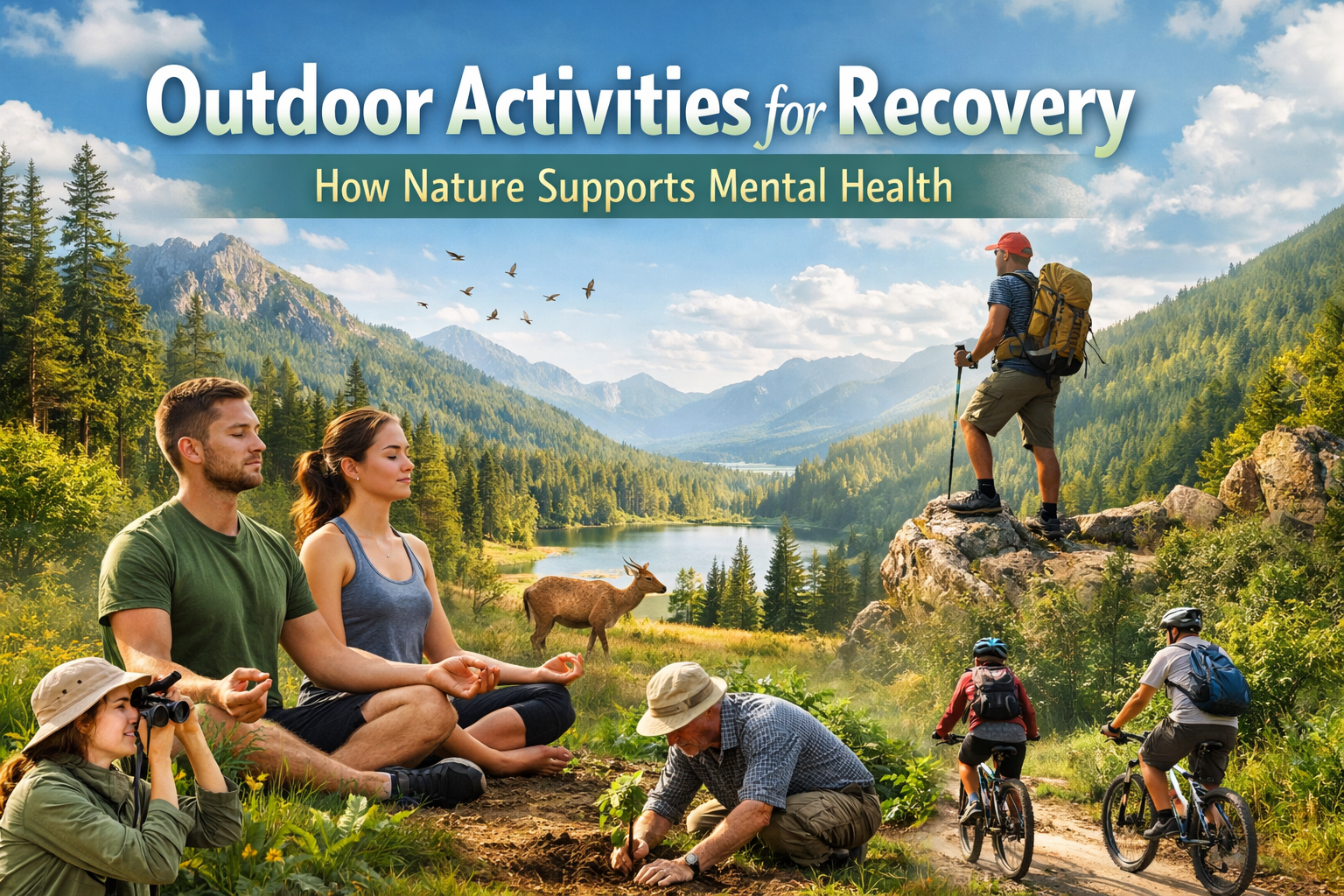
Recovering from addiction is more than just abstaining from substances—it’s about rebuilding mental health, emotional balance, and a sense of purpose. One highly effective, yet often overlooked approach is outdoor activities for recovery. Nature isn’t just beautiful; it actively promotes mental wellness, reduces stress, and strengthens the recovery journey.
Whether you’re a school-going student, a college student, or an office professional struggling with stress or addiction, integrating nature into your recovery plan can transform your healing experience.
Why Outdoor Activities Matter in Recovery
Connecting with Nature Enhances Mental Health
Research shows that spending time outdoors can improve mood, reduce anxiety, and even help regulate emotions. Activities like walking in a park, hiking, or gardening offer natural stress relief in nature, helping your mind reset from daily pressures.
- Improves focus and cognitive function
- Reduces cortisol levels (stress hormone)
- Promotes better sleep and emotional stability
Benefits of Outdoor Exercise in Recovery
Outdoor Activities for Recovery play a vital role in supporting both mental and physical wellness. Engaging in Outdoor Activities for Recovery helps individuals overcome addiction by reducing stress, improving mood, and boosting overall health. Regular participation in Outdoor Activities for Recovery encourages discipline and consistency, key factors in sustaining long-term sobriety. Beyond physical fitness, Outdoor Activities for Recovery promote mindfulness and emotional balance, helping participants reconnect with themselves and nature. By incorporating Outdoor Activities for Recovery into daily routines at Nasha Mukti Kendra in Gwalior, individuals can experience enhanced mental clarity, stronger resilience, and a healthier lifestyle.
Key Benefits Include:
- Stress Relief in Nature: Movement in green spaces lowers stress and improves mood.
- Improved Physical Health: Walking, jogging, or cycling strengthens the body weakened by substance use.
- Social Connection: Group activities like nature hikes or yoga sessions foster supportive relationships.
- Mindfulness Practice: Outdoor activities encourage awareness, helping you stay present and avoid triggers.
Nature-Based Therapy Programs
Modern recovery centers, including Nasha Mukti Kendras, increasingly integrate nature-based therapy programs into treatment plans. These programs combine professional guidance with outdoor activities to promote holistic healing.
Common Nature-Based Therapy Programs
- Forest Bathing or “Shinrin-Yoku” – Immersing yourself in the forest is a calming outdoor activity for recovery that reduces stress and improves mental clarity.
- Outdoor Yoga and Meditation – Practicing yoga and meditation in natural settings enhances mindfulness, emotional balance, and overall well-being, making it a powerful outdoor activity for recovery.
- Gardening and Horticulture Therapy – Tending to plants encourages patience, focus, and a sense of accomplishment, serving as a therapeutic outdoor activity for recovery.
- Adventure Therapy (Trekking or Kayaking) – Engaging in safe adventure sports builds resilience, confidence, and social connection, offering an exciting and effective outdoor activity for recovery.
Such programs help reduce relapse risks by teaching coping strategies in natural settings, making recovery more sustainable.

Best Outdoor Activities for Recovery
Here’s a list of effective activities that anyone in recovery can try:
- Walking or Jogging in Parks: Improves heart health and clears the mind.
- Hiking: Builds physical endurance while offering breathtaking natural views.
- Gardening: Encourages patience, mindfulness, and nurturing skills.
- Yoga or Meditation Outdoors: Combines physical exercise with mental calmness.
- Cycling: Provides cardiovascular benefits while exploring nature trails.
-
Birdwatching or Nature Photography: Cultivates mindfulness and appreciation for beauty.
Tip: Start with 20–30 minutes daily and gradually increase as your stamina and comfort grow.
How Outdoor Activities Support Long-Term Recovery
Integrating outdoor activities into your recovery routine offers multiple long-term advantages:
- Reduces cravings and anxiety
- Strengthens emotional resilience
- Enhances self-esteem through achievement
- Encourages social interaction in safe, healthy environments
- Improves overall quality of life
At Sanchit Nasha Mukti Kendra in Gwalior, structured programs guide individuals in safely incorporating outdoor therapy into their recovery journey, ensuring measurable mental and physical benefits.
Tips to Make the Most of Outdoor Activities for Recovery
To maximize the benefits of Outdoor Activities for Recovery, consistency is key. Scheduling daily or weekly sessions ensures you maintain momentum and progress in your recovery journey. Practicing mindfulness during Outdoor Activities for Recovery—focusing on your breathing and surroundings—enhances mental clarity and emotional balance.
Setting goals for your Outdoor Activities for Recovery helps track physical improvements and mental wellbeing over time. Including friends, family, or recovery peers in Outdoor Activities for Recovery adds social support, making the experience more motivating and enjoyable.
Always combine Outdoor Activities for Recovery with professional guidance, so they complement counseling or rehab programs effectively. Exploring different options like yoga, meditation, hiking, or gardening ensures your Outdoor Activities for Recovery stay engaging and rewarding. Regular participation in Outdoor Activities for Recovery builds resilience, reduces stress, and strengthens long-term recovery.
By making Outdoor Activities for Recovery a consistent part of your routine, you create a sustainable path to emotional, mental, and physical wellness. Structured Outdoor Activities for Recovery at centers like Sanchit Nasha Mukti Kendra in Gwalior provide professional support while enjoying the healing power of nature.

Summary
Outdoor activities for recovery are more than leisure—they’re an essential tool in rebuilding mental health, reducing stress, and sustaining long-term sobriety. By embracing nature-based therapy, outdoor exercise, and mindful activities, individuals can strengthen emotional resilience, improve physical health, and enjoy a fulfilling recovery journey.
Take the first step today—explore local green spaces or join structured nature therapy programs at Sanchit Nasha Mukti Kendra in Gwalior to enhance your healing process.
FAQ
Q1: Can outdoor activities really reduce addiction cravings?
Yes. Physical exercise and nature exposure reduce stress hormones and trigger endorphin release, helping manage cravings naturally.
Q2: How long should I spend outdoors daily for recovery?
Even 20–30 minutes of mindful outdoor activity daily can have noticeable mental health benefits.
Q3: Are nature-based therapy programs suitable for all ages?
Absolutely. Programs can be adapted for students, adults, and seniors, focusing on safety and therapeutic goals.
Q4: What’s the easiest outdoor activity to start with?
Walking in a nearby park or practicing outdoor mindfulness is the simplest and most accessible option.
Q5: How do I combine outdoor activities with professional recovery programs?
Coordinate with your rehab or Nasha Mukti Kendra counselor to integrate activities safely with your therapy plan.