
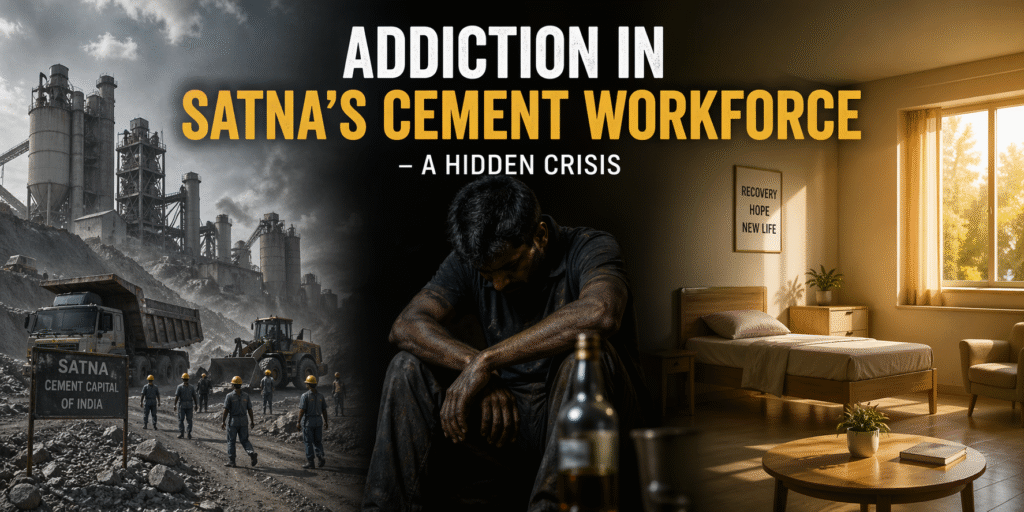
 Satna is India’s cement capital — home to ACC, Prism Cement, JP Cement, and Ultra Tech’s Vindhyan operations. The district produces more cement than any comparable area in India, with massive limestone quarries and processing plants employing tens of thousands of workers across the Satna-Maihar-Amarpatan belt. This industrial workforce — physically demanding work, shift-based, dusty, and dangerous — carries one of the highest alcohol dependency rates of any industrial sector in central India.
When Satna families search for addiction help, they find Samarpan’s Jhansi template and Laksh’s UP listing — neither has a physical Satna presence. Sanchit Nasha Mukti Kendra in Gwalior — 5.5 hours by road, MP govt-registered — is the only genuine comprehensive residential option for Satna and the wider Vindhya belt.
Why Addiction is Rising in Satna’s Cement Industry
Addiction is rising in Satna’s cement industry due to the harsh and demanding nature of the work. Long shifts, extreme heat, and physically exhausting conditions push workers toward alcohol as a way to relax and cope with stress. Over time, this habit becomes normalised within the workforce, turning occasional drinking into long-term dependency. Lack of awareness and limited access to proper treatment further worsen the situation.
Key Reasons:
- Physically demanding work and extreme heat conditions
- Long, irregular shift timings causing mental fatigue
- Social drinking culture among workers
- Easy availability of alcohol near industrial areas
- Lack of awareness about addiction as a medical condition
- Limited access to proper rehabilitation support
Complete Addiction Treatment Services at Sanchit Rehab
Sanchit Rehab offers a structured and medically guided treatment program designed to address addiction at every stage — from detox to long-term recovery. Each patient receives personalised care based on their condition, background, and severity of addiction, ensuring safe and effective healing.
Our Core Treatment Services:
- Medical Detoxification:
Safe withdrawal from alcohol, drugs, or prescription medications under 24/7 medical supervision to manage symptoms and prevent complications. - Individual Counselling (CBT-Based):
One-on-one sessions focused on identifying root causes, changing negative thought patterns, and building healthier coping mechanisms. - Group Therapy Sessions:
Daily peer discussions that encourage sharing experiences, building accountability, and reducing feelings of isolation. - Family Counselling & Support:
Guidance for families to understand addiction, improve communication, and support long-term recovery at home. - Holistic Healing Programs:
Yoga, meditation, and daily routine practices to improve mental clarity, emotional balance, and discipline. - Relapse Prevention & Aftercare:
Structured post-treatment plans, follow-up counselling, and strategies to handle real-world triggers and avoid relapse. - Personalised Treatment Plans:
Every recovery journey is customised based on the patient’s addiction history, mental health, and lifestyle factors.
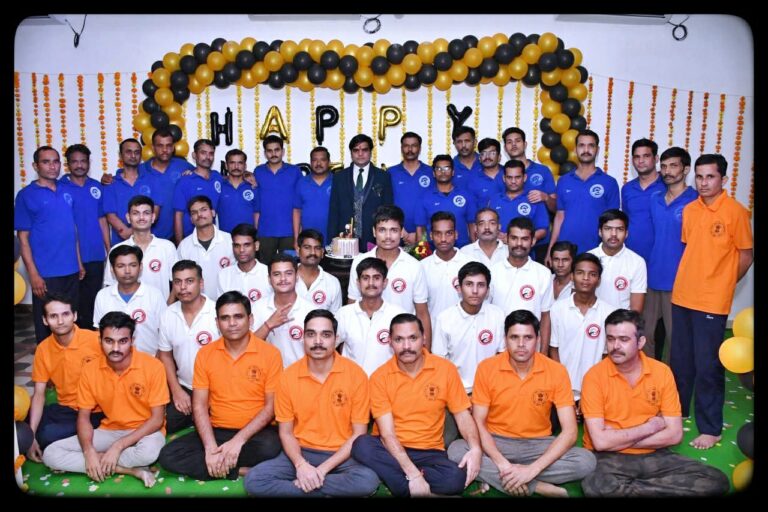
Our Team and Your Treatment
Sanchit’s senior psychiatrist and lead counsellor have treated patients from Satna, Maihar, Rewa, and across the cement belt for decades. The detox protocol is medically supervised — alcohol withdrawal, opioid detox, cannabis tapering — all managed by a resident doctor with 24/7 nursing support. Every patient’s treatment plan is built on Day 1 based on their specific case, not a template.
The counselling program for Satna’s cement workers addresses the specific occupational identity — men who pride themselves on physical strength and endurance, for whom admitting addiction feels like admitting weakness. The CBT framework helps patients separate occupational strength from the necessity of clinical recovery — a distinction that is critical for this demographic to maintain recovery long-term.
Services at Sanchit Nasha Mukti Kendra
Medical Detox — alcohol, opioid, and prescription drug withdrawal under 24/7 clinical supervision. For Satna’s heavy drinkers — industrial workers with 15–25 years of daily drinking — the detox protocol includes seizure prevention, cardiac monitoring, and careful medication management.
Individual CBT Counselling — sessions calibrated to the cement belt context: occupational identity, industrial peer culture, the specific economic context of shift work and piece wages, and the agricultural distress patterns of Satna’s farming communities.
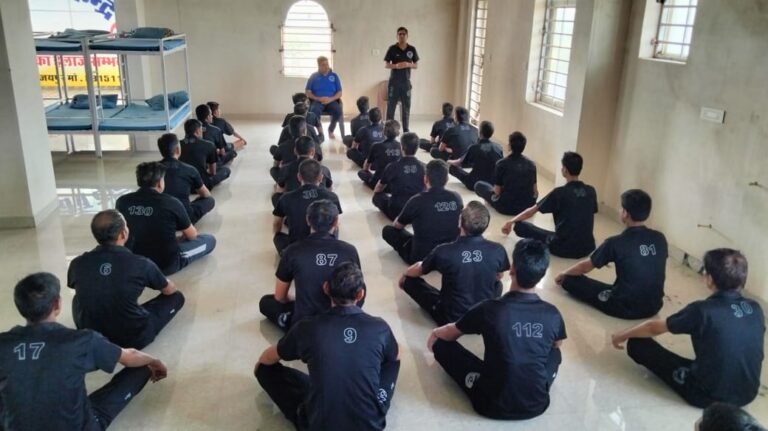
Group Therapy — daily peer sessions. For Satna’s working-class patients, the group context provides the first experience of honest conversation about addiction outside the family — and hearing others describe identical experiences is one of the most powerful therapeutic moments in the program.
Family Counselling — video call between visits or in-person on visiting days. Satna families receive specific guidance on the occupational triggers that most threaten recovery and the family’s role in supporting the patient’s return to the cement belt environment.
Aftercare — written Satna-specific plan covering the cement industry’s occupational stress calendar, post-shift drinking culture management, and follow-up counselling schedule built before every discharge.
Satna’s Industrial Addiction Profile
Cement manufacturing is physically punishing and mentally monotonous. The quarry workers, kiln operators, and transport workers who form Satna’s industrial base work in high-temperature, high-dust environments for shifts that exhaust the body. The post-shift alcohol normalisation in this workforce is structural — drinking is how stress is released, how community is built, and how the week ends in cement belt culture. This pattern, sustained over 10–20 years, produces severe physical alcohol dependency.
Satna’s agricultural population in Nagod, Ramnagar, and Maihar blocks shows the same Vindhyan distress-driven alcohol dependency as Rewa and the wider Vindhya plateau belt. The pilgrim economy at Chitrakoot — Satna’s major religious site — adds a seasonal transient workforce population with its own risk profile. All three populations are treated at Sanchit with personalised, contextually informed programs.
Addictions Treated — Satna and Cement Belt
| Addiction | Satna Context | Treatment at Sanchit |
| Alcohol Dependency | Most common — cement + quarry workforce | Medical detox + CBT + industrial context aftercare |
| Cannabis / Ganja | Widespread — youth and workers | CBT + motivational therapy + group sessions |
| Opioids / Smack | Present — Vindhyan corridor | Medical detox + long-term residential |
| Drug Addiction | Rising in Satna urban youth | Residential detox + behavioural therapy |
What Sanchit Offers Satna Families
- ✅ MP Govt-Registered and State-Certified
- ✅ 6,000+ Recoveries Including Cement Belt Patients
- ✅ Full-Time Psychiatrist — 24/7 Medical Supervision
- ✅ Cement / Industrial Workforce Counselling Experience
- ✅ 5.5 Hours from Satna — Pickup Arranged
- ✅ Affordable Sharing Ward for Working-Class Families
- ✅ Satna-Specific Written Aftercare Plan
Contact Sanchit Nasha Mukti Kendra — Satna Helpline
| Satna Helpline — 24 Hours, 7 Days | |
| 📞 Primary | +91-7828991573 |
| 📞 Alternate | +91-8302102094 | +91-9755870972 |
| 📍 Centre | Sanchit Nasha Mukti Kendra, Gwalior, MP — 290km / 5.5 hrs from Satna |
| ⏰ Hours | 24 hours a day, 7 days a week |
📞 Call Now — Free Confidential Consultation
Frequently Asked Questions
Q1. Is there a Nasha Mukti Kendra for Satna families?
Sanchit in Gwalior — 5.5 hours from Satna — is the nearest MP govt-registered comprehensive option. Call +91-7828991573.
Q2. Why is alcohol dependency so common in Satna’s cement workforce?
Shift-based physical labour, high-heat dangerous environments, and industrial peer drinking culture create the same documented alcohol dependency seen in India’s coal and steel belt workforces. Long-duration heavy drinking produces severe physical dependency.
Q3. How long does alcohol treatment take for an industrial worker?
60–90 days for serious long-standing dependency. Duration is set by the psychiatrist after Day 1 assessment — based on severity, not a preset calendar.
Q4. Can a Satna family afford treatment at Sanchit?
Yes. Sharing ward options are available. Medical quality is identical across all accommodation categories. Call for honest pricing information.
Q5. How does a Satna patient reach Gwalior?
Train via Satna–Gwalior route (approximately 5.5 hours) or road. Sanchit arranges pickup. Call +91-7828991573 to plan.
Q6. What aftercare covers post-shift drinking culture?
A written Satna-specific aftercare plan covering the cement industry’s post-shift alcohol pressure, specific workplace social contexts, and follow-up counselling schedule is built before every discharge.