

Watching a family member lose themselves to addiction — alcohol, drugs, or any substance — is one of the most painful experiences a family can carry. You have tried reasoning with them, bargaining with them, and hoping things will change. They haven’t. The truth is that addiction is a medical condition, and it requires a medical solution. That is exactly what Sanchit Nasha Mukti Kendra provides for Khandwa families.
Sanchit Nasha Mukti Kendra is based in Gwalior, Madhya Pradesh — government-registered, state-certified, and operational for over two decades. The centre has treated 6,000+ patients from across Central India, including many from Khandwa, Burhanpur, Harda, and the wider Nimad region. The clinical team — led by a senior MBBS psychiatrist with post-graduate addiction medicine training, supported by a lead counsellor with decades of field experience — delivers personalised, evidence-based residential treatment under 24/7 medical supervision.
Understanding Addiction in Khandwa’s Context
Khandwa sits in MP’s Nimad region — a fertile agricultural belt on the Narmada. Cotton, soybean, and wheat farming form the economic backbone. The agricultural workforce, the textile and ginning industry workers of the Khandwa-Burhanpur corridor, and the tribal communities (Barela, Bhilala) of the surrounding hills all carry specific addiction burdens. Alcohol dependency in the farming population is significant — driven by occupational stress, seasonal debt cycles, and the cultural normalisation of drinking as post-harvest release.
Khandwa’s tribal belt faces a compounding challenge: mahua-based alcohol consumption with deep cultural roots, combined with limited healthcare access. The result is long-standing physical alcohol dependency that goes untreated for decades. No genuine residential rehabilitation centre exists in Khandwa. Samarpan’s listing carries a Jhansi phone number with no physical Khandwa presence. Sanchit in Gwalior — accessible in 6 hours — is the real and only comprehensive option for Nimad families.
Our Expertise and Treatment Philosophy
Sanchit Nasha Mukti Kendra operates on a single foundational principle: addiction is a brain disease, not a character flaw. This understanding changes everything about how the centre approaches treatment. The patient is not judged. They are assessed medically, treated clinically, and supported psychologically until the neurological damage of dependency is sufficiently reversed for them to rebuild their life.
The senior psychiatrist conducts a full assessment on Day 1 — substance type, duration, physical health, mental health co-conditions, and the social context the patient will return to. A written personalised treatment plan is built before detox begins. Nothing at Sanchit is a template. Khandwa’s farming community patient and a corporate professional from Indore receive the same quality of clinical care, calibrated to completely different life contexts.
Services at Sanchit Nasha Mukti Kendra
Medical Detoxification
Detox is the first and most medically critical phase. For alcohol dependency — the most common case from Khandwa’s farming population — withdrawal carries real medical risks including seizures and cardiac events. Sanchit’s resident psychiatrist manages detox with approved medication protocols, 24/7 nursing supervision, and daily doctor review. Patients are not left to endure withdrawal alone.
Drug and Alcohol De-Addiction Program
After detox stabilises, the residential rehabilitation program begins. This is a structured 30–90 day program covering individual CBT counselling, group therapy, behavioural rehabilitation, motivational enhancement, and daily structured activities. The program is calibrated to the specific substance and the patient’s life context — Khandwa’s agricultural environment, Nimad’s cultural patterns, and the family structure the patient is returning to.
Individual Counselling (CBT)
One-on-one sessions with a qualified counsellor using Cognitive Behavioural Therapy — the most evidence-supported approach for addiction. CBT identifies and restructures the thought patterns, emotional triggers, and automatic behaviours that sustain dependency. For Khandwa patients, this includes addressing agricultural debt stress, seasonal employment anxiety, and the cultural frameworks around drinking in Nimad’s farming communities.
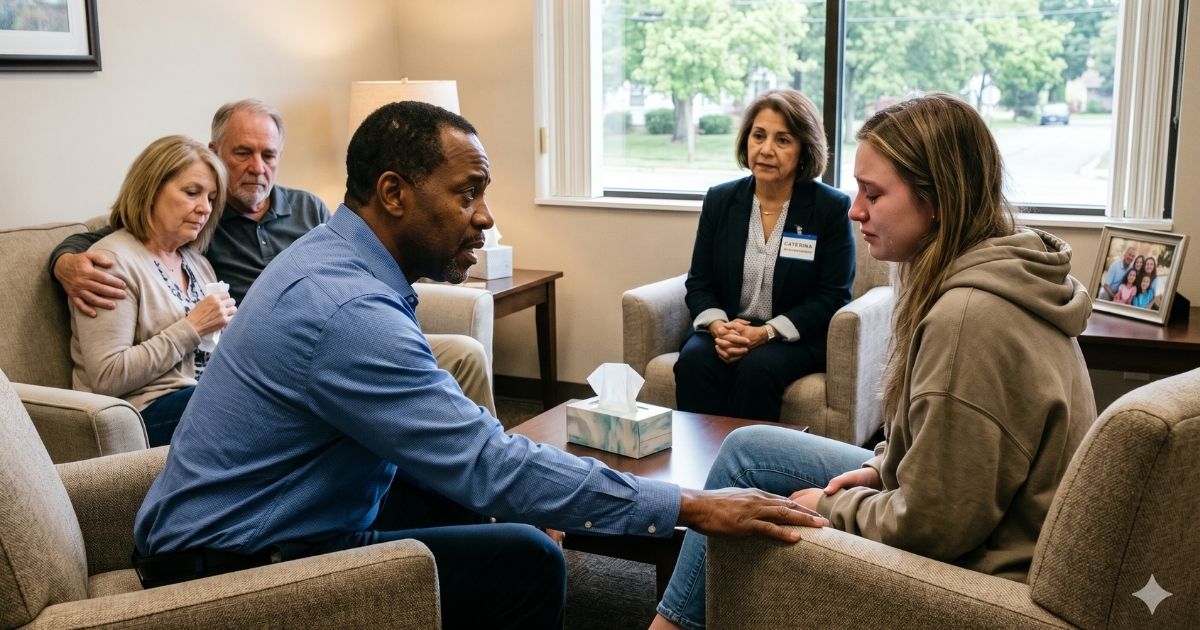
Family Counselling
Addiction affects the entire family — not just the person using. Sanchit’s family counselling sessions help families understand the medical reality of addiction, identify enabling patterns they may unknowingly sustain, and prepare practically for the patient’s return to the Khandwa environment. Sessions are conducted via video call or in person on visiting days.
Group Therapy
Daily structured group sessions with other residential patients. Group therapy’s therapeutic power is peer identification — hearing others describe identical experiences breaks the isolation and shame that addiction creates. For Nimad’s farming community patients, who have typically never spoken about their addiction outside the family, group therapy is often the first honest conversation they have had.
Relapse Prevention and Aftercare
Every patient discharged from Sanchit receives a written aftercare plan before leaving — not after. The plan covers the specific relapse triggers of Khandwa’s environment, a follow-up counselling schedule, family roles in supporting recovery, and early warning signs that indicate professional help is needed again. Aftercare is as important as detox. Without it, the program is incomplete.
The Treatment Process — Step by Step
Step 1 — First Call and Assessment
Call +91-7828991573 any time. A trained counsellor answers, listens to the specific situation, asks clinical questions, and gives an honest assessment. The first call commits the family to nothing — it begins the process of getting clarity on what the case requires.
Step 2 — Admission and Medical Assessment
On arrival at Sanchit, the senior psychiatrist conducts a comprehensive assessment: substance type, duration, physical health, co-occurring mental health conditions, and social history. A written personalised treatment plan is prepared before detox begins.
Step 3 — Medical Detox
Clinically supervised withdrawal management using approved protocols. Duration: 7–14 days depending on substance and severity. The patient is monitored by nursing staff around the clock with daily doctor review throughout this phase.
Step 4 — Residential Rehabilitation
30–90 days of structured residential programming: individual CBT counselling, group therapy, family sessions, yoga, physical activity, motivational sessions, spiritual practice, and structured daily routine. Each component is clinically necessary — not optional supplementary activity.
Step 5 — Discharge with Written Aftercare Plan
The patient is discharged only when clinically appropriate — not on a predetermined calendar date. A written Khandwa-specific aftercare plan is provided before discharge. Follow-up counselling access is available post-discharge.
Why Choose Sanchit Nasha Mukti Kendra for Khandwa
No competitor targeting Khandwa families holds an MP government registration or operates a genuine local residential program. Samarpan’s Khandwa page carries a Jhansi phone number (9131190455) — a centre physically located in Jhansi with no Khandwa presence. Sanchit is real, registered, and reachable. The 6-hour journey from Khandwa to Gwalior is a single-day trip, not an obstacle.
Beyond credibility, Sanchit’s clinical track record — 6,000+ documented recoveries over two decades — provides the evidence that matters. The centre’s same-state registration (MP government) means the centre operates under the same legal jurisdiction as Khandwa families, with the same oversight and accountability. Sanchit is among India’s most trusted rehabilitation centres.
Facilities at Sanchit Nasha Mukti Kendra
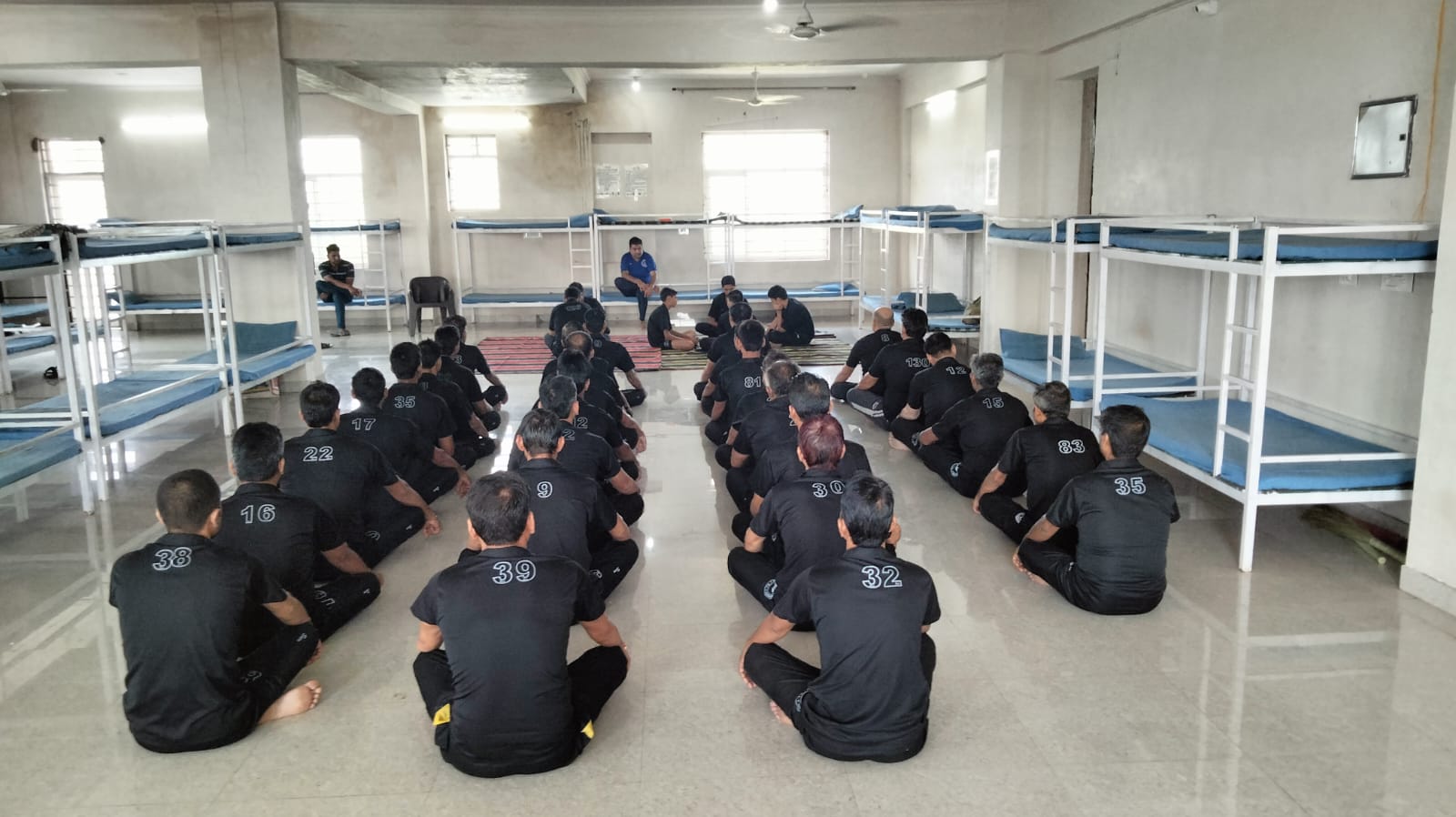
The centre provides a safe, structured, and comfortable residential environment designed specifically for recovery. Accommodation options include VIP AC rooms, Private AC wards, and affordable sharing wards — ensuring families of all economic backgrounds can access quality treatment. The campus includes dedicated therapy rooms, a gymnasium, outdoor spaces for physical activity, and a daily program schedule that runs from 5:30 AM to 10 PM.
Medical infrastructure includes a fully equipped treatment room for detox management, a dispensary, a nursing station operational 24/7, and doctor availability around the clock. The environment is substance-free, structured, and supervised — the foundation conditions that recovery requires.
Signs That a Family Member Needs a De-Addiction Centre
Families often spend years managing addiction at home before seeking professional help. These are the signs that residential treatment is needed — not optional:
- The person has tried to stop multiple times and cannot sustain it
- Physical withdrawal symptoms appear when they try to stop — tremors, sweating, nausea, anxiety
- Drinking or drug use has increased significantly over the past 6–12 months
- They are missing work, neglecting family, or facing health problems due to substance use
- Home-based interventions — bargaining, removing substances, threats — have all failed
- A doctor has advised them to stop and they have been unable to do so
If three or more of these apply, the threshold for professional residential treatment has been crossed. Learn more about the signs of addiction that require professional help.
Contact Sanchit Nasha Mukti Kendra — Khandwa Helpline
| Khandwa Helpline — 24 Hours, 7 Days a Week | |
| 📞 Primary Helpline | +91-7828991573 |
| 📞 Alternate Numbers | +91-8302102094 | +91-9755870972 |
| sanchitrehab@gmail.com | |
| 🌐 Website | sanchitrehab.com |
| 📍 Centre Location | Sanchit Nasha Mukti Kendra, Gwalior, Madhya Pradesh — 350km / ~6 hours from Khandwa |
| ⏰ Available | 24 hours a day, 7 days a week — including weekends and holidays |
📞 Call Now — Free Confidential Consultation
Frequently Asked Questions — Sanchit Nasha Mukti Kendra in Khandwa
Q1. Is Sanchit Nasha Mukti Kendra accessible from Khandwa?
Yes. Sanchit is 350km from Khandwa — 6 hours by road or the Khandwa–Gwalior train route. Pickup from Khandwa is arranged directly. Call +91-7828991573.
Q2. Is there a genuine local rehabilitation centre in Khandwa?
No credible local residential centre exists in Khandwa. The only pages appearing in search results carry Jhansi-based phone numbers with no physical Khandwa presence. Sanchit in Gwalior is the nearest real option.
Q3. How long does alcohol treatment take for Khandwa patients?
30–90 days depending on severity. Long-standing physical dependency typically requires 60–90 days. Duration is set by the psychiatrist after the Day 1 medical assessment — not on a predetermined calendar.
Q4. Is treatment affordable for Nimad’s farming families?
Yes. Sanchit’s sharing ward options keep costs within reach of agricultural and working-class families without reducing medical care quality. Call for transparent pricing — no pressure, no hidden costs.
Q5. Can Khandwa families visit during treatment?
Yes. Family counselling is scheduled throughout the stay. Visiting days allow in-person participation. Between visits, sessions are conducted via video call.
Q6. What aftercare is provided after discharge?
A written Khandwa-specific aftercare plan — relapse triggers, follow-up schedule, family roles — is built before every discharge. Aftercare access continues post-discharge.