
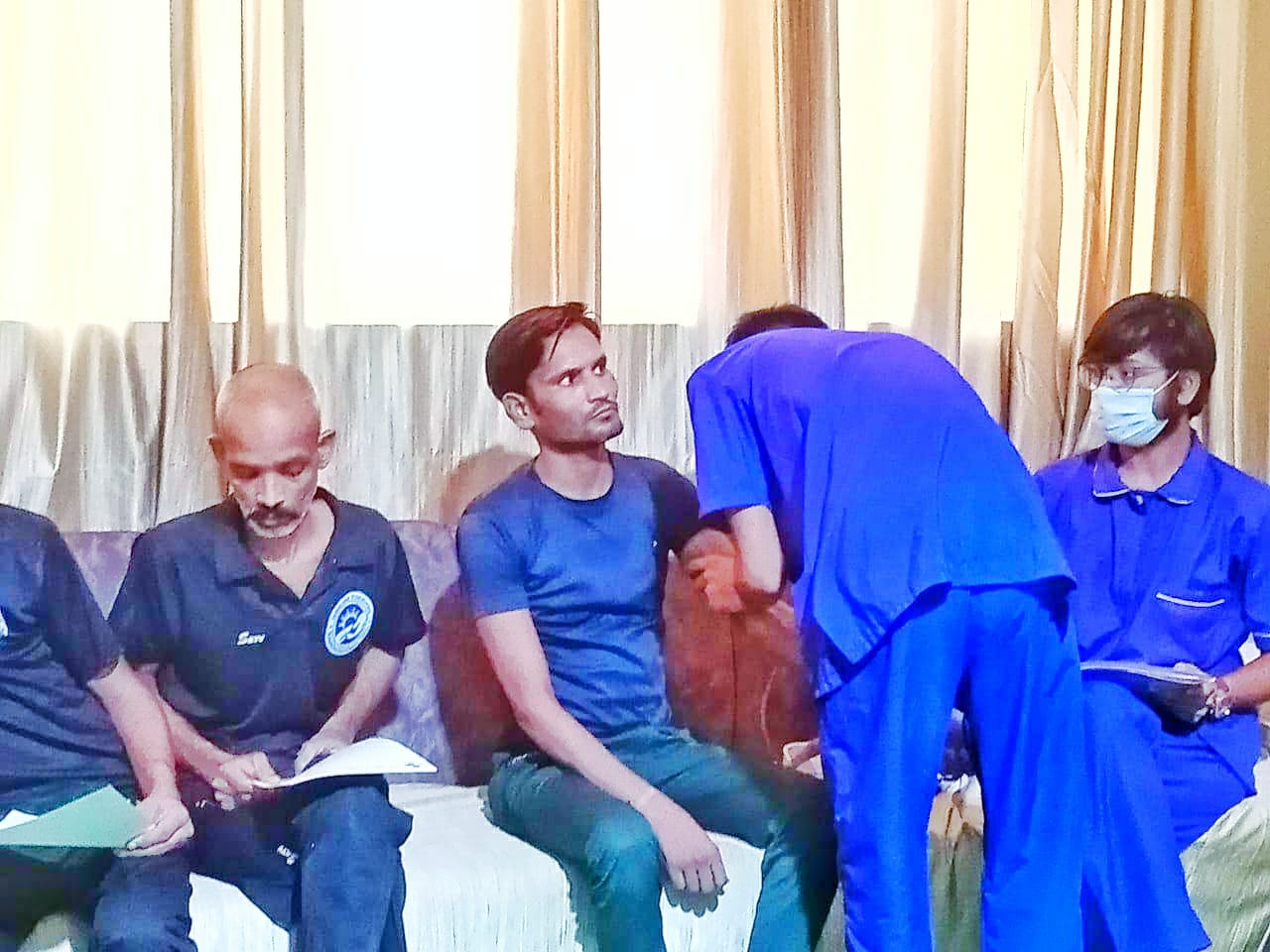
Churu’s families are known for their warmth and resilience. But addiction tests even the strongest of us. If someone you love is struggling, real help — and real hope — is here. Sanchit Rehab is a government-registered de-addiction and rehabilitation centre that serves families from Churu and across the Shekhawati region of Rajasthan. We provide medically supervised detox, individual and family counselling, and a structured long-term recovery programme for alcohol, drugs, and all forms of substance addiction. Our helpline is open 24 hours a day, every day.
Sanchit Nasha Mukti Kendra in Churu
Types of Addiction We Treat at Sanchit Rehab
- Alcohol addiction — chronic dependency on sharaab, a leading cause of family breakdown in Rajasthan
- Heroin and opioid addiction — increasingly common in Rajasthan’s northern and eastern districts
- Cannabis and ganja use disorder — often dismissed as harmless but requiring professional treatment
- Prescription medicine dependency — sleeping pills, painkillers, and sedatives misused over time
- Tobacco and nicotine addiction — including beedi, cigarette, and smokeless tobacco (gutka/khaini)
- Synthetic drug and chemical substance use — affecting younger populations in urban-adjacent towns
- Multiple substance use and dual diagnosis — addiction alongside depression, anxiety, or other mental health conditions
Warning Signs Every Family Should Know
1. Physical Warning Signs
Sudden or significant weight loss, bloodshot or glazed eyes, trembling hands especially in the morning, persistent fatigue regardless of how much sleep is taken, poor personal hygiene that was not a concern before, recurring unexplained health complaints, and a general deterioration in physical appearance. In cases of serious opioid use, the physical decline can be dramatic and rapid.
2. Behavioural Warning Signs
Becoming secretive about daily movements and phone activity. Repeatedly borrowing or stealing money without clear explanation. Abandoning work, college, or household responsibilities. Becoming defensive or aggressive when asked simple questions. Cycles of promising to stop followed by breaking those promises. Making excuses that become increasingly implausible over time.
3. Emotional Warning Signs
Extreme and unpredictable mood swings — from seemingly normal to deeply irritable or depressed. Growing hopelessness about the future. Increased anxiety or paranoia. In more severe cases: expressions of worthlessness, feeling like a burden to the family, or statements about not wanting to be alive. These emotional signs require immediate professional attention.
4. Social Warning Signs
Withdrawing from family meals, conversations, and functions. Losing long-standing friendships and replacing them with people whose behaviour is concerning. Skipping community and religious events that were previously important. Disappearing for long periods without clear account of where they have been. Becoming an almost different person socially compared to who they were just one or two years ago.
Our Complete De-Addiction Treatment Process
1. Confidential Assessment
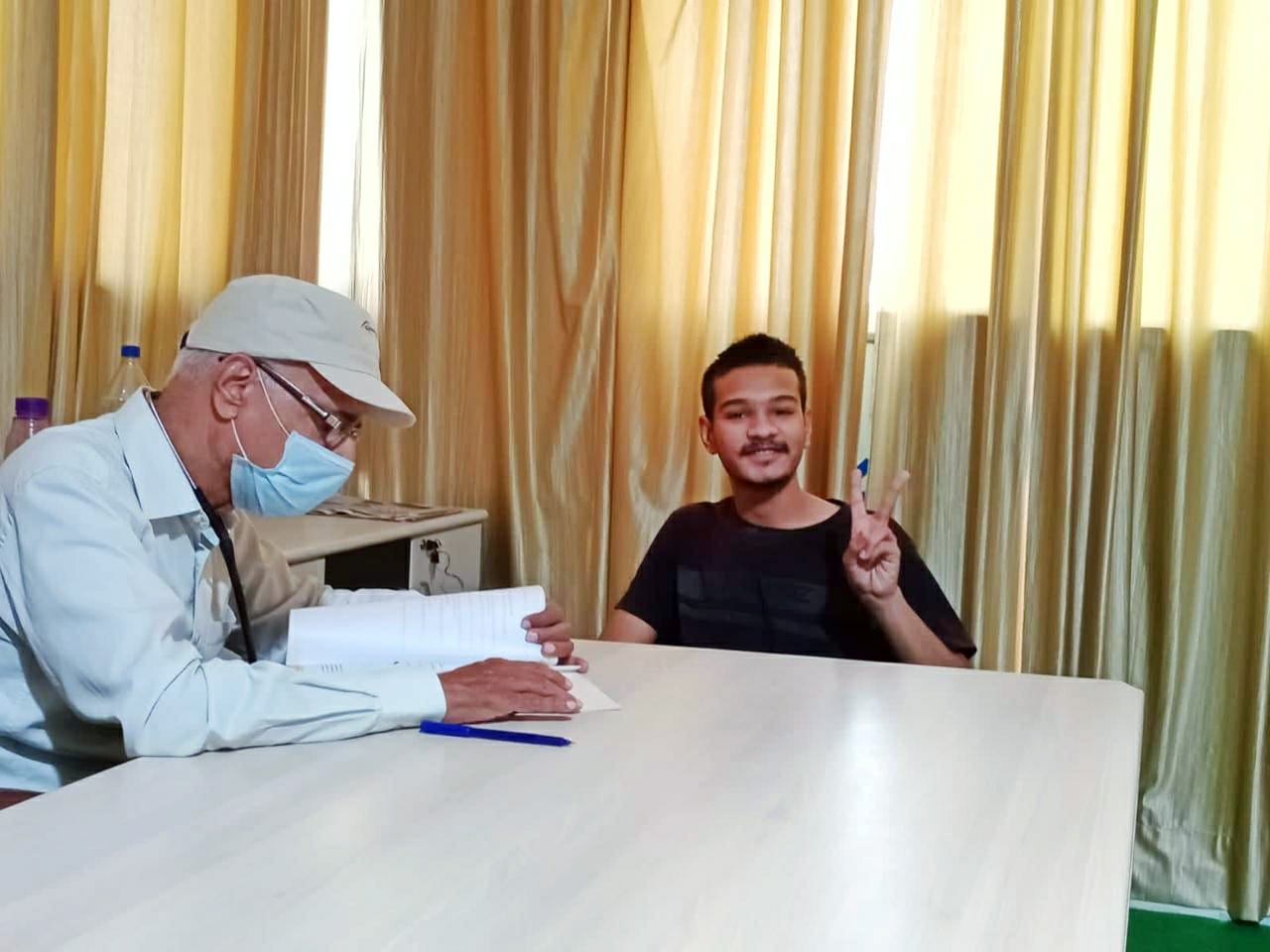
Recovery begins with understanding. When a patient arrives at Sanchit Rehab, our medical team and counsellors conduct a thorough, completely private assessment. We take time to understand the full picture — the substance used, the timeline of use, the patient’s physical health, mental health background, and the family environment. This is not a form to be filled. It is a genuine conversation that shapes every decision we make about treatment. Nothing we learn leaves this conversation without your consent.
2. Safe Medical Detox
Physical dependency must be addressed before psychological healing can begin. For many patients — particularly those with alcohol or opioid dependency — withdrawal can be physically serious and in some cases dangerous without medical supervision. At Sanchit Rehab, detoxification is managed 24/7 by qualified doctors using medically approved protocols. Patients are kept comfortable, safe, and continuously monitored throughout. This phase typically lasts 7 to 14 days and sets the foundation for everything that follows.
3. Therapy & Counselling
Once the body is medically stable, the real work of healing begins. Individual counselling sessions allow patients to explore — safely and honestly — the emotional and psychological roots of their addiction. What pain were they escaping? What fears were they burying? What patterns in their life kept pulling them back? Using Cognitive Behavioural Therapy, motivational interviewing, and trauma-informed approaches, our counsellors help patients understand themselves and begin building genuinely healthier ways of facing life. Group therapy adds the powerful element of shared experience — the recognition that they are not alone, and that others have walked this road and come out the other side.
4. Rehabilitation Program
The rehabilitation phase rebuilds the life that addiction dismantled. Through structured daily routines, physical fitness, yoga, meditation, creative activities, and practical life skills training, patients rediscover parts of themselves that substance use had buried. Many patients describe this phase as feeling genuinely alive for the first time in years — experiencing clarity, motivation, and connection without the distortion of substances. Vocational guidance supports patients in planning a realistic path forward after discharge.
5. Family Counselling
Addiction has never only affected one person in a family. By the time a patient arrives at our centre, their family has typically been carrying significant emotional weight for months or years — mistrust, resentment, grief, exhaustion. Our family counselling sessions create a structured, safe space for all of this to be acknowledged and worked through. Families learn to understand addiction as a disease, rebuild communication, set healthy boundaries, and prepare their home environment to genuinely support the recovery rather than accidentally undermine it.
6. Relapse Prevention Program
Leaving the protected environment of a rehabilitation centre and returning to the real world — with all its triggers, pressures, and old associations — is one of the most critical moments in recovery. Our relapse prevention programme is thorough and practical. Patients identify their personal high-risk situations. They develop specific, rehearsed strategies for each one.
7. Long-Term Aftercare Support
Our relationship with patients does not end at discharge. The aftercare programme includes scheduled individual counselling sessions, regular family check-ins, access to peer support groups, and a helpline that is available around the clock. We measure real success at the six-month, one-year, and two-year marks — not just on the day a patient walks out of our centre. Long-term recovery is what we are working toward, and we stay invested in it.
Why Families Trust Sanchit Rehab
- Government registered rehabilitation centre — fully compliant with regulatory standards
- Qualified doctors, psychiatrists, and licensed addiction counsellors
- Personalised treatment plans — no two patients ever treated identically
- Safe, clean, and structured residential environment
- 24/7 medical supervision and patient care
- Holistic recovery — addressing body, mind, and family relationships
- Complete confidentiality for patient and family — always
- Family-inclusive approach throughout the treatment process
- Strong long-term recovery outcomes backed by years of service to Rajasthan families
- Aftercare support that continues long after discharge
Benefits of Professional Addiction Treatment
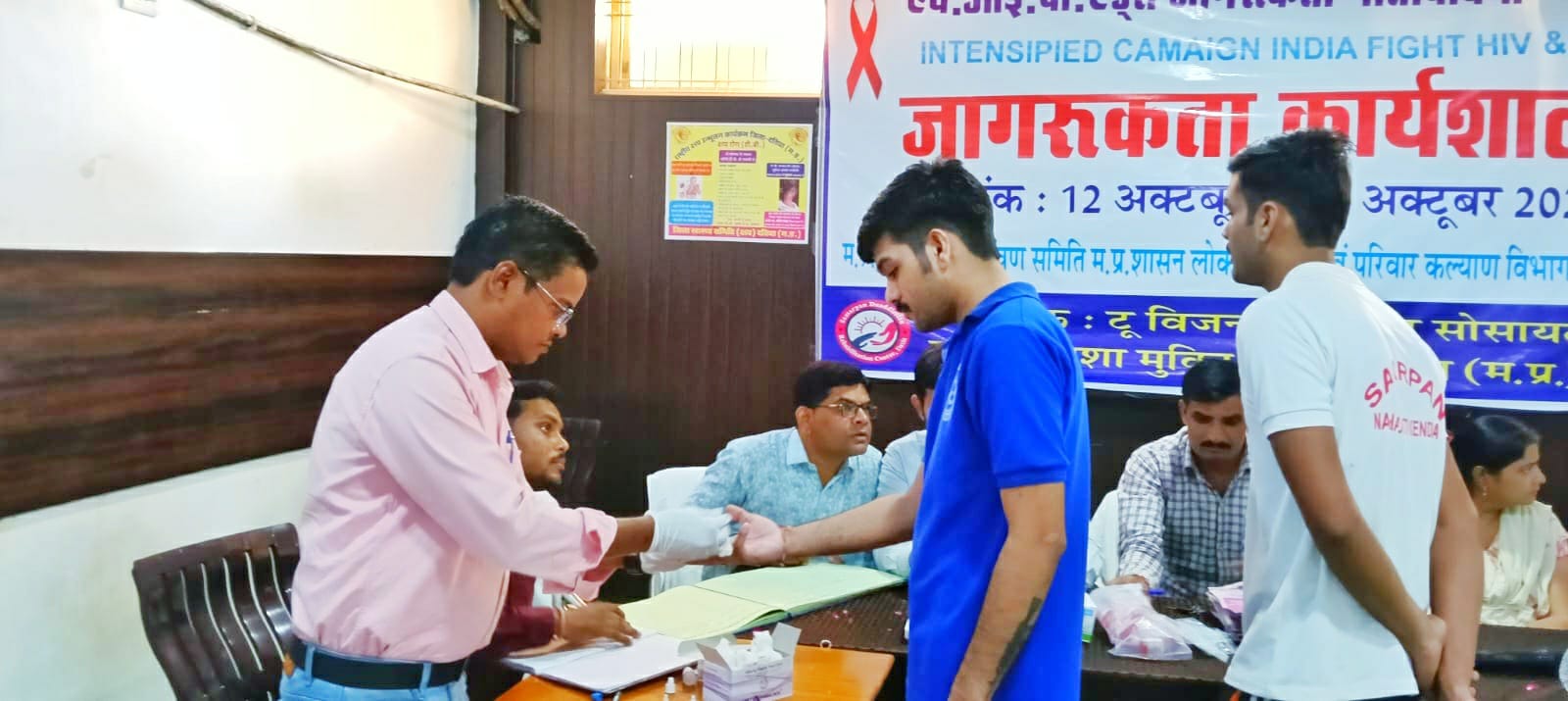
The transformation that professional addiction treatment produces is not marginal — it is profound and far-reaching, touching every dimension of the patient’s life and every person who loves them.
Physically, the body recovers. Liver health improves. Sleep normalises. Appetite and weight return. Energy levels rise. Patients often describe the first weeks of sustained sobriety as experiencing their body for the first time — truly feeling well, truly rested, truly present.
Mentally, the fog lifts. The ability to think clearly, make decisions, and plan for the future returns. Anxiety reduces dramatically once the substances that were both causing and masking it are removed from the equation.
Emotionally, patients begin to feel the full range of human experience again — joy, connection, pride, love — without the numbing distortion of addiction. This emotional reawakening is one of the most powerful parts of recovery.
For families, the changes are equally profound. Trust, once broken so many times, begins to rebuild. Communication opens. The home becomes peaceful again. Marriages recover. Children who grew up in the shadow of addiction begin to exhale.
Professionally and socially, recovered individuals return to work, rebuild careers, and re-engage with the community they had withdrawn from. The ripple effects of one person’s recovery spread through an entire family and community.
How Sanchit Rehab Helps Patients and Families from Churu
We understand that for families in Churu, the decision to seek treatment at a rehabilitation centre is not a simple one. There are practical concerns — how do we get there, what do we tell people, how will we manage during the absence, what will it cost.
Our admission team addresses every one of these concerns before asking you to make any decision. We provide complete information transparently, help coordinate transport from Churu and surrounding Shekhawati area towns, and guide families through a smooth, dignified admission process.
During treatment, families receive regular updates. We keep communication open without compromising the patient’s therapeutic process. We prepare families for the transition home with the same care we give to the patient’s discharge planning.
Families from across Churu district — from Taranagar, Sardarshahar, Ratangarh, and surrounding areas — have already trusted Sanchit Rehab with their most difficult moments. Their recoveries are the reason we do this work.
Admission is completely confidential. Your community does not need to know. Your employer does not need to know. What happens in your family’s journey with us stays within your family’s journey.
Our Commitment to Safe, Ethical, and Transparent Recovery
Sanchit Rehab operates with full professional accountability. We are a government-registered facility, and our treatment processes comply with all applicable standards for de-addiction and rehabilitation centres in India.
Our clinical team holds recognised qualifications in addiction medicine, psychiatry, and counselling psychology. Treatment decisions are evidence-based, updated with current best practices, and made transparently — with the family informed at every meaningful stage.
We do not use coercive, punitive, or fear-based approaches. Genuine, lasting recovery is built on trust, respect, and human dignity. Every patient who comes to us — regardless of how far they have fallen, how many times they have tried before, or what has brought them here — is received with compassion and the full commitment of our team.
Patient privacy is non-negotiable. We are bound by professional ethics to maintain complete confidentiality, and we take that obligation with the seriousness it deserves. Your trust is the most important thing you bring through our doors, and we protect it absolutely.
Related Recovery Services
- Alcohol Addiction Treatment
- Drug Addiction Treatment
- Detox Treatment Program
- Rehab Centre in Madhya Pradesh
- Relapse Prevention Program
Why Addiction Is Becoming a Growing Problem in Churu
Churu sits at the heart of the Shekhawati region — historically known as the land of merchants and havelis, but today facing the very real challenges that come with shifting economies and changing social structures.
Young men in Churu face a difficult reality. Traditional trading and farming livelihoods have diminished. New employment is scarce. Many young people are educated but underemployed — trapped between the expectations placed on them and the limited opportunities available. That frustration, left unaddressed, becomes a doorway to substance use.
Migration is another factor. Churu sends a significant number of young workers to Delhi, Haryana, and Punjab. When they return — sometimes with money, sometimes without — they often bring with them habits acquired in environments where alcohol and drugs were more accessible and socially normalised.
The extreme heat of Churu’s summers is also a stress factor that communities rarely discuss openly. Prolonged heat, sleep disruption, and seasonal work uncertainty create conditions of chronic low-level stress that many manage through alcohol.
Meanwhile, in schools and colleges, awareness about addiction is still very limited. Students experiment without understanding the consequences, and families do not always recognise the early signs until the problem has already deepened significantly.
The Silent Suffering That Churu Families Carry Every Day
A father from Churu once sat across from our counsellor and said: “Mera beta pehle bohot mehnat karta tha. Padha-likha hai. Hum log garv karte the usse. Pata nahi kab sab badal gaya. Ab uthta bhi nahi toh woh pehle wala beta nazar aata hai — par thodi der mein phir woh gum ho jaata hai.”
That grief — of seeing flashes of the person you love through the fog of addiction — is something only families living it truly understand. It is not just the person who changes. The entire family does. Parents stop sleeping. Mothers stop eating properly. Siblings walk on eggshells. Children grow up in a home filled with unspoken tension.
Financial pressure adds to everything. Money that should have gone to household needs, children’s education, or future savings disappears. Sometimes silently. Sometimes the family only finds out when it is too late to recover what was lost.
And through it all, the family continues to show up — to the addicted person, and to the outside world — while collapsing internally. This kind of pain deserves to be met with real care. Not platitudes. Not judgement. Real, expert, compassionate care. That is what Sanchit Rehab is built on.
Frequently Asked Questions
1. Is there a trusted Nasha Mukti Kendra in Churu?
While a fully equipped residential de-addiction centre within Churu city itself may be limited, Sanchit Rehab is a government-registered rehabilitation centre actively serving families from Churu and across the Shekhawati region. We understand the local context of Churu’s communities and provide full transport coordination and confidential admission support for all families seeking help from this area.
2. How long does addiction treatment take?
Treatment duration is determined by the type and severity of the addiction, the patient’s physical and mental health, and how they respond to treatment. Most residential programmes run between 30 and 90 days. Complex cases or those involving dual diagnosis may require longer stays. After residential treatment, a structured aftercare programme continues for a minimum of 12 months to support sustained recovery.
3. What is the cost of rehabilitation treatment at Sanchit Rehab?
Treatment costs vary depending on the programme length and level of care required. We believe that every family deserves access to quality addiction treatment regardless of economic background. We are completely transparent about all costs — there are no hidden fees. Please call us directly for a detailed, honest discussion about what treatment would involve for your specific situation and what options are available.
4. Can family members stay involved during treatment?
Absolutely — family involvement is not just permitted, it is considered an essential part of our treatment model. We conduct dedicated family counselling sessions, provide regular progress updates to families, and guide family members in how to support recovery positively. We also help families address their own emotional needs, which are significant after years of living with an addicted family member.
5. Is medical detox safe for someone with long-term alcohol dependency?
Yes — but it must be done under medical supervision, which is exactly why it should not be attempted at home. Long-term alcohol dependency can produce serious withdrawal symptoms including seizures and delirium. At Sanchit Rehab, detox is managed 24/7 by qualified doctors using medically appropriate interventions that keep patients safe and as comfortable as possible throughout the process.
6. What happens after my family member completes rehab treatment?
Discharge is not the end of our relationship — it is the beginning of the next chapter of recovery. Every patient leaves with a detailed aftercare plan that includes scheduled counselling sessions, family guidance on supporting recovery at home, access to peer support groups, and a helpline that is available at any hour. We follow up consistently and remain available if challenges arise after the patient returns home.
7. Can addiction be fully and permanently overcome?
Yes. With professional treatment, genuine personal commitment, strong family support, and sustained aftercare engagement, full and lasting recovery from addiction is completely achievable. Millions of people worldwide, including many patients treated at Sanchit Rehab, live completely addiction-free lives. Addiction is a chronic condition that can go into full remission — and professional treatment is the most reliable path to get there.
8. Is treatment at Sanchit Rehab completely confidential?
Yes, completely. Patient confidentiality is one of our most fundamental commitments. No information about your family member’s treatment is shared with anyone — employers, relatives, neighbours, or community members — without your explicit written consent. We understand how important privacy is in close-knit communities like Churu’s, and we protect it absolutely and without exception.