
Meta Description
Learn the early signs of alcohol addiction that families often overlook. Discover behavioral, emotional, and physical warning signs and understand when it’s time to seek professional help.
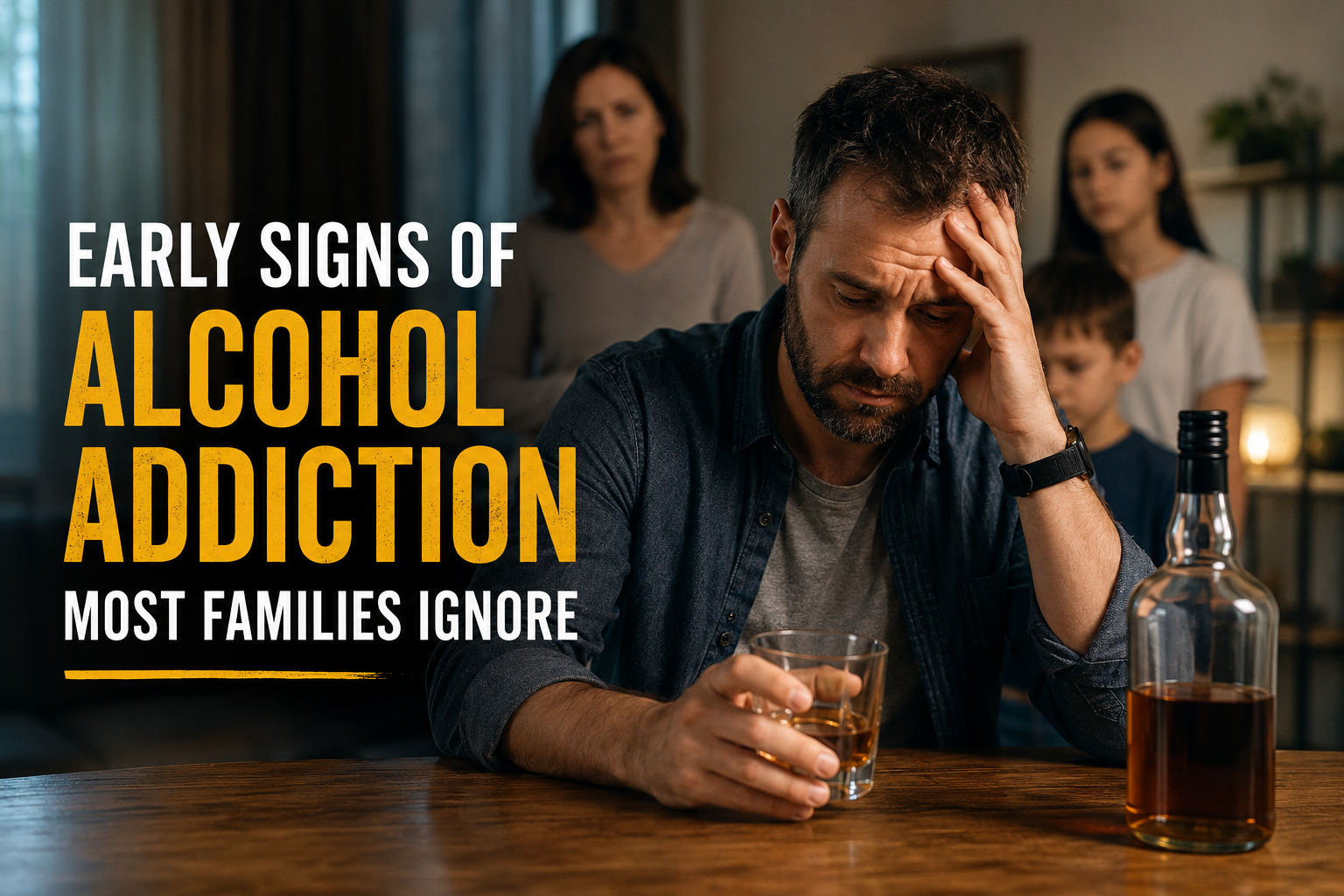
Early Signs of Alcohol Addiction Most Families Ignore
Alcohol addiction rarely develops overnight. In most cases, it starts with small behavioral changes that family members may dismiss as stress, work pressure, social drinking, or temporary mood swings. Unfortunately, ignoring these early warning signs can allow the problem to grow into a serious addiction.
Recognizing alcohol addiction in its early stages can make a significant difference in a person’s recovery journey. Families who identify the signs early are often able to encourage treatment before severe physical, emotional, and social consequences occur. Research shows that warning signs may include mood changes, relationship problems, neglect of responsibilities, increasing alcohol consumption, and unsuccessful attempts to reduce drinking.
If you or a loved one is showing these signs, seeking professional help early can make recovery easier. Learn more about addiction treatment services at Sanchit Rehab.
In this article, we will discuss the most common early signs of alcohol addiction that families often overlook.
Why Early Detection Matters
Many people assume that someone must drink heavily every day to have an alcohol problem. However, alcohol use disorder often begins with subtle changes in behavior and thinking patterns.
Early intervention can:
- Prevent severe health complications
- Reduce family conflicts
- Improve treatment success rates
- Protect careers and relationships
- Lower the risk of accidents and legal issues
The sooner addiction is identified, the easier it is to seek professional support and begin recovery.
1. Frequent Excuses for Drinking
One of the earliest warning signs is finding a reason to drink for every situation.
Common excuses include:
- “I had a stressful day.”
- “I deserve a drink after work.”
- “Everyone drinks at parties.”
- “I’m just relaxing.”
While occasional social drinking may not be problematic, repeatedly using alcohol as a coping mechanism can indicate a developing dependence.
2. Drinking More Than Intended
A person may initially plan to have one or two drinks but regularly ends up consuming much more.
Warning signs include:
- Losing track of the number of drinks consumed
- Drinking longer than planned
- Difficulty stopping once drinking begins
This loss of control is a major indicator of alcohol misuse.

3. Mood Swings and Irritability
Families often mistake emotional changes for stress or personality issues.
Early emotional signs may include:
- Increased irritability
- Sudden anger
- Defensiveness when alcohol is mentioned
- Anxiety or depression
- Emotional instability

Experts identify mood and personality changes as common early indicators of problematic drinking.
4. Becoming Secretive About Drinking
As alcohol use increases, some individuals begin hiding their drinking habits.
Examples include:
- Concealing bottles
- Drinking alone
- Lying about alcohol consumption
- Avoiding conversations about drinking
Secrecy often indicates that the person is aware their drinking may be excessive. Family members should pay attention to these behavioral changes.

5. Neglecting Responsibilities
Alcohol addiction can slowly interfere with daily obligations.
Look for signs such as:
- Missing work or school
- Poor performance at work
- Ignoring household responsibilities
- Frequently arriving late
When alcohol begins affecting responsibilities, it may indicate a developing alcohol use disorder.

6. Changes in Friendships and Social Circles
A person struggling with alcohol may gradually distance themselves from family members and supportive friends.
Possible signs include:
- Spending more time with heavy drinkers
- Avoiding family gatherings
- Losing interest in old friendships
- Isolating themselves
Changes in relationships are often among the earliest social indicators of alcohol-related problems.

7. Loss of Interest in Hobbies and Activities
People developing alcohol dependence often lose interest in activities they once enjoyed.
Examples include:
- Sports and fitness activities
- Family events
- Creative hobbies
- Outdoor activities
Alcohol gradually becomes the primary source of enjoyment, replacing healthy interests and routines.

What Families Should Do If They Notice These Signs
If you recognize several of these warning signs in a loved one:
Stay Calm
Avoid accusations or confrontations.
Start an Honest Conversation
Express concern with empathy and understanding.
Document Patterns
Notice recurring behaviors rather than isolated incidents.
Encourage Professional Help
A counselor, addiction specialist, or rehabilitation center can provide guidance.
Offer Support
Recovery is often more successful when family members remain involved and supportive.
Professional treatment can help individuals safely overcome alcohol addiction. At Sanchit Rehab, trained professionals provide structured recovery programs, counseling, and long-term support for addiction recovery.
Frequently Asked Questions (FAQs)
Can someone be addicted to alcohol without drinking every day?
Yes. Alcohol addiction is not defined solely by daily drinking. Loss of control, cravings, and continued drinking despite negative consequences can indicate alcohol use disorder.
What is the earliest sign of alcohol addiction?
One of the earliest signs is regularly drinking more than intended and finding excuses to drink in stressful or social situations.
How can families help someone with alcohol addiction?
Families can help by offering emotional support, encouraging professional treatment, and avoiding judgmental or confrontational approaches.
Is recovery from alcohol addiction possible?
Yes. With proper treatment, counseling, support groups, and family involvement, many people successfully recover from alcohol addiction.
Conclusion
Alcohol addiction often begins with subtle warning signs that families may dismiss as normal life stress or occasional drinking habits. Mood swings, secrecy, increased tolerance, neglect of responsibilities, and emotional dependence on alcohol are all early indicators that should never be ignored.
Recognizing these signs early can help families intervene before the addiction becomes severe. If you notice multiple warning signs in a loved one, seeking professional guidance as soon as possible can make a life-changing difference.
Recovery is possible, and early action is often the first step toward a healthier future.