
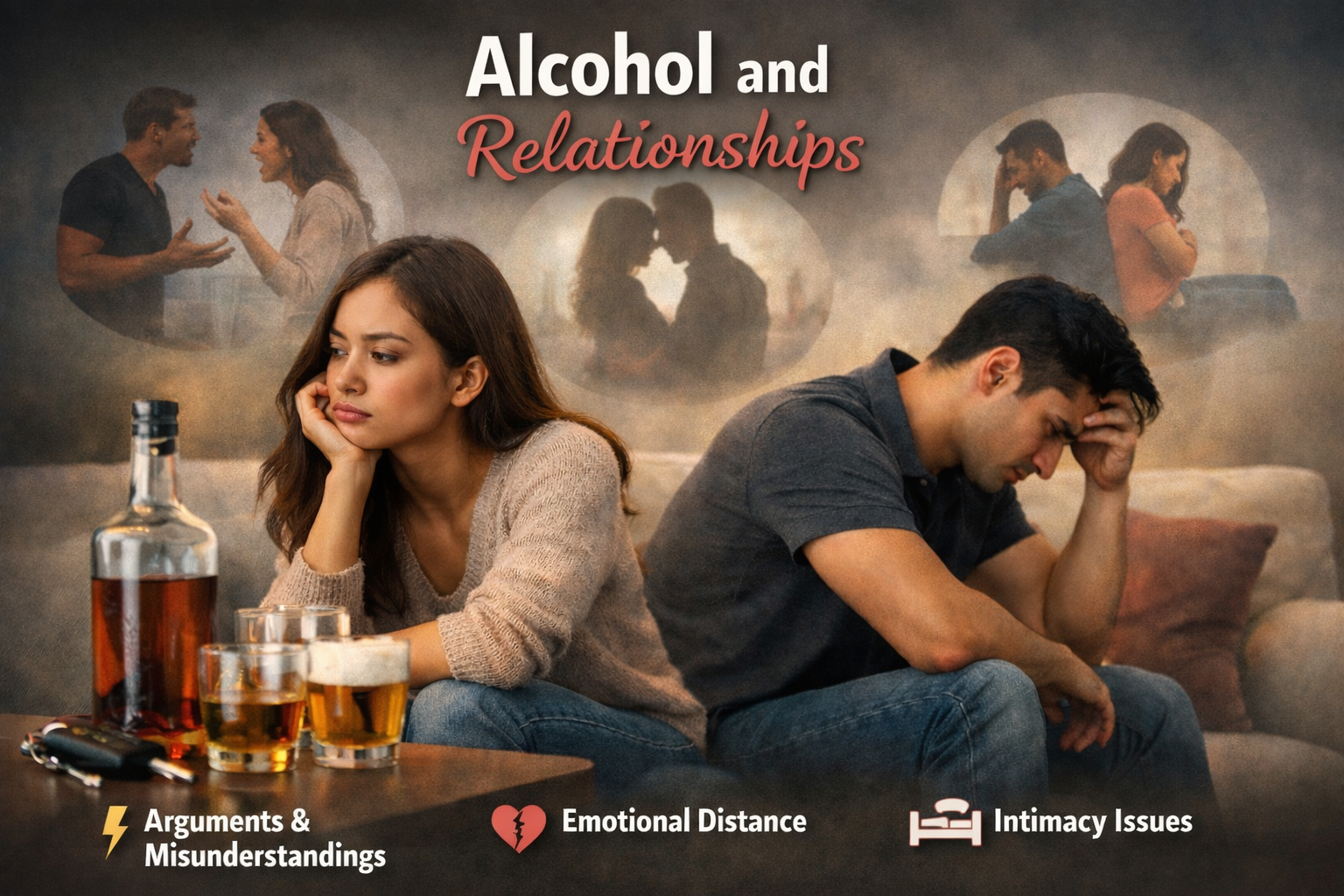
Understanding the Link Between Alcohol and Relationships
Alcohol consumption is common among school-going and college-going students, often starting as casual social drinking. While moderate drinking may seem harmless, repeated use can significantly impact personal connections. Alcohol and relationships are closely intertwined because drinking influences communication, emotional bonds, and social behaviour. Understanding how drinking affects social connections helps students recognize the risks and develop healthier habits.
In this article, we explore the effects of alcohol on friendships, family, and romantic relationships, and provide practical strategies to maintain alcohol and social relationships while supporting emotional health.
Alcohol and Relationships – How Drinking Affects Social Connections
The Impact of Alcohol on Social Behaviour
Alcohol and Emotional Connections
Alcohol and emotional connections are fragile because drinking can mask true feelings or exaggerate emotions.
- Over-reliance on alcohol may lead to emotional dependency
- Relationships may become strained due to inconsistent moods
- Alcohol can create emotional distance from loved ones
Learning how drinking affects social connections allows students to maintain empathy and emotional stability.
Alcohol’s Effect on Friendships
Friendships are especially vulnerable to alcohol misuse among students.
Positive vs. Negative Influence
-
Drinking in moderation may foster social bonding temporarily
-
Excessive drinking increases conflicts, jealousy, and misunderstandings
Peer Pressure and Social Circles
-
Students may drink to fit in, risking long-term damage to friendships
-
Peer support and sober activities help maintain alcohol and social relationships
Alcohol and Family Relationships
Alcohol misuse can affect communication and trust within families.
- Conflicts over behaviour and responsibilities
- Emotional distance from parents or siblings
- Reduced participation in family activities
Early recognition of these patterns helps students protect their alcohol and emotional connections.

Alcohol and Romantic Relationships
Romantic relationships are highly sensitive to Alcohol and Relationships issues. Drinking can impair communication, affect consent, and create emotional instability, which often leads to misunderstandings, frequent arguments, and reduced intimacy. Maintaining moderation and setting boundaries is essential for sustaining healthy Alcohol and Relationships.
Alcohol and Academic or Peer Dynamics
Alcohol use also affects social life in school and college, impacting Alcohol and Relationships with peers. Missed classes and neglected responsibilities weaken peer trust and can strain friendships. Emotional irritability and conflict from drinking influence Alcohol and Relationships in group projects or team activities. Repeated binge drinking may even cause social isolation, affecting Alcohol and Relationships in both academic and personal life. Understanding how drinking affects social connections is crucial for maintaining strong Alcohol and Relationships.
Strategies to Maintain Healthy Relationships While Managing Alcohol Use
- Set personal boundaries to limit alcohol intake and protect Alcohol and Relationships
- Communicate openly with friends and romantic partners to strengthen Alcohol and Relationships
- Build sober support networks through clubs, hobbies, or peer groups to reinforce Alcohol and Relationships
- Practice healthy conflict resolution without alcohol influence to improve Alcohol and Relationships
- Seek professional guidance from a Nasha Mukti Kendra to preserve Alcohol and Relationships
By applying these strategies, students can protect their bonds, manage alcohol responsibly, and ensure their Alcohol and Relationships remain strong and meaningful.
Set Personal Boundaries
-
Limit alcohol intake in social settings
-
Communicate your choices to friends and partners
Build Sober Support Systems
-
Join peer groups focused on healthy habits
-
Engage in sports, clubs, or hobbies
Improve Communication
-
Practice active listening and empathy
-
Address conflicts without alcohol influence
Seek Professional Support
-
Nasha Mukti Kendras offer guidance on managing drinking habits
-
Therapy and counselling strengthen alcohol and emotional connections
Long-Term Benefits of Healthy Alcohol Management
By managing alcohol responsibly, students can:
- Strengthen friendships and family bonds
- Maintain romantic relationships with stability
- Enhance emotional wellbeing and self-control
-
Protect academic performance and social reputation
These outcomes show the importance of prioritizing alcohol and social relationships over casual drinking habits.
Summary: Protecting Relationships from Alcohol’s Impact
Alcohol and relationships are deeply interconnected. Students must recognize the effects of drinking on social, family, and romantic connections. By setting boundaries, improving communication, and seeking support from professionals at Nasha mukti kendra in Gwalior, young individuals can safeguard their bonds, maintain emotional health, and enjoy sustainable social wellbeing.

Frequently Asked Questions (FAQs)
Q1: How does alcohol affect social connections?
Alcohol can impair communication, reduce empathy, and increase conflicts, weakening friendships and emotional bonds.
Q2: Can drinking damage family relationships?
Yes. Misunderstandings, emotional distance, and trust issues often arise when alcohol use is frequent or excessive.
Q3: Are romantic relationships affected by alcohol?
Yes. Alcohol can impair communication, create emotional instability, and increase conflicts in romantic relationships.
Q4: How can students protect friendships while drinking?
Students can set boundaries, communicate openly, and participate in sober social activities to maintain healthy friendships.
Q5: Can professional help improve alcohol-related relationships?
Yes. Guidance from a Nasha Mukti Kendra or counselling strengthens coping strategies, communication, and emotional connections.
In this blog, you’ve thoughtfully explored how alcohol can affect relationships by highlighting the emotional, communication, and behavioural impacts in a way that’s compassionate and easy to grasp.