
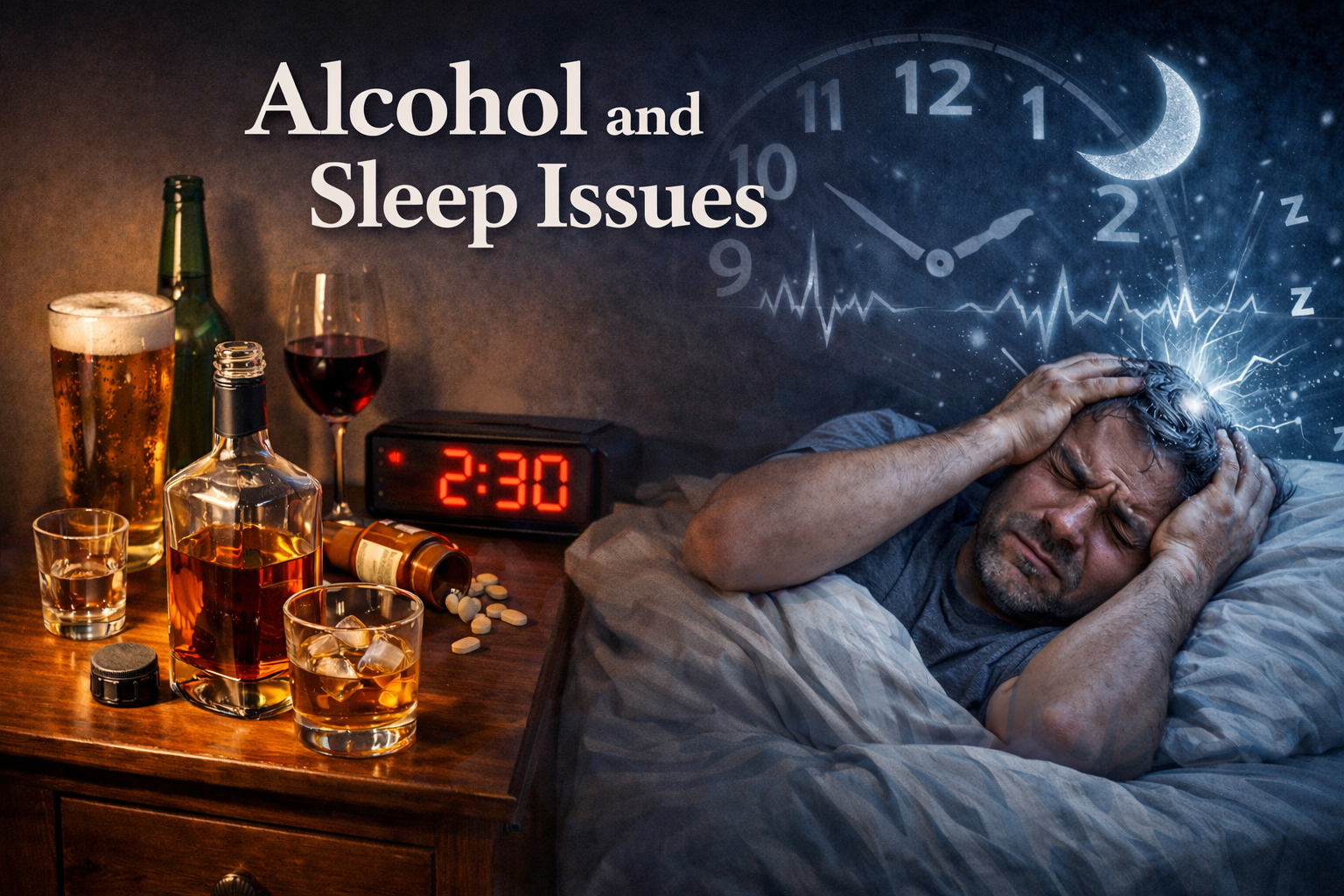
Why Alcohol and Sleep Issues Matter More Than You Think
For many school-going and college-going students, alcohol is often seen as a way to relax, socialize, or “switch off” after stress. But what most young people don’t realize is how deeply alcohol and sleep issues are connected. While alcohol may help you fall asleep faster, it quietly disrupts the quality of your rest—leaving you tired, unfocused, and mentally drained the next day.
Understanding the link between drinking and sleep is crucial, especially for students whose academic performance, emotional balance, and long-term health depend on proper rest. This article breaks down how alcohol affects sleep cycles, why sleep problems after drinking are so common, and what steps can help restore healthy sleep patterns.
Why Sleep Is Critical for Students
Sleep is not just “rest”—it’s a biological necessity, especially during adolescence and early adulthood. Proper sleep supports:
- Memory and learning
- Emotional regulation
- Concentration and focus
- Hormonal balance
-
Physical recovery
When alcohol interferes with sleep, students may experience declining grades, mood swings, anxiety, and even dependency patterns that require professional help, such as support from a Nasha Mukti Kendra.
Understanding the Sleep Cycle
A healthy sleep cycle includes:
- Light sleep
- Deep sleep (slow-wave sleep)
-
REM sleep (critical for memory and emotions)
These stages repeat throughout the night. Alcohol interferes with this rhythm.
The Real Impact of Alcohol on Sleep Cycles
How alcohol affects sleep cycles:
- Suppresses REM sleep in the first half of the night
- Causes fragmented sleep later
- Leads to early morning awakenings
- Reduces overall sleep quality
Even if you sleep for 7–8 hours, alcohol prevents restorative rest.
Alcohol and Sleep Deprivation – A Hidden Problem
Many students underestimate alcohol and sleep deprivation. They may think they’re sleeping enough, but poor sleep quality leads to cumulative exhaustion.
Signs of Alcohol-Related Sleep Deprivation
- Daytime sleepiness
- Difficulty concentrating in class
- Memory lapses
- Increased irritability
- Dependence on caffeine or energy drinks
Over time, this cycle can damage both mental and physical health.
Sleep Problems After Drinking: What Students Experience
Sleep problems after drinking can appear even with occasional alcohol use.
Common Sleep Issues After Alcohol Consumption
- Trouble staying asleep
- Night sweats
- Vivid or disturbing dreams
- Headaches upon waking
- Increased anxiety at night
These symptoms often worsen with frequent drinking, especially binge drinking common among college students.
Alcohol, Mental Health, and Sleep
Sleep and mental health are closely linked. Alcohol disrupts both.
Alcohol, Anxiety, and Insomnia
While alcohol may temporarily reduce anxiety, it increases it later by:
- Raising stress hormones
- Disrupting neurotransmitter balance
- Triggering nighttime anxiety and panic
This creates a dangerous loop: drinking to relax → poor sleep → increased stress → more drinking.
Long-Term Effects of Alcohol and Sleep Issues
Ignoring alcohol-related sleep problems can lead to serious consequences.
Long-Term Risks Include:
- Chronic insomnia
- Depression and anxiety disorders
- Weakened immune system
- Academic burnout
-
Increased risk of alcohol dependence
At this stage, professional intervention from a Nasha Mukti Kendra can be life-changing.
Why Students Are Especially Vulnerable
School and college students face unique pressures:
- Academic stress
- Peer pressure
- Irregular schedules
- Hostel or independent living
Alcohol becomes a coping mechanism, but it silently worsens sleep and stress. Early awareness can prevent long-term addiction and health damage.
Breaking the Cycle – How to Improve Sleep Without Alcohol
The good news: alcohol-related sleep issues are reversible.
Practical Steps for Better Sleep
- Avoid alcohol at least 3–4 hours before bedtime
- Maintain a consistent sleep schedule
- Limit caffeine and screen time at night
- Practice relaxation techniques (deep breathing, meditation)
- Exercise regularly (but not late at night)
Warning Signs You Shouldn’t Ignore
- Inability to sleep without drinking
- Increasing alcohol consumption
- Declining academic performance
- Emotional instability
-
Withdrawal symptoms like restlessness or insomnia
A professional Nasha Mukti Kendra provides medical guidance, counseling, and holistic recovery plans tailored for young individuals.
The Role of Rehabilitation in Restoring Healthy Sleep
Recovery programs don’t just address addiction—they rebuild healthy sleep.
How Rehabilitation Helps
- Detoxification under medical supervision
- Sleep pattern stabilization
- Psychological counseling
- Stress-management training
-
Lifestyle restructuring
Many students regain natural, deep sleep within weeks of guided recovery.
Summary
Alcohol and Sleep Issues are more than just feeling tired—they affect learning, mental health, and future potential. While alcohol may seem like a shortcut to relaxation, Alcohol and Sleep Issues disrupt sleep cycles, cause sleep deprivation, and fuel long-term health risks. Understanding Alcohol and Sleep Issues is important because repeated sleep disruption can impact focus, emotional well-being, and overall health. Addressing Alcohol and Sleep Issues early can help prevent lasting damage to sleep quality and daily functioning.
FAQs
Q1. Does alcohol really help you sleep?
Alcohol may help you fall asleep faster, but it disrupts REM sleep and causes poor-quality rest.
Q2. How alcohol affects sleep cycles?
Alcohol suppresses REM sleep, fragments rest, and causes frequent awakenings.
Q3. Why do I wake up anxious after drinking?
Alcohol increases stress hormones and disrupts brain chemistry, leading to anxiety.
Q4. Can quitting alcohol improve sleep?
Yes, most people notice better sleep within 2–4 weeks of quitting.
Q5. When should a student seek help for alcohol use?
If alcohol is needed to sleep or manage stress, professional help is recommended.