
Why Managing Alcohol Cravings Is So Important
Alcohol cravings can feel overwhelming, especially for school-going and college-going students who face daily pressure from academics, social circles, and emotional stress. For many young people, cravings are the biggest obstacle on the path to recovery. This is why Managing Alcohol Cravings is not just about willpower—it requires the right behavioural strategies, support, and mindset.
Cravings are temporary, but the damage caused by giving in can be long-lasting. The good news is that with the right behavioural strategies for alcohol cravings, students can learn how to control urges, stay focused on recovery goals, and build a healthier future. This article explains practical, easy-to-understand techniques that truly help.
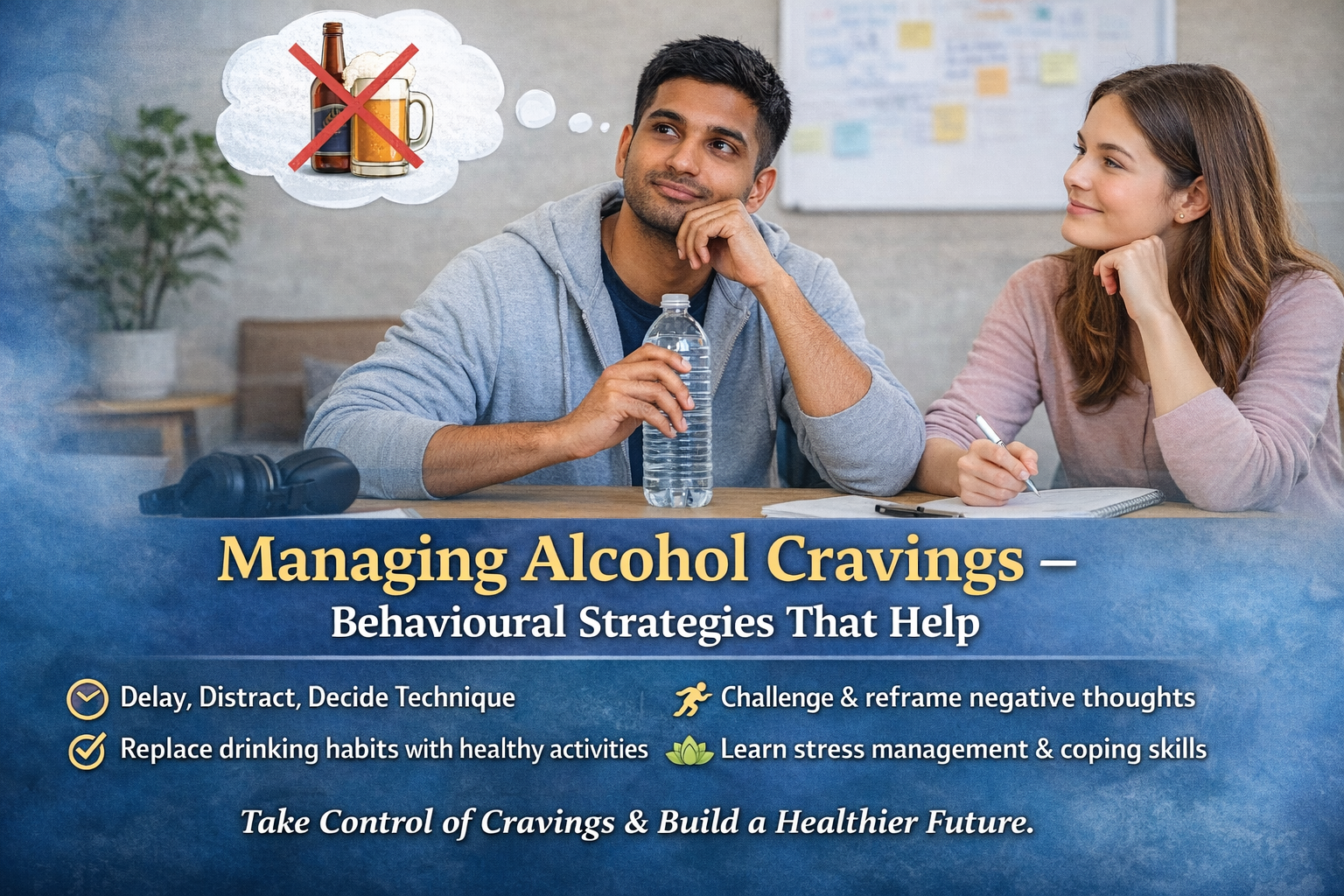
Managing Alcohol Cravings – Behavioural Strategies That Help
Understanding Alcohol Cravings
Alcohol cravings are strong urges to drink, often triggered by emotions, habits, or environmental cues. For students, common triggers include stress before exams, peer pressure, loneliness, or exposure to social drinking. Cravings are not a sign of failure. They are a normal part of recovery and can be managed effectively with the right tools at Sanchit Rehab Centre in Gwalior, where students receive professional guidance, structured support, and practical strategies to overcome alcohol cravings and stay on the path to long-term sobriety.
Why Students Are More Vulnerable to Alcohol Cravings
Young individuals experience rapid emotional and psychological changes. This makes them more sensitive to triggers and impulsive decisions.
Common reasons students struggle with cravings include:
- Academic stress and performance pressure
- Social acceptance and peer influence
- Emotional instability and anxiety
-
Lack of healthy coping skills
Learning how to control alcohol cravings early helps prevent long-term addiction and relapse.
Importance of Behavioural Strategies in Managing Alcohol Cravings
Behavioural strategies focus on changing thoughts, habits, and responses rather than suppressing cravings. These strategies teach students what to do when cravings appear.
Key benefits of behavioural approaches:
- Long-term craving control
- Better emotional regulation
- Reduced relapse risk
-
Improved decision-making
These techniques are widely used in professional treatment programs at a Nasha Mukti Kendra.
Behavioural Strategies for Alcohol Cravings That Work
Identify and Understand Your Triggers
The first step in managing alcohol cravings is recognizing what causes them.
Common triggers:
Common triggers that make Managing Alcohol Cravings challenging include stress or frustration, which can intensify the urge to drink. Social situations like parties or gatherings often test self-control, making Managing Alcohol Cravings more difficult. Certain friends or environments may encourage drinking, requiring careful attention for effective Managing Alcohol Cravings. Even negative emotions such as sadness or anger can spark cravings, emphasizing the need for strategies in Managing Alcohol Cravings. By identifying these triggers early, students can plan ahead and strengthen their ability to succeed in Managing Alcohol Cravings.
Once triggers are identified, students can prepare healthier responses instead of reacting impulsively.
Practice the “Delay, Distract, Decide” Method
Cravings usually peak for 15–30 minutes and then fade.
Steps:
- Delay drinking for 20 minutes
- Distract yourself with a healthy activity
- Decide calmly whether drinking aligns with your goals
This simple technique is highly effective in craving control.
Replace Drinking Habits with Healthy Alternatives
Habits play a huge role in addiction. Replacing old habits reduces the intensity of cravings.
Healthy alternatives include:
- Exercise or walking
- Listening to music
- Journaling thoughts
-
Talking to a trusted friend
These are powerful coping strategies for alcohol addiction that students can use daily.
Cognitive Techniques to Control Alcohol Cravings
Challenge Negative Thinking Patterns
Cravings are often accompanied by thoughts like:
- “One drink won’t hurt”
-
“I can’t relax without alcohol”
Learning to challenge these thoughts helps students regain control.
Replace them with:
- “This craving will pass”
-
“My health and future matter more”
Set Clear Personal Goals
Clear goals give cravings less power.
Examples:
- Improving academic performance
- Maintaining family trust
-
Achieving physical and mental fitness
When goals are clear, managing alcohol cravings becomes easier and more meaningful.
Emotional Coping Strategies for Alcohol Addiction
Cravings often come from emotional discomfort rather than physical need.
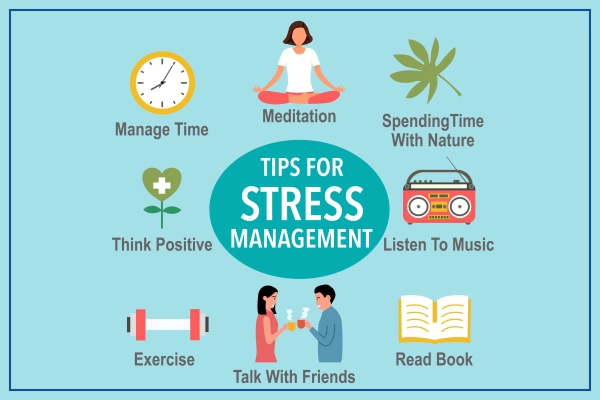
Learn Healthy Stress Management
Effective stress-management techniques include:
- Deep breathing exercises
- Meditation or mindfulness
- Time management for studies
-
Adequate sleep
These practices reduce emotional triggers and strengthen self-control.
Express Emotions Safely
Suppressing emotions increases cravings. Students should learn to express feelings through:
- Writing
- Art or music
- Counselling sessions
- Peer support groups
Healthy emotional expression is a key part of recovery.
Role of Routine and Discipline in Craving Control
An unstructured day increases the risk of cravings.
Helpful habits:
- Fixed sleep and wake times
- Planned study hours
- Scheduled meals
-
Regular physical activity
Routine creates stability, which is essential for managing alcohol cravings.
Social Strategies to Prevent Alcohol Cravings
Choose Supportive Company
The people around you influence behaviour more than you think.
Helpful steps:
- Avoid high-risk social situations
- Spend time with sober friends
- Join recovery or student support groups
Positive peer influence strengthens commitment to recovery.
Learn to Say “No” Confidently
Students often drink due to pressure, not desire.
Practice responses like:
- “I’m focusing on my health”
- “I have important goals right now”
Confidence reduces temptation and builds self-respect.
Professional Support for Managing Alcohol Cravings
While self-help strategies are useful, professional guidance ensures deeper healing.
A Nasha Mukti Kendra provides:
- Behavioural therapy
- Craving management techniques
- Emotional counselling
-
Structured relapse prevention
Combining professional care with behavioural strategies leads to stronger, long-lasting recovery.
How Behavioural Therapy Helps in Alcohol Recovery
Behavioural therapy at Nasha Mukti Kendra in Gwalior focuses on:
- Understanding addiction patterns
- Replacing harmful behaviours
- Strengthening self-control
-
Developing healthy coping skills
At Nasha Mukti Kendra in Gwalior, these approaches are tailored to help students and young adults build lasting recovery habits and effectively manage alcohol cravings.

Long-Term Strategies for Sustainable Recovery
Managing cravings is an ongoing process, not a one-time effort.
Long-term strategies include:
- Continuous self-awareness
- Regular counselling or support groups
- Healthy lifestyle choices
- Avoiding high-risk environments
Consistency turns recovery into a stable way of life.
Summary: Control Cravings, Control Your Future
Managing Alcohol Cravings is a critical step in alcohol recovery, especially for school-going and college-going students. With the right behavioural strategies, emotional coping skills, and professional support, cravings can be controlled effectively.
Recovery is not about perfection—it’s about progress, discipline, and smart choices.
Frequently Asked Questions (FAQs)
What are alcohol cravings?
Alcohol cravings are strong urges to drink, often triggered by stress, emotions, or environmental cues.
How long do alcohol cravings last?
Most cravings peak within 20–30 minutes and then reduce if not acted upon.
Can students manage alcohol cravings on their own?
Some can, but professional guidance and structured behavioural strategies improve success rates.
Are behavioural strategies effective for long-term recovery?
Yes. Behavioural strategies help change habits, thoughts, and responses, making recovery sustainable.
When should professional help be taken?
If cravings feel uncontrollable or lead to repeated relapse, professional help at a Nasha Mukti Kendra is strongly recommended.