
Alcohol and Mental Health
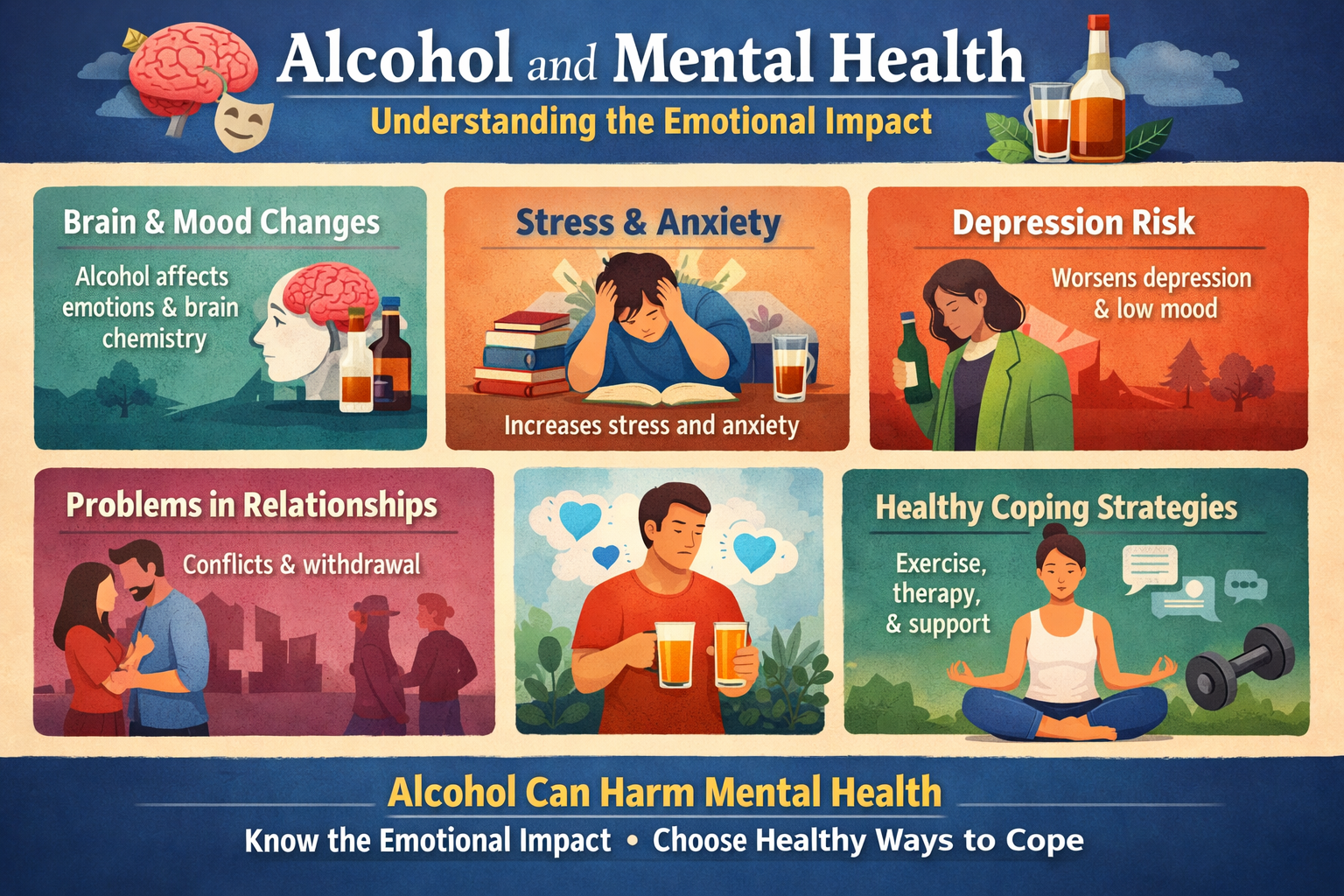
Alcohol and mental health are closely connected. While many people drink to relax, socialize, or cope with stress, alcohol can significantly affect emotions, mood, and psychological well-being—especially when used regularly or in large amounts.
Alcohol and Stress
Many individuals turn to alcohol as a way to escape academic pressure, work stress, or personal problems. Understanding Alcohol and Mental Health is essential, as alcohol can actually increase stress levels over time. Alcohol and Mental Health are affected because alcohol disrupts sleep, weakens coping skills, and reduces the brain’s ability to handle emotional challenges, making stress feel more intense the next day.
Impact on Anxiety and Depression
Regular alcohol use can worsen symptoms of anxiety and depression. Alcohol and Mental Health are closely linked here, as alcohol may intensify feelings of hopelessness, low motivation, and emotional instability. In some cases, alcohol masks emotional pain temporarily, delaying healthy emotional processing and recovery. Awareness of Alcohol and Mental Health helps identify these risks early.
Emotional Dependence and Isolation
Over time, people may start relying on alcohol to manage emotions such as loneliness, anger, or sadness. This emotional dependence affects Alcohol and Mental Health, often leading to withdrawal from family, friends, and responsibilities, which increases feelings of isolation and guilt. Recognizing Alcohol and Mental Health patterns can prevent deeper emotional struggles. At Sanchit Rehab Center in Gwalior, we help individuals identify these patterns and provide support to rebuild emotional balance and healthy coping skills.
Effects on Daily Life and Relationships
Alcohol-related emotional changes can affect behavior and relationships. Poor emotional control negatively impacts Alcohol and Mental Health, causing conflicts, impulsive decisions, reduced academic or work performance, and loss of self-confidence—all of which further strain mental well-being.
Moving Toward Emotional Well-Being
Understanding the emotional impact of alcohol is the first step toward healthier choices. Focusing on Alcohol and Mental Health, developing positive coping strategies—such as exercise, mindfulness, counseling, creative activities, or social support—can improve emotional resilience and mental clarity.
Alcohol and Sleep Quality
Alcohol may make a person feel sleepy, but it disrupts deep sleep cycles. Poor sleep affects Alcohol and Mental Health by reducing emotional balance, concentration, and stress tolerance. Over time, lack of quality sleep increases irritability, emotional exhaustion, and vulnerability to mental health disorders.
Alcohol’s Effect on Self-Esteem and Identity
Regular alcohol use can gradually affect how individuals view themselves. This impacts Alcohol and Mental Health, as feelings of guilt, shame, or regret after drinking episodes lower self-esteem. This negative self-image often fuels a cycle where alcohol is used again to escape uncomfortable emotions, further affecting Alcohol and Mental Health.
Alcohol and Emotional Regulation Skills
Healthy emotional regulation involves recognizing, processing, and expressing feelings appropriately. Alcohol interferes with this process, dulling awareness and negatively impacting Alcohol and Mental Health. As a result, individuals may struggle to cope with frustration, disappointment, or emotional pain without drinking.
Increased Risk of Emotional Burnout
Chronic alcohol use places constant strain on the nervous system. Over time, emotional burnout can occur—characterized by mental fatigue, lack of motivation, emotional detachment, and reduced ability to experience joy. This makes Alcohol and Mental Health a growing concern for long-term well-being.
Alcohol and Decision-Making Under Emotional Pressure
Alcohol weakens judgment and impulse control, especially during emotionally charged situations. This can worsen Alcohol and Mental Health, leading to risky decisions, emotional outbursts, or behaviors that further increase stress and regret.
Impact on Young Adults and Developing Minds
In adolescents and young adults, the brain is still developing. Alcohol and Mental Health are closely connected at this stage, as alcohol can interfere with emotional maturity, stress management skills, and resilience. Early exposure increases the likelihood of long-term emotional instability and unhealthy coping patterns, emphasizing the importance of education on Alcohol and Mental Health.

Some common emotional warning signs include:
Feeling Emotionally Numb Without Alcohol
When alcohol becomes a regular emotional outlet, the brain may struggle to feel pleasure or emotional balance without it. This numbness can make everyday experiences feel dull or empty, increasing reliance on alcohol to “feel normal.”
Increased Irritability or Anger
Alcohol disrupts emotional regulation. Without it, unresolved stress and suppressed emotions can surface as frustration, impatience, or anger, even over small issues.
Loss of Interest in Previously Enjoyed Activities
As alcohol takes priority, hobbies, goals, and relationships may feel less rewarding. This loss of interest often signals emotional exhaustion or early mental health strain.
Avoidance of Responsibilities or Social Interaction
Emotional discomfort or guilt related to drinking can cause people to withdraw from work, studies, family, or friends. Avoidance becomes a way to escape pressure or judgment.
Using Alcohol as the Primary Way to Cope with Emotions
Relying on alcohol to handle stress, sadness, or anxiety prevents healthy coping skills from developing. Over time, emotional challenges feel harder to manage without drinking.
Importance of Emotional Awareness and Support
Building emotional awareness helps individuals understand their triggers and emotional needs. Focusing on Alcohol and Mental Health, talking to trusted friends, family members, counselors, or support groups reduces emotional burden and lowers the urge to rely on alcohol for relief. Awareness of Alcohol and Mental Health issues encourages healthier coping strategies and strengthens emotional resilience.
Conclusion
Alcohol and Mental Health goes beyond mood changes—it affects sleep, self-worth, emotional skills, decision-making, and long-term psychological resilience. At Nasha Mukti Kendra in Gwalior, strengthening emotional awareness, seeking timely support, and choosing healthier coping methods are emphasized as crucial steps in protecting mental well-being and fostering long-term emotional stability. Prioritizing Alcohol and Mental Health helps individuals recognize triggers, improve decision-making, and maintain emotional balance for a healthier life.
Frequently Asked Questions (FAQs)
1. How are Alcohol and Mental Health connected?
Alcohol and Mental Health are closely linked because alcohol directly affects brain chemicals responsible for mood, emotions, and stress control. Regular or excessive drinking can worsen anxiety, depression, emotional instability, and stress levels over time.
2. Can alcohol increase stress and anxiety?
Yes. While alcohol may feel relaxing at first, it actually increases stress and anxiety later. Alcohol and Mental Health are affected as alcohol disrupts sleep, weakens emotional coping skills, and increases nervous system imbalance, making daily stress feel more intense.
3. Does alcohol worsen depression?
Alcohol and Mental Health are strongly connected when it comes to depression. Alcohol is a depressant that can increase feelings of sadness, hopelessness, low motivation, and emotional fatigue, especially with regular use.
4. Can alcohol cause emotional dependence?
Yes. Emotional dependence develops when a person relies on alcohol to cope with stress, sadness, anger, or loneliness. This dependence negatively affects Alcohol and Mental Health by reducing natural emotional regulation and increasing isolation.
5. How does alcohol affect sleep and mental health?
Alcohol disrupts deep sleep cycles, even if it causes drowsiness initially. Poor sleep weakens Alcohol and Mental Health by increasing irritability, emotional imbalance, poor concentration, and vulnerability to mental health disorders.