
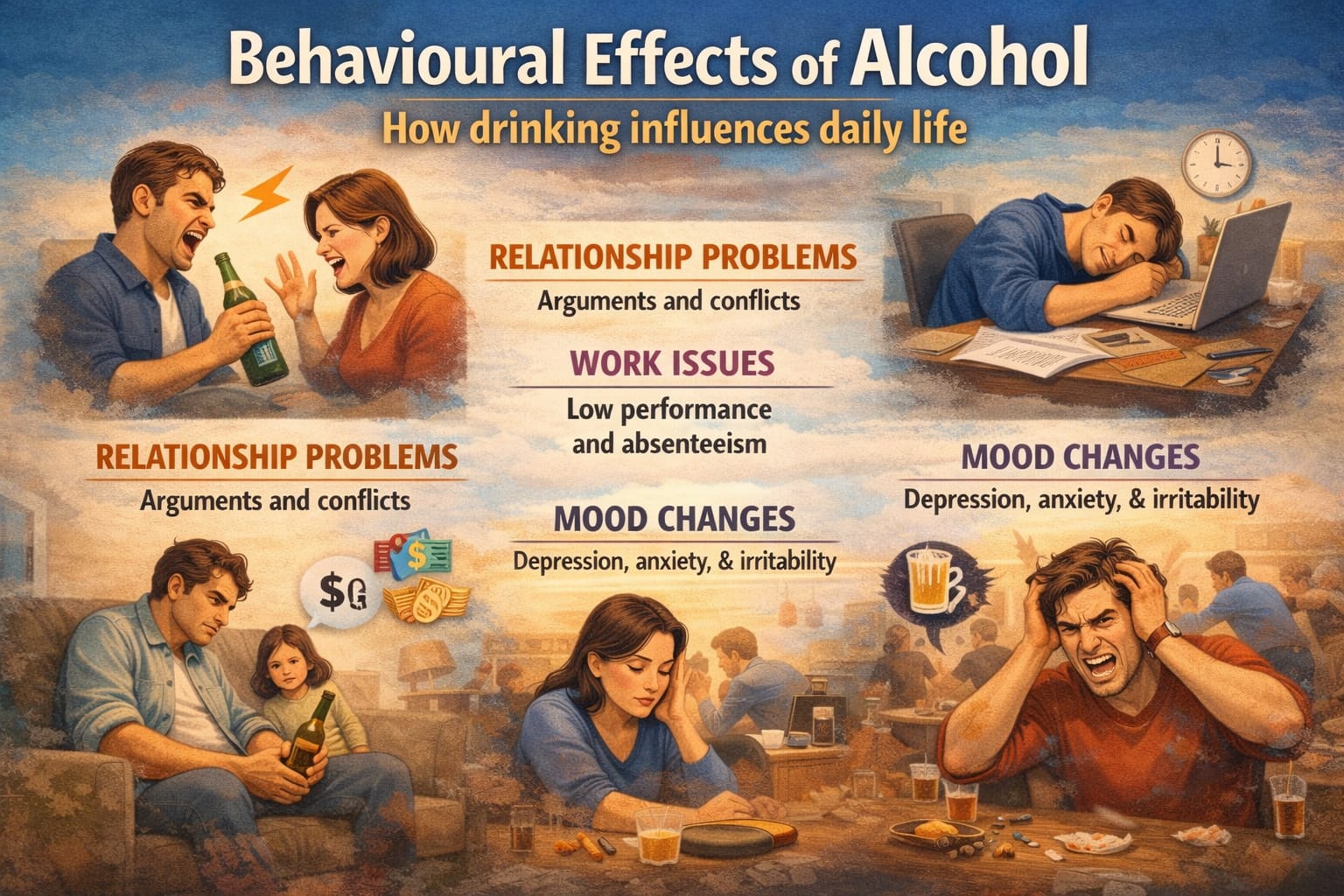
Behavioural Effects of Alcohol
Alcohol consumption among students is a rising concern, often starting as casual experimentation during social events or academic stress. However, repeated drinking can have profound effects on behaviour, emotions, and daily routines. Understanding alcohol and stress is key, as stress often drives drinking, which in turn worsens emotional and cognitive challenges.
This article, brought to you by Sanchit Rehab Centre Gwalior, explores the behavioural effects of alcohol, how drinking influences daily life, and practical strategies to mitigate its negative consequences. By understanding these connections, students can make informed choices and maintain a healthier lifestyle.
Understanding Alcohol and Stress
Alcohol and stress are closely linked, and understanding the Behavioural Effects of Alcohol is essential for recovery. Many students turn to alcohol as a way to cope with academic pressure, social anxiety, or personal problems. While it may provide temporary relief, the Behavioural Effects of Alcohol often worsen stress over time, disrupt normal functioning, and affect behaviour.
Key points:
- Alcohol temporarily lowers inhibitions, creating a false sense of relief from stress, which is one of the most common behavioural Effects of Alcohol.
- Over time, alcohol consumption can increase anxiety, irritability, and depressive symptoms, showing how the behavioural Effects of Alcohol impact mental health.
-
Stress-driven drinking can lead to dependency and behavioural changes that interfere with daily life, another example of the behavioural Effects of Alcohol.
Understanding this cycle and the behavioural Effects of Alcohol is the first step toward managing drinking and preventing long-term consequences.
Impact of Alcohol on Behavior
Short-Term behavioural Effects
Even moderate drinking can influence behavior in noticeable ways:
- Impaired judgment and decision-making
- Increased risk-taking or aggressive behavior
- Reduced academic performance and focus
- Social withdrawal or mood swings
Long-Term behavioural Effects
Chronic alcohol use can create deeper behavioural changes:
- Emotional instability and irritability
- Difficulty managing stress and responsibilities
- Poor interpersonal relationships
- Risk of developing alcohol dependence or addiction
Secondary Keywords Integrated:
- Impact of alcohol on behavior
- Alcohol and behavior changes
How Drinking Influences Daily Life
Alcohol affects multiple aspects of a student’s life:
Academic Performance
-
Memory and concentration decline
-
Lower grades due to missed classes or assignments
-
Reduced ability to handle stress and deadlines

Social Life
- Strained friendships due to mood swings or reckless behavior
- Increased social isolation or peer pressure to continue drinking
- Physical Health
- Fatigue and sleep disturbances
- Weakened immunity and increased susceptibility to illness
- Risk of injuries or accidents during intoxication
Emotional Wellbeing
- Heightened anxiety or depression
- Difficulty coping with normal stress
- Lower self-esteem and motivation
By recognizing these effects, students can make conscious decisions about their drinking habits.
Strategies to Manage Alcohol and Stress
Preventing stress-driven drinking requires conscious effort and support. Here are effective strategies:
Stress Management Techniques
- Practice mindfulness or meditation
- Engage in physical activities or sports
- Maintain a healthy sleep schedule
- Develop hobbies and creative outlets
Seeking Professional Support
-
Counselling or therapy at a Nasha Mukti Kendra
-
Support groups or peer mentoring programs
-
Family involvement and open communication
Healthy Lifestyle Choices
-
Limit alcohol intake or abstain completely to protect your Alcohol and Mental Health.
-
Plan academic schedules to reduce stress and support overall Alcohol and Mental Health.
-
Build strong social connections without relying on alcohol, which strengthens Alcohol and Mental Health and emotional resilience.
These approaches help reduce the negative behavioural effects of alcohol while promoting mental and emotional well-being.
Role of Family and Friends
Recovery and behavioural improvement are easier with a supportive environment:
-
Family can provide accountability, encouragement, and emotional guidance
-
Friends can model healthy coping strategies and reduce peer pressure
-
Open communication helps students discuss challenges without fear of judgment
“Support from family and friends strengthens resilience and reduces the risk of stress-driven drinking.”

Summary and Call to Action
Alcohol significantly affects behavior, academic performance, and emotional wellbeing. Stress often drives drinking, creating a harmful cycle that impacts daily life.
Key Takeaways:
-
Understand the link between alcohol and stress
-
Recognize short-term and long-term behavioural effects
-
Implement stress management and healthy coping strategies
-
Seek professional help at a trusted Nasha Mukti Kendra
-
Build a supportive network of family and peers
Take action today: Don’t let alcohol and stress control your life. Reach out to a trusted Nasha Mukti Kendra in Gwalior and take the first step toward healthier habits and improved wellbeing.
FAQ Section
Q1: Can alcohol really increase stress in the long term?
A: Yes, while alcohol may temporarily relieve stress, chronic drinking disrupts brain chemistry, increasing anxiety and tension over time.
Q2: How does alcohol affect student behavior?
A: It impairs judgment, increases impulsivity, affects mood, and can lower academic and social performance.
Q3: What are effective ways to manage alcohol and stress?
A: Mindfulness, exercise, healthy sleep, hobbies, counseling, and peer/family support are highly effective.
Q4: Is professional help necessary for stress-related drinking?
A: In cases of frequent or excessive drinking, a Nasha Mukti Kendra or professional counseling can provide structured support and recovery plans.
Q5: Can friends and family influence recovery from alcohol stress behaviors?
A: Yes, support and open communication help students resist peer pressure, manage stress, and maintain healthier habits.