
Life after rehab after alcohol and drugs
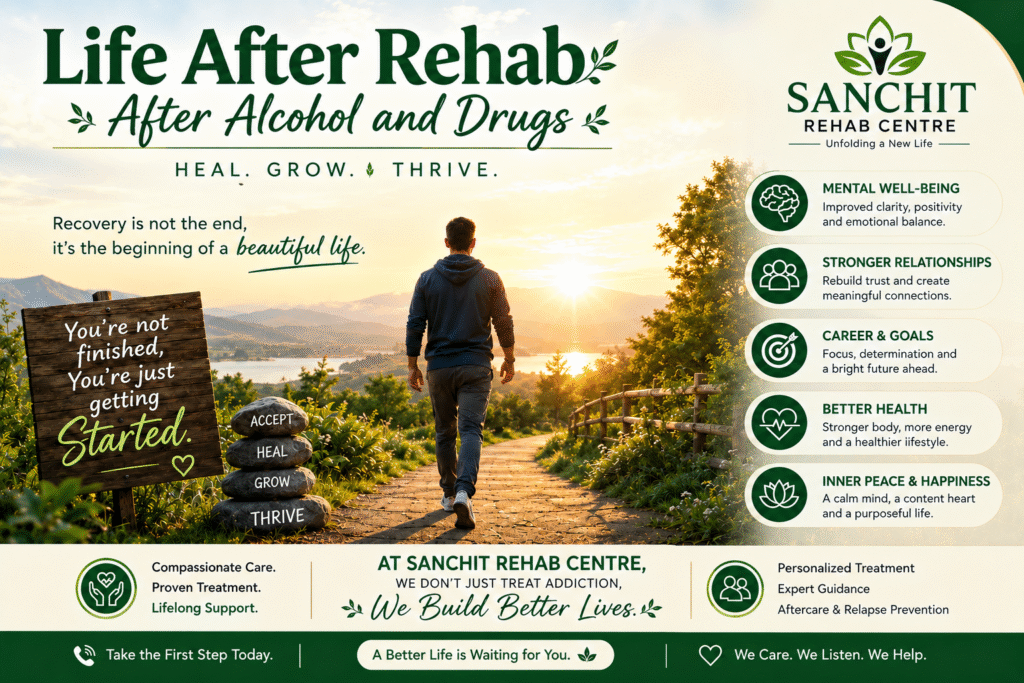
Life after rehab after alcohol and drugs can feel both hopeful and challenging. Completing a rehabilitation program is an important milestone, but recovery does not end when you leave treatment. Adjusting to everyday life, managing triggers, rebuilding relationships, and maintaining sobriety are all important parts of the journey.
At Sanchit Rehab Centre, we focus on empowering individuals with the clinical guidance, personalized care, and aftercare strategies needed to navigate the transition from treatment to lasting independence smoothly.
The early stages of life after rehab may involve significant emotional and lifestyle changes. Learning how to handle stress without alcohol or drugs, reconnecting with family and friends, returning to work, and finding meaningful activities can take time. Recovery is a personal process, and progress may look different for everyone.
Why Is Aftercare Important After Rehab?
Sanchit Rehab Centre provides aftercare support to help individuals adjust to daily life after treatment. Ongoing guidance can help with relapse prevention, healthy routines, and long-term recovery.
Finishing rehab does not always mean that recovery is finished. Many people benefit from continued support after leaving treatment. An aftercare plan can help you adjust to life outside rehab and continue building healthy habits. Depending on your needs, aftercare may include therapy, outpatient treatment, support groups, family counseling, or sober living.
Aftercare can help you:
- Stay accountable
- Manage cravings
- Recognize signs of relapse
- Learn healthy coping skills
- Build better relationships
- Stay connected to supportive people
- Manage work and family responsibilities
- Continue working on recovery goals
The First 30–90 Days After Rehab
The first 30 to 90 days after rehab can be an important time in recovery. During rehab, your daily schedule was often structured around treatment and recovery. After leaving, you may have more freedom and responsibilities.
Create a Healthy Daily Routine
A regular daily routine can make the transition after rehab easier and help you stay focused on recovery. Try to keep a consistent schedule for sleep, meals, work or study, exercise, therapy, and relaxation. Practicing mindfulness orggggggggggg yoga and meditation practices can also be helpful for managing daily stress and anxiety. You can include the following activities in your routine:
- Eating meals
- Working or studying
- Exercising
- Going to therapy or support meetings
- Spending time with supportive people
- Relaxing and enjoying hobbies
A healthy routine can give your day structure, reduce unplanned free time, and help you develop positive habits that support long-term recovery.
Make Your Home a Safe Environment
Your home should be a safe and supportive place during recovery. If possible, remove alcohol, drugs, and anything that may remind you of past substance use. It can also help to avoid people, places, and situations that may increase cravings or make staying sober more difficult. Creating a safe home environment can help you feel more comfortable, build healthy habits, and stay focused on your long-term recovery.
Prepare for Challenges After Rehab
Not every day after rehab will be easy. You may experience stress, cravings, difficult emotions, or challenges with family, work, or daily responsibilities. Before leaving rehab, make a list of trusted people you can contact when you need support, such as a family member, close friend, therapist, sponsor, or treatment professional. Knowing who to reach out to can help you manage challenges early and stay focused on your recovery.
Relapse Prevention After Rehab
Relapse prevention is an important part of long-term recovery. Learning your triggers and planning how to handle them can help you stay focused on sobriety.
Identify Your Triggers
A trigger is anything that can increase your desire to drink alcohol or use drugs. Understanding your personal triggers is an important part of relapse prevention because it helps you prepare for difficult situations and choose healthier ways to respond. Common triggers include:
- Stress
- Anger
- Loneliness
- Anxiety
- Parties or bars
- Memories of past substance use
Your triggers may be different from someone else’s. Take time to notice the people, places, emotions, or situations that affect you and create a plan for handling them in a healthy way. Avoiding high-risk situations when possible and reaching out for support when needed can help you stay focused on your recovery.
Understanding Post-Acute Withdrawal Syndrome (PAWS)
Some people experience post-acute withdrawal syndrome (PAWS) after the initial withdrawal period.
Possible symptoms include:
- Sleep problems
- Mood changes
- Irritability
- Difficulty concentrating
- Cravings
Not everyone experiences PAWS, and these symptoms can have other causes. If symptoms continue or become severe, speak with a healthcare professional.
Use the HALT Strategy
The HALT strategy is a simple tool that can help you understand your basic needs during recovery. It can be useful when you feel stressed, upset, overwhelmed, or experience cravings for alcohol or drugs.
- H — Hungry: Being hungry can affect your mood and make you feel stressed or irritable.
- A — Angry: Anger can increase stress and may make it harder to manage cravings or difficult situations.
- L — Lonely: Feeling alone can make you more vulnerable to negative thoughts and cravings. Talking to someone you trust can help.
- T — Tired: Lack of sleep or rest can affect your mood, energy, and ability to make healthy decisions.
When you experience strong emotions or cravings, take a moment to check whether you are hungry, angry, lonely, or tired. Taking care of these basic needs may help you feel calmer and more in control. The HALT strategy can be a helpful part of a relapse prevention plan, but it does not replace professional treatment or counseling.
Create a Relapse Prevention Plan
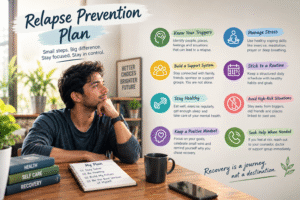
A relapse prevention plan can also include contact information for trusted family members, counselors, or recovery professionals. Sanchit Rehab Centre can provide guidance and support when individuals face cravings or recovery challenges.
A written relapse-prevention plan can help you know what to do when recovery becomes difficult.
Your plan can include:
- Your main triggers
- Warning signs that you are struggling
- Healthy ways to manage stress
- People you can call for help
- Recovery meetings you can attend
- Safe places you can go
- Steps to take if you return to alcohol or drug use
Rebuilding Relationships After Addiction
Alcohol and drug addiction can affect relationships with family members, partners, friends, and coworkers. Rebuilding these relationships takes time and patience.
Rebuilding Trust With Family
Addiction can hurt relationships with family members, and they may not immediately trust you after rehab. Rebuilding trust takes time, patience, and consistent effort. Instead of expecting things to return to normal right away, focus on showing your commitment through your actions. Be honest, keep your promises, communicate openly, and respect your family members’ boundaries. With time and consistent positive behavior, you can gradually rebuild trust and strengthen your relationships.
Dealing With Social Pressure
After rehab, you may still have friends or people from your past who drink alcohol or use drugs. They may invite you to parties, bars, or other places where substances are available. It is okay to say no and choose situations that support your recovery. During early recovery, avoiding places or people that create pressure to drink or use drugs can help you stay focused on sobriety. You do not have to explain your recovery to everyone, and it is important to put your health and well-being first.
Building a Sober Support Network
Having supportive people around you can make recovery easier and help you stay focused on your goals. A strong support network can provide encouragement, understanding, and guidance when you face stress, cravings, or other challenges during recovery.
You can build a sober support network through:
- Recovery support groups
- Rehab alumni programs
- Exercise groups
- Volunteer work
- Hobbies
- Community activities
A strong support network can help you feel less alone while building a healthier lifestyle. Staying connected with people who respect your recovery can also give you a safe place to talk about your feelings and challenges
Mental Health and Continued Care
Recovery is about more than stopping alcohol or drug use. You may also need to work on stress, anxiety, depression, trauma, relationships, or other personal challenges.
Continue Therapy After Rehab
Therapy can play an important role in recovery after rehab. It can help you understand your emotions, manage difficult situations, and develop healthier ways to cope with stress and cravings. Continuing therapy after rehab can also provide ongoing support as you adjust to everyday life and work toward long-term recovery.
Therapy may help with:
- Stress
- Anxiety
- Depression
- Anger
- Cravings
- Relationships
Your treatment provider can help you decide what type of ongoing care is right for you based on your recovery needs and personal situation.
Understanding Dual Diagnosis
Some people experience both a substance use disorder and a mental health condition, which is known as a dual diagnosis or co-occurring disorder. Conditions such as anxiety, depression, or other mental health concerns can affect the recovery process, so addressing both substance use and mental health is important for long-term recovery. If you are experiencing mental health difficulties during or after rehab, speaking with a qualified healthcare professional can help you find the right treatment and support.
Managing Your Finances
Addiction can sometimes cause financial problems. After rehab, learning to manage your money can help create greater stability.
You can start by:
- Creating a monthly budget
- Tracking your spending
- Paying important bills first
- Working on debt
- Avoiding unnecessary spending
- Saving money when possible
Finding Purpose and Setting Goal
Recovery gives you an opportunity to create a new direction in life and focus on what is important to you. Your purpose may come from family, work, education, hobbies, volunteering, or personal goals. Setting small and realistic goals can help you stay motivated and make steady progress during recovery. Instead of expecting yourself to change everything at once, focus on one goal at a time and celebrate your progress along the way.
Healthy Habits for Long-Term Recovery
Healthy habits can support your physical and emotional well-being during recovery.
Exercise and Physical Health
Regular physical activity can be a helpful part of a healthy lifestyle after rehab. Exercise may support your physical health, improve your mood, reduce stress, and give you a positive way to spend your time during recovery. You might try:
- Walking
- Running
- Swimming
- Cycling
- Yoga
- Strength training
Choose activities you enjoy so they are easier to maintain as part of your daily routine. Starting with small and realistic goals can help you stay active and make exercise a regular part of your long-term recovery.
Sleep and Nutrition
Good sleep and regular meals are important for your overall health and recovery after rehab. Try to follow a regular sleep schedule and get enough rest each night to support your energy, mood, and daily routine. Eating balanced and nutritious meals can also help support your physical and emotional well-being during recovery. If you have specific health or nutrition concerns, speak with a qualified healthcare professional for appropriate guidance.
Sober Living After Rehab
For some people, returning directly home after rehab may not provide enough structure. A sober living home can provide a transitional environment between rehab and independent living.
Who Can Benefit From Sober Living?
Sober living may be helpful for people who need extra support and structure after completing rehab. It can provide a safe and supportive environment where individuals can adjust to independent living while continuing their recovery. Sober living may be helpful for people who:
- Need more structure after rehab
- Do not have a safe home environment
- Want additional accountability
- Need time to adjust to independent living
- Want to live with other people in recovery
Whether sober living is right for you depends on your personal situation, recovery needs, home environment, and treatment recommendations. Speaking with a qualified treatment professional can help you decide whether a sober living home is a suitable option for your recovery.
How Sober Living Supports Recovery
A sober living home can provide a safe and supportive environment for people continuing their recovery after rehab. It can offer structure, accountability, and the opportunity to live with others who are also working toward sobriety. This supportive environment can make the transition from residential treatment to independent living more gradual and help individuals develop healthy routines and recovery habits for long-term sobriety.
Support Systems and Recovery Resource
You do not have to go through recovery alone. Having the right support can make it easier to manage cravings, stress, and other challenges after rehab. Staying connected with family, friends, counselors, support groups, and other people who understand recovery can provide encouragement and guidance. Continued support can also help you stay focused on your recovery goals, build healthy habits, and maintain long-term sobriety
What to Do If You Relapse After Rehab
A relapse does not mean that you have failed in your recovery. It may be a sign that you need additional support or changes to your recovery plan. Taking action early can help you understand what happened, address the reasons behind the relapse, and get back on track with your recovery.
Recognize the Warning Signs
Recognizing early warning signs can help you ask for support before a difficult situation becomes more serious. Common warning signs may include:
- Increasing cravings
- Avoiding supportive people
- Missing therapy or recovery meetings
- Returning to high-risk places
- Major changes in mood
- Increasing stress
- Thinking often about drinking or drug use
If you notice these warning signs, consider reaching out to a trusted person, therapist, counselor, or treatment professional. Getting support early can help you manage challenges and reduce the risk of continued substance use.
Update Your Recovery Plan
If you experience a relapse, take time to understand what happened and what may have contributed to it. You may need to make changes to your daily routine, avoid certain triggers, increase therapy sessions, attend more support meetings, or consider additional addiction treatment. Updating your recovery plan can help you identify areas that need more support and reduce the risk of future relapse. If someone is unconscious, having trouble breathing, or experiencing a suspected overdose, seek emergency medical help immediately.
How Long Does Recovery Take After Rehab?
There is no set timeline for recovery after rehab. Some people adjust to life after rehab within a short time, while others may need ongoing treatment, counseling, and support for a longer period. Recovery is a continuing process, and you may experience both good days and difficult days. The goal is to keep learning healthy ways to manage stress, cravings, emotions, and daily challenges without relying on alcohol or drugs.
FAQs About Life After Rehab
How Does Sanchit Rehab Centre Support Individuals After Treatment?
Sanchit Rehab Centre provides continued support after treatment to help people stay on the path to recovery. The centre offers aftercare guidance, counselling, relapse prevention support, and help with adjusting to daily life. Ongoing support can help individuals manage triggers, build healthy habits, and maintain long-term sobriety.
What Is Life Like After Rehab After Alcohol and Drugs?
Life after rehab involves returning to everyday life while continuing your recovery. You may need to manage cravings, avoid triggers, attend therapy or support groups, rebuild relationships, and create healthy routines.
What Should I Do During the First 30 Days After Rehab?
Focus on creating a daily routine, following your aftercare plan, avoiding high-risk situations, staying connected with supportive people, and attending recommended treatment or recovery meetings.
How Can I Prevent Relapse After Rehab?
Learn your triggers, create a relapse-prevention plan, continue treatment, stay connected with supportive people, and use healthy ways to manage stress and cravings.
What Is PAWS After Rehab?
PAWS stands for post-acute withdrawal syndrome. Some people experience symptoms such as sleep problems, mood changes, difficulty concentrating, and cravings after the initial withdrawal period. Talk with a healthcare professional about ongoing or severe symptoms.
Do I Need Therapy After Rehab?
Many people benefit from ongoing therapy after rehab. Therapy can help with cravings, stress, mental health, relationships, and relapse prevention. Your treatment provider can help you choose the right level of care.
Is Sober Living Necessary After Rehab?
Not everyone needs sober living. It may be helpful for people who need additional structure or who do not have a safe and supportive home environment.
Can I Have a Normal Life After Rehab?
Yes. Many people build healthy and meaningful lives after treatment. Recovery may require ongoing support and lifestyle changes, but sobriety can become a normal part of everyday life.
Does Recovery End After Rehab?
No. Rehab is one step in the recovery process. Continued care, therapy, support groups, and healthy lifestyle changes can help support long-term recovery.
Conclusion
Life after rehab after alcohol and drugs can be challenging, but it can also be the beginning of a healthier future.
The first few months are a time to build new routines, understand your triggers, manage cravings, and stay connected to support. As you become more comfortable with recovery, you can also focus on relationships, work, finances, health, and personal goals.
You do not have to recover alone. Therapy, support groups, alumni programs, sober living, family support, and other resources can help you continue moving forward.
Recovery is not about being perfect. It is about making healthier choices, learning from difficult moments, and continuing to build a life you want to live.