

Addiction rarely begins with a person deciding that they want to lose control of their life. For many people, alcohol or drug use starts casually, socially, or as a way to deal with stress. Over time, occasional use can become a repeated habit, and eventually the person may find it difficult to stop even when they genuinely want to.
This raises an important question for families: When is it time to seek professional addiction treatment?
There is no single moment that applies to everyone. However, repeated substance use, increasing tolerance, withdrawal symptoms, damaged relationships, declining work or academic performance, financial problems, and unsuccessful attempts to quit can all indicate that professional help may be necessary.
Professional Addiction Treatment, provides structured support for people who are struggling to control their use of alcohol or drugs. It can address not only physical dependence but also the emotional, psychological, behavioral, and social factors associated with addiction.
At Sanchit Nasha Mukti Kendra in Gwalior, individuals and families can explore treatment options designed to support recovery in a structured and supportive environment. Understanding the warning signs early can make it easier to seek help before addiction causes further damage.
What Is Professional Addiction Treatment?
Professional Addiction Treatment, refers to organized care provided by qualified healthcare and addiction-recovery professionals to help a person overcome problematic substance use.
Treatment can vary depending on the person’s needs. Some people may require medically supervised detoxification before rehabilitation, while others may benefit from counselling, behavioral therapy, family support, or structured residential care.
A comprehensive treatment approach may include:
- Initial assessment
- Detoxification support
- Medical monitoring when required
- Individual counselling
- Group therapy
- Family counselling
- Behavioral therapy
- Craving-management strategies
- Relapse-prevention planning
- Healthy lifestyle activities
- Aftercare support
The goal is not simply to make someone stop using a substance for a few days. The larger goal is to help the individual develop healthier ways to manage emotions, stress, relationships, responsibilities, and everyday challenges.
Why Is It Difficult to Know When to Seek Professional Addiction Treatment?
Many people wait because they believe their substance use is not “bad enough” to require treatment.
A person may say:
- “I can stop whenever I want.”
- “I only drink on weekends.”
- “Everyone I know drinks.”
- “I have never had a serious health problem.”
- “I will quit next month.”
- “I just need more self-control.”
These thoughts can delay treatment.
Addiction is not always obvious from the outside. Someone may continue going to work, attending college, maintaining relationships, or appearing socially active while privately struggling with substance use.
The important question is not simply how much someone uses. It is also whether alcohol or drugs are beginning to control important areas of life.
When substance use repeatedly causes problems and the person cannot make lasting changes independently, Professional Addiction Treatment, may be worth considering.
1. You Cannot Stop Even When You Want To
One of the clearest warning signs is repeated unsuccessful attempts to quit.
A person may decide to stop using alcohol or drugs on Monday, make it through several days, and then return to substance use. This cycle may happen repeatedly.
They may genuinely want to quit but find themselves unable to maintain the decision.
This does not mean they are weak. Addiction can create powerful physical and psychological patterns that make stopping difficult.
If repeated attempts to quit have not worked, Professional Addiction Treatment, can provide structure, accountability, counselling, and appropriate support.
2. Your Substance Use Is Increasing
Another warning sign is increasing frequency or quantity of use.
Someone who previously drank occasionally may gradually start drinking several times a week. A person who used drugs socially may begin using alone or more frequently.
Tolerance can also develop. The person may need more of a substance to achieve the same effect.
Increasing use should not be ignored simply because serious consequences have not happened yet.
Early intervention can sometimes prevent the situation from becoming more severe.
3. You Experience Withdrawal Symptoms
Withdrawal can be a strong indication that the body has become accustomed to a substance.
Depending on the substance and individual circumstances, withdrawal may involve:
- Tremors
- Sweating
- Anxiety
- Irritability
- Nausea
- Headaches
- Sleep difficulties
- Restlessness
- Muscle discomfort
- Mood changes
- Strong cravings
Some withdrawal syndromes can become medically serious, particularly after heavy or prolonged use of certain substances.
If withdrawal symptoms occur when a person tries to stop, seeking professional medical advice is important. Professional Addiction Treatment, can help determine whether medically supervised detoxification or another level of care is appropriate.

4. Alcohol or Drugs Are Affecting Your Relationships
Addiction does not affect only the person using substances.
It can create tension between:
- Parents and children
- Husbands and wives
- Siblings
- Friends
- Colleagues
Arguments may become more frequent. Trust can decrease. Promises may repeatedly be broken.
Family members may start worrying about the person’s behaviour, safety, finances, or health.
If substance use is repeatedly damaging important relationships, it may be time to consider Professional Addiction Treatment.
Family counselling can also help loved ones understand addiction and learn healthier ways to support recovery.
5. Work or Studies Are Being Affected
A person’s performance at work, school, or college can provide another important warning sign.
Addiction may contribute to:
- Frequent absences
- Poor concentration
- Missed deadlines
- Reduced productivity
- Falling grades
- Conflicts with colleagues
- Loss of motivation
- Disciplinary problems
Sometimes the person continues performing adequately for a while, but it requires increasing effort to hide their substance use.
When alcohol or drugs begin interfering with responsibilities, professional support should be considered.
6. You Are Hiding Your Substance Use
Secrecy is another common warning sign.
Someone may begin hiding bottles, deleting messages, lying about where they have been, or giving false explanations about how much they have consumed.
They may use substances privately because they know family members or friends would be concerned.
Occasional privacy is normal, but repeated deception surrounding substance use can indicate that the behaviour has become difficult to control.
This can be an appropriate time to explore Professional Addiction Treatment, rather than waiting for a major crisis.
7. You Need Alcohol or Drugs to Feel “Normal”
Some people eventually begin feeling uncomfortable when they are not using a substance.
They may believe they need alcohol to relax after work, drugs to socialise, or another substance to sleep.
The substance may no longer be used primarily for pleasure. Instead, the person may feel that they need it simply to get through the day.
This can indicate increasing dependence.
Professional assessment can help determine the severity of the problem and identify appropriate treatment options.
8. Your Mental Health Is Getting Worse
Substance use and mental health can influence one another.
A person may use alcohol or drugs to temporarily cope with:
- Stress
- Anxiety
- Loneliness
- Sadness
- Emotional pain
- Anger
- Traumatic experiences
Although substances may provide temporary relief, they can sometimes worsen emotional difficulties over time.
If substance use is accompanied by persistent mood changes, severe anxiety, emotional instability, or other mental health concerns, professional evaluation becomes especially important.
Professional Addiction Treatment can address addiction while also recognising the importance of mental and emotional well-being.
9. You Continue Using Despite Negative Consequences
This is one of the most important signs.
A person may experience serious consequences because of substance use and still continue.
For example, they may:
- Lose money
- Damage relationships
- Miss work
- Experience legal or social problems
- Suffer health difficulties
- Lose important opportunities
Yet they continue using.
When the negative consequences are no longer enough to stop the behavior, addiction may have moved beyond casual use.
This is a strong reason to seek professional support.
10. You Spend Increasing Amounts of Time Around Substance Use
Addiction can gradually change a person’s priorities.
They may spend more time:
- Obtaining alcohol or drugs
- Using substances
- Recovering from their effects
- Thinking about when they can use again
- Spending time with people connected to substance use
Other interests may slowly disappear.
Hobbies, exercise, family activities, and social responsibilities may become less important.
A structured rehabilitation program can help individuals rebuild their daily routines and reconnect with healthier activities.
11. You Have Strong Cravings
Cravings are more than simply wanting a drink or drug.
A craving can feel like an intense urge that is difficult to ignore. Certain people, places, emotions, smells, celebrations, or stressful situations may trigger it.
If cravings are becoming frequent or difficult to control, it may be time to seek help.
Professional Addiction Treatment can teach individuals how to identify triggers and develop healthier ways to respond to cravings.
12. You Have Tried to Quit Without Support Multiple Times
There is nothing wrong with trying to change your behaviour independently.
However, repeated unsuccessful attempts may indicate that additional support is needed.
A person may stop for a few days or weeks and then return to substance use. Each attempt can create frustration and reduce confidence.
Instead of seeing another failed attempt as a personal failure, it can be useful to view it as information: the current approach may not be providing enough support.
A professional treatment plan can provide additional structure and guidance.
13. Your Daily Routine Revolves Around Substance Use
A healthy routine usually includes work, study, family, sleep, meals, exercise, hobbies, and social activities.
Addiction can gradually reorganise that routine around alcohol or drugs.
For example, someone may plan their day around when they can drink, avoid activities where substances are unavailable, or choose social situations mainly because alcohol or drugs will be present.
When substance use becomes central to everyday life, professional treatment deserves serious consideration.
14. Family Members Are Repeatedly Expressing Concern
Sometimes the person struggling with addiction does not recognise the severity of the problem.
Family members may notice changes before they do.
If several people who care about you are repeatedly expressing concern, it may be worth listening rather than automatically dismissing their observations.
A professional assessment does not mean that someone is being forced into treatment. It can simply provide a clearer understanding of what is happening and what options are available.
How Professional Addiction Treatment Can Help
Once a person decides to seek help, treatment can address addiction from several directions.
Medical Support
Depending on the substance and severity of dependence, medical professionals may recommend supervised detoxification and appropriate withdrawal management.
Individual Counselling
One-to-one counselling can help individuals explore triggers, emotions, behaviors, and personal recovery goals.
Group Therapy
Group sessions can provide opportunities to learn from others and develop a sense of connection.
Family Counselling
Family support can help rebuild communication and establish healthier boundaries.
Relapse Prevention
Individuals can learn how to identify high-risk situations and prepare practical responses to cravings and stress.
Healthy Lifestyle Development
Exercise, balanced nutrition, sleep, meditation, recreation, and structured daily activities can support a healthier routine.
These elements can work together as part of a broader recovery plan.
Detoxification and Professional Addiction Treatment
For some individuals, treatment may begin with detoxification.
Detox helps the body adjust when alcohol or drugs are stopped. It may involve withdrawal symptoms, which can range from mild to severe depending on the substance and individual.
However, detox is not the same as complete addiction treatment.
Once the body becomes more stable, the person may still need to address:
- Emotional triggers
- Behavioral patterns
- Cravings
- Relationships
- Stress management
- Social environments
- Relapse risks
This is why detox is often followed by rehabilitation and counselling.
What Happens at a Rehabilitation Centre?
A Rehabilitation Centre, can provide a structured environment where individuals can focus on recovery away from some of the distractions and triggers associated with everyday life.
Depending on the program, daily activities may include:
- Counselling sessions
- Group discussions
- Recovery education
- Physical activity
- Meditation or relaxation
- Meals
- Recreation
- Family sessions
- Personal reflection
- Relapse-prevention work
A structured routine can help people rebuild habits that may have been disrupted by addiction.
At Sanchit Nasha Mukti Kendra in Gwalior, individuals and families can explore available rehabilitation and addiction-support services according to their needs.
How Families Can Encourage Someone to Seek Treatment
Approaching a loved one about addiction can be difficult.
Instead of accusing or humiliating the person, families can choose a calm moment and explain their concerns honestly.
Helpful approaches include:
- Speak about specific behaviors rather than attacking the person’s character.
- Use supportive language.
- Listen to their concerns.
- Encourage professional assessment.
- Avoid threatening or shaming them.
- Set reasonable boundaries.
- Protect your own well-being.
- Seek family counselling when appropriate.
The goal is to open a conversation rather than win an argument.
A Message for Addiction Treatment
Addiction Treatment is not something a person should feel ashamed of seeking.
Asking for professional help does not mean that someone has failed. It means they have recognized that the current situation is difficult and are willing to take action.
If alcohol or drug use is beginning to control your decisions, affecting relationships, damaging your health, interfering with work, or making you feel unable to stop, you do not have to wait until everything falls apart.
Early support can provide an opportunity to understand the problem and begin making changes.
For families in Gwalior, Sanchit Nasha Mukti Kendra provides information about addiction recovery, rehabilitation, counselling, and related treatment services. Readers can explore the centre’s Services, About Us, and Contact Us, sections to learn more about available support.
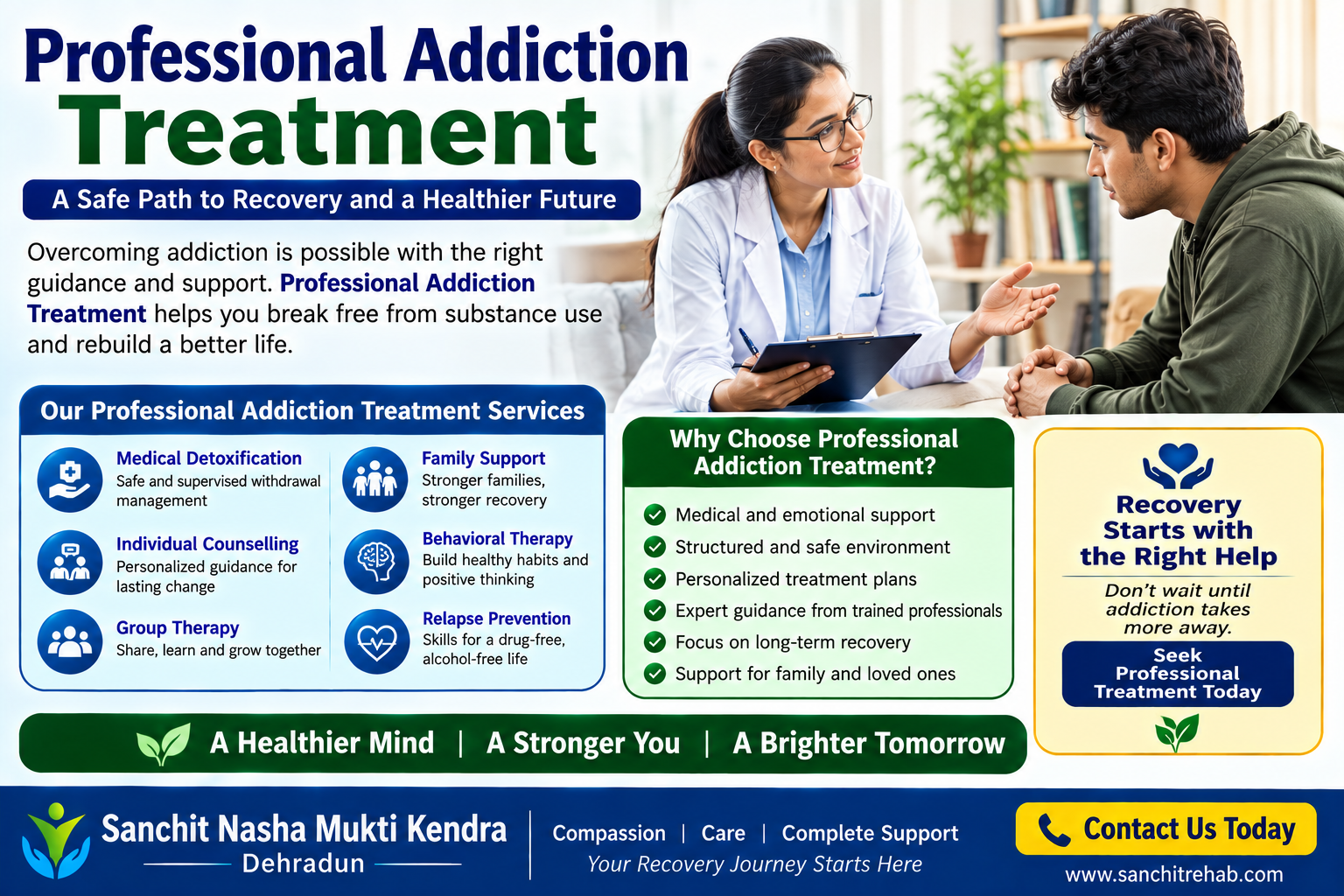
How to Take the First Step Toward Professional Addiction Treatment
The first step does not have to be complicated.
A person can begin by talking honestly with a qualified healthcare or addiction professional about their substance use.
An initial assessment may consider:
- What substance is being used
- How often it is used
- How long use has continued
- Previous attempts to quit
- Withdrawal symptoms
- Physical health
- Mental and emotional well-being
- Family and social circumstances
- Personal recovery goals
This information can help professionals determine what type of treatment may be appropriate.
Some people may need detoxification first. Others may require counselling or structured rehabilitation. Treatment should be based on individual circumstances rather than assumptions.
Frequently Asked Questions
1. When is it time to seek Professional Addiction Treatment?
It may be time when a person cannot control their substance use, repeatedly tries and fails to quit, experiences withdrawal or strong cravings, or continues using despite problems with health, family, work, studies, or finances.
2. Do I need treatment if I only drink on weekends?
Frequency alone does not determine whether someone has an addiction. If weekend drinking leads to loss of control, relationship problems, risky behavior, health concerns, or difficulty stopping, professional advice may be useful.
3. Can someone stop addiction without professional help?
Some people may successfully change their substance use without formal treatment. However, repeated unsuccessful attempts, dependence, or significant withdrawal symptoms are reasons to seek professional assessment and support.
4. What is the difference between detox and rehabilitation?
Detox focuses mainly on helping the body adjust after substance use stops and managing withdrawal. Rehabilitation addresses the broader psychological, behavioural, emotional, and social aspects of addiction.
5. Is Professional Addiction Treatment only for severe addiction?
No. People can seek help at different stages. Early professional support may help prevent substance use from becoming more severe.
6. How can families recognise addiction?
Families may notice increasing substance use, secrecy, withdrawal from responsibilities, mood changes, financial problems, relationship conflict, declining work or academic performance, and repeated unsuccessful attempts to quit.
7. What happens during addiction counselling?
Counselling may help individuals understand their substance use, identify triggers, manage emotions and cravings, improve coping skills, and create realistic recovery goals.
8. Can addiction treatment help prevent relapse?
Treatment can teach people how to recognise triggers, manage cravings, develop healthy coping strategies, build support networks, and create a relapse-prevention plan. Recovery is an ongoing process, so continued support may be important.
9. Should someone with withdrawal symptoms seek medical advice?
Yes. Withdrawal can vary significantly depending on the substance, duration of use, and individual health. Some forms of withdrawal can become serious, so professional medical assessment is important.
Conclusion
Knowing when to seek professional addiction treatment can make a meaningful difference in a person’s recovery journey. There is no requirement to wait until addiction causes a major health crisis, destroys relationships, or results in serious financial or social consequences.
If someone repeatedly tries to quit but cannot, experiences withdrawal or strong cravings, hides their substance use, neglects responsibilities, or continues using despite negative consequences, professional support should be considered.
Professional Addiction Treatment can provide a structured path that combines assessment, detoxification when appropriate, counselling, behavioural support, family involvement, healthy routines, and relapse-prevention planning.
Most importantly, seeking treatment is not a sign of weakness. It is a practical step toward change.
For people and families in Gwalior, Sanchit Nasha Mukti Kendra, the Best Rehab Centre in Gwalior, can be a starting point for learning about addiction recovery and available rehabilitation support.
Recovery may take time, but recognising the need for help is often one of the most important decisions a person can make.