
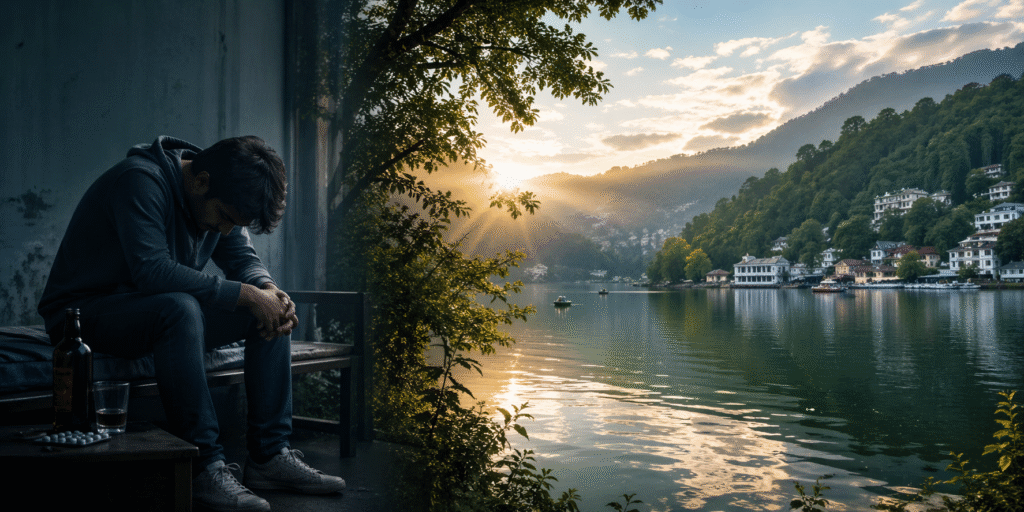
Nainital is known for its beauty — the sparkling lake, the forested hills, the fresh mountain air, the silence. People come here to escape, to heal, to find peace.
But for many people from Nainital and Uttarakhand, there is a different kind of healing needed. Hidden behind the beauty, addiction silently grows. Alcohol dependence in small towns. Drug use among young people. Prescription pill addiction. The same struggles that exist in big cities — but here, they feel even more isolating because there are fewer places to turn.
If you or someone you love in Nainital is struggling with addiction — this guide is for you. It explains why recovery is possible, why the right environment matters, and how to access professional treatment that actually works.
Nasha Mukti Kendra in Nainital — The Complete Recovery Guide
Nainital itself may not have a specialized de-addiction centre — and that is actually an advantage. It forces you to seek proper, professional treatment rather than settling for an unregulated local operation. The best treatment for serious addiction is found in centres with proven track records, qualified doctors, and structured programs.
Sanchit Nasha Mukti Kendra, while located in Gwalior, Madhya Pradesh, serves patients from across India including Nainital and Uttarakhand. The 6-7 hour journey is a small price for recovery that actually works.
Addiction in Nainital — A Hidden Crisis
Nainital appears peaceful on the surface. But substance abuse is more common here than most residents realise — and it often goes unaddressed longer because of social stigma.
Alcohol Addiction in Nainital
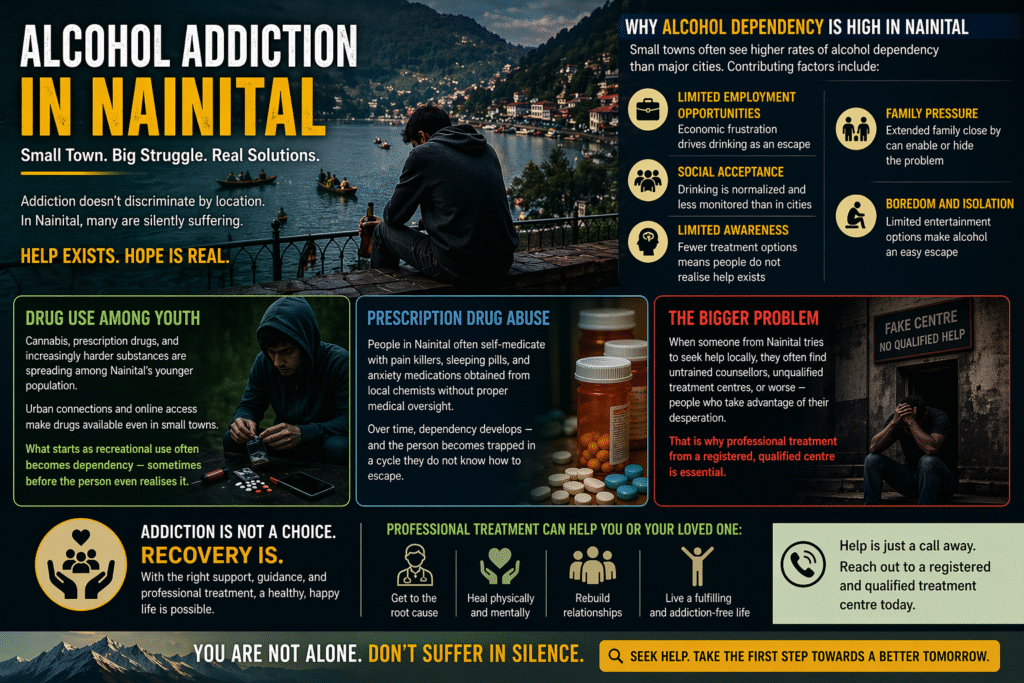
Small towns often see higher rates of alcohol dependency than major cities. Contributing factors include:
- Limited employment opportunities: Economic frustration drives drinking as an escape
- Social acceptance: Drinking is normalized and less monitored than in cities
- Limited awareness: Fewer treatment options means people do not realise help exists
- Family pressure: Extended family close by can enable or hide the problem
- Boredom and isolation: Limited entertainment options make alcohol an easy escape
Drug Use Among Youth
Cannabis, prescription drugs, and increasingly harder substances are spreading among Nainital’s younger population. Urban connections and online access make drugs available even in small towns. What starts as recreational use often becomes dependency — sometimes before the person even realises it.
Prescription Drug Abuse
People in Nainital often self-medicate with pain killers, sleeping pills, and anxiety medications obtained from local chemists without proper medical oversight. Over time, dependency develops — and the person becomes trapped in a cycle they do not know how to escape.
The bigger problem: When someone from Nainital tries to seek help locally, they often find untrained counsellors, unqualified treatment centres, or worse — people who take advantage of their desperation. That is why professional treatment from a registered, qualified centre is essential.
Why Sanchit for Nainital Residents — The Advantage of Distance
This might sound counterintuitive: the best thing about getting treatment in Gwalior instead of locally is the distance itself.
When someone stays in their hometown during recovery — they are constantly exposed to triggers. The same streets where they bought drugs. The same friends who enable the habit. The same bars. The same routines. Willpower gets exhausted fighting the environment every single day.
Sanchit’s location in Gwalior solves this problem. It is far enough away to break the pattern, close enough to remain accessible. The patient enters a completely different environment — a structured centre, qualified doctors, supportive peers who are going through the same journey. The triggers are removed. The focus becomes 100% recovery.
What Nainital Residents Get at Sanchit
- ✅ Complete Environmental Reset — New city, new faces, new routines. The brain is not fighting old patterns.
- ✅ Professional Medical Team — MBBS doctors, psychiatrists, and certified psychologists. Not local counsellors without credentials.
- ✅ 24/7 Medical Supervision — If withdrawal symptoms become dangerous, immediate medical care is available.
- ✅ Structured Daily Program — 30-90 day residential treatment with therapy, yoga, meditation, and recreational activities.
- ✅ Nature-Based Healing — While in Gwalior, the environment supports recovery through outdoor activities and peaceful settings.
- ✅ Family Involvement — Structured family counselling (can include video sessions for those far away) helps rebuild relationships.
- ✅ Direct Pickup Service — No need to figure out transport. Sanchit arranges everything from Nainital.
- ✅ Aftercare Planning — Before discharge, a detailed plan for long-term recovery is created and connections are made with local resources in Nainital.
- ✅ Complete Confidentiality — Your family’s reputation is protected. No one in Nainital needs to know unless you choose to tell them.
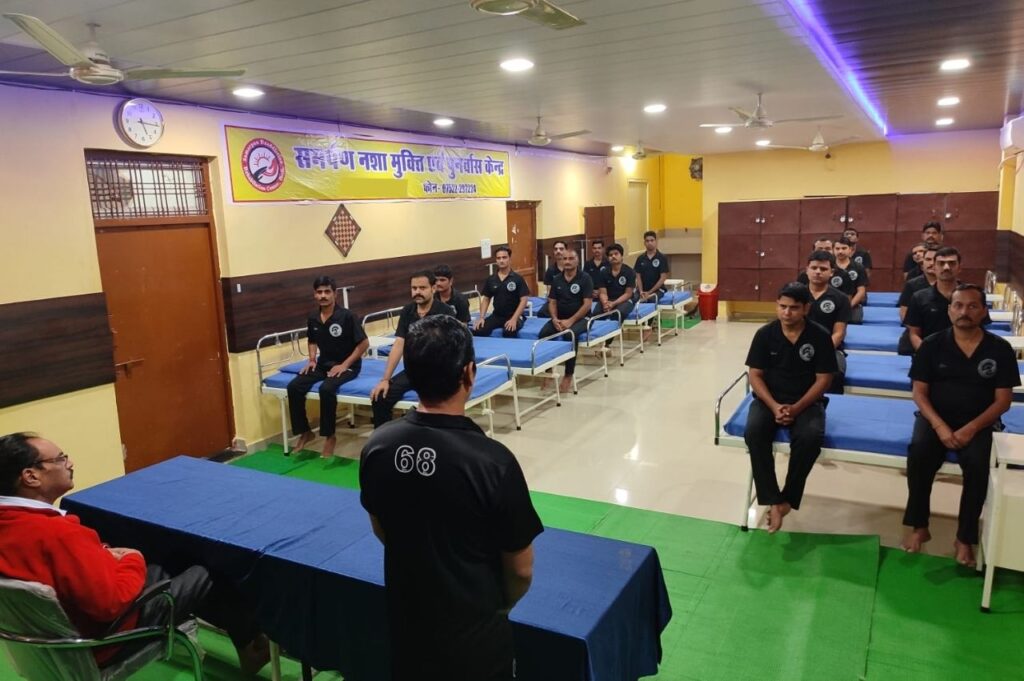
Treatment Program Overview — What Happens at Sanchit
Assessment & Admission (Day 1)
Upon arrival from Nainital, the patient undergoes complete medical and psychological evaluation. The doctor, psychiatrist, and counsellor review:
- Type of substance and duration of use
- Physical health status and medical history
- Mental health conditions (anxiety, depression, trauma)
- Family history and dynamics
- Previous attempts at recovery
A personalised treatment plan is created based on this assessment.
Medical Detoxification (Days 1–21)
The body must safely clear out the substance it has become dependent on. Withdrawal symptoms are managed with appropriate medications and 24/7 medical care. The goal is comfort and safety — the patient is not left to suffer unnecessarily.
Psychological Rehabilitation (Days 22–60)
Once the body is stabilised, the deeper work begins. The patient works with counsellors and therapists on:
- Understanding what triggered the addiction
- Identifying and changing thought patterns that lead to substance use
- Building new coping mechanisms for stress and emotions
- Processing trauma or unresolved emotional issues
- Rebuilding self-esteem and confidence
Integration & Discharge Planning (Days 61–90)
As discharge approaches, the focus shifts to preparing for re-entry into normal life. The patient learns relapse prevention strategies, builds a support network, and plans how to reintegrate into Nainital or their home community — this time, sober and equipped.
Addictions Treated at Sanchit — Recovery for All Substances
| Addiction Type | Common in Nainital | Medical Management | Success Rate |
| Alcohol Addiction | Very Common | Medicated detox + counselling + family therapy | 85% |
| Cannabis/Marijuana | Growing | Behavioural therapy + life skills + peer support | 91% |
| Prescription Drug Abuse | Common | Gradual tapering + pain management alternatives | 89% |
| Heroin / Brown Sugar | Rising | Buprenorphine-assisted detox + intensive therapy | 87% |
| Cocaine / Crack | Occasional | Psychological therapy + mood stabilisers + CBT | 84% |
| Benzodiazepines | Common | Slow tapering protocol + anxiety management | 86% |
| Polysubstance Abuse | Increasing | Integrated medical + psychological approach | 79% |
The Role of Nature & Environment in Recovery
While Sanchit’s primary centre is in Gwalior (not Nainital), the treatment philosophy emphasises the healing power of a peaceful, natural environment — something that patients from Nainital understand instinctively.
How Nature Accelerates Recovery
- Reduces Stress & Anxiety: Natural settings lower cortisol (stress hormone) and activate the parasympathetic nervous system (calm mode). A patient’s anxiety naturally decreases.
- Improves Sleep: Fresh air, natural light cycles, and physical activity improve sleep quality — which is critical for recovery. Many addicts struggle with insomnia; nature helps restore normal sleep.
- Enhances Mood: Sunlight, greenery, and outdoor activity boost serotonin and dopamine naturally. The brain does not need substances to feel better — it is getting them from nature itself.
- Supports Physical Healing: The body’s immune system strengthens with outdoor activity, fresh air, and sunlight. Addiction damages physical health; nature helps reverse it.
- Provides Reflection Space: Nature is quiet. A person in recovery has time to think, process, and rebuild their sense of self.
Nature-Based Activities at Sanchit
The treatment program includes:
- Morning yoga in open spaces
- Walking meditation through natural grounds
- Gardening and horticulture therapy
- Physical fitness activities outdoors
- Spiritual and reflective sessions in natural settings
For someone from Nainital, this environment feels familiar — and that familiarity itself is healing.
Warning Signs — When to Seek Help
If any of these are true for you or someone from Nainital, professional treatment is needed:
- Using more than intended and unable to stop
- Experiencing physical withdrawal symptoms (shaking, sweating, anxiety) when the substance is unavailable
- Neglecting work, family, or responsibilities because of substance use
- Continuing use despite knowing it is causing harm
- Lying to family or friends about usage amounts
- Spending significant money on the substance despite financial hardship
- Driving or operating machinery while intoxicated
- Loss of motivation, mood swings, aggression
- Legal problems related to substance use
- Failed attempts to cut down on use
Three or more of these? It is time to make the call. Waiting only makes the situation worse.
Treatment Models — Residential vs Outpatient
For Nainital residents, residential treatment is strongly recommended. Here is why:
| Residential (24/7) | Outpatient (Part-Time) | |
| Environment Control | Triggers removed, safe space | Constant exposure to triggers |
| Medical Supervision | 24/7 medical staff on site | Limited to clinic hours |
| Crisis Support | Immediate intervention available | May be hours away when needed |
| Peer Support | 24/7 interaction with recovery peers | Limited to session times |
| Success Rate | 85-90% | 25-40% |
| Best For | Moderate to severe addiction | Mild dependency, highly motivated |
For Nainital residents: The 6-7 hour distance to Gwalior is not a barrier — it is an advantage. It ensures you get proper residential treatment, not a compromise outpatient program.
How Family Involvement Works During Treatment
Addiction damages families. Parents blame themselves. Spouses feel betrayed. Children are confused. Addiction is a family disease.
That is why Sanchit involves family in the recovery process from day one — not as an afterthought.
Family Sessions Include
- Understanding Addiction: Family members learn that addiction is a medical condition, not a moral failure. Blame shifts to compassion.
- Communication Skills: Family members learn to communicate without enabling or enabling relapse.
- Setting Boundaries: How to support recovery without sacrificing your own wellbeing.
- Rebuilding Trust: A structured path to restoring the relationship after addiction broke it.
- Relapse Prevention: How to recognise early warning signs and respond appropriately if relapse occurs.
For Nainital Families
Family members from Nainital can:
- Attend in-person sessions if they visit (Gwalior is accessible by road)
- Participate in video counselling sessions (from Nainital)
- Receive written guidance and home assignments
- Call the counsellor with urgent questions
Practical Details for Nainital Residents
Transportation & Logistics
Distance: Nainital to Gwalior is approximately 6–7 hours by road via Delhi.
Route: Nainital → Delhi (6 hours) → Gwalior (6 hours). Or direct via highways.
Sanchit’s Pickup Service: The centre handles all transport. A team member coordinates pickup from Nainital, manages the journey, and ensures the patient arrives safely. The family does not have to worry about logistics.
Accommodation
Sanchit offers:
- VIP AC Private Room (Single occupancy, private bathroom)
- Private AC Ward (2-3 shared beds with bathroom)
- Sharing Ward (4-6 beds, communal bathroom, more economical)
Room selection depends on comfort preference and budget. All patients receive identical quality medical care and therapy regardless of room type.
Program Costs
Treatment costs vary based on:
- Program duration (30/60/90 days)
- Accommodation type (VIP / Private / Sharing)
- Any additional medical requirements
Payment options: Sanchit offers flexible payment plans. Cost should never be a barrier to recovery. Call to discuss options: +91-8770211494
What to Bring
When a patient from Nainital arrives at Sanchit, they should bring:
- Valid ID (Aadhar, PAN, Driving License)
- Medical reports (if any previous health issues)
- List of current medications
- Comfortable clothes for outdoor activities
- Personal hygiene items
- Any required medical devices (glasses, hearing aids, etc.)
Most other necessities are provided at the centre.
Aftercare — Recovery Does Not End at Discharge
When a patient from Nainital completes the program and returns home, recovery has not ended — it has entered a critical new phase.
Structured Aftercare Plan
- First 3 Months: Weekly follow-up sessions (via video call or phone), medical check-ups, connection to local AA/NA groups in Nainital
- Months 3–6: Bi-weekly counselling, family follow-ups, relapse trigger planning
- Months 6–12: Monthly check-ins, continued peer support group attendance, crisis support available 24/7
Re-Integration Into Nainital Life
Returning to the same town where the addiction began is challenging. The aftercare plan addresses this by:
- Identifying specific Nainital triggers and creating coping strategies
- Connecting the person with local recovery groups (AA, NA, SMART Recovery if available in Nainital)
- Building a relapse prevention network of supportive friends/family in Nainital
- Career or educational planning if job/study was affected by addiction
This support structure is what transforms a recovery program into lasting sobriety.
Contact Sanchit — Start Recovery Today
| 24/7 Helpline — Call Immediately | |
| 📞 India Helpline | +91-8770211494 |
| 📞 Main Centre (Gwalior) | +91-7828991573 | +91-8302102094 |
| sanchitrehab@gmail.com | |
| 🌐 Website | sanchitrehab.com |
| 📍 Centre Location | Gwalior, Madhya Pradesh (6-7 hours from Nainital) |
| 🚗 Pickup Service | Available from Nainital and across India |
| ⏰ Available | 24 hours, 7 days a week, 365 days a year |
📞 Book a Free Confidential Consultation
Final Thoughts
Nainital is beautiful. The lake, the mountains, the peace. Many come here searching for healing.
If you or someone you love is struggling with addiction — you deserve that healing too. Real healing. Professional healing. The kind that comes from proper medical care, supportive people who understand, and an environment designed for recovery.
That healing is possible. It requires one thing: the courage to make a call.
Frequently Asked Questions
Q1. Is it really necessary to go so far for treatment? Are there no centres in Nainital?
While there may be some local counselling services in Nainital, for serious addiction (especially involving hard drugs or alcohol dependency), you need a registered, government-certified centre with qualified doctors, psychiatrists, and 24/7 medical supervision. Sanchit provides all of this. The distance is actually an advantage — it removes you from triggers and provides a dedicated treatment environment.
Q2. How long does the treatment program take?
Standard programs are 30, 60, or 90 days depending on the severity of addiction. Most cases benefit from the 90-day program as it allows time for detoxification, psychological healing, family work, and relapse prevention. Longer programs may be recommended for severe polysubstance abuse or those with co-occurring mental health conditions.
Q3. Can I visit my family in Nainital during treatment?
Home visits during treatment are generally not recommended in the first 2-3 months, as returning to the familiar environment can trigger relapse. However, family members can visit the centre at Gwalior. After the initial phases, supervised visits back to Nainital may be permitted based on the treatment team’s assessment.
Q4. What if I relapse after completing the program and returning to Nainital?
Relapse happens to many people — it is not a failure, it is part of the recovery journey. The aftercare plan includes 24/7 crisis support. Call immediately and get guidance. Depending on the situation, a return to the centre for refresher treatment may be recommended. This is why the relationship with the treatment centre continues even after discharge.
Q5. Is there any shame in admitting I need this help?
No. Addiction is a medical condition, not a character flaw. Seeking treatment is an act of strength, not weakness. Many successful, respected people in Nainital have quietly gone through Sanchit’s program and rebuilt their lives. Your family’s privacy is completely protected.
Q6. What if my family is struggling to accept my addiction?
Denial and shame are common in families. Family counselling sessions (which can be video-based for those in Nainital) help educate families about addiction and build the understanding needed to support recovery. Sometimes, family members change their perspective once they understand addiction as a medical disease.