
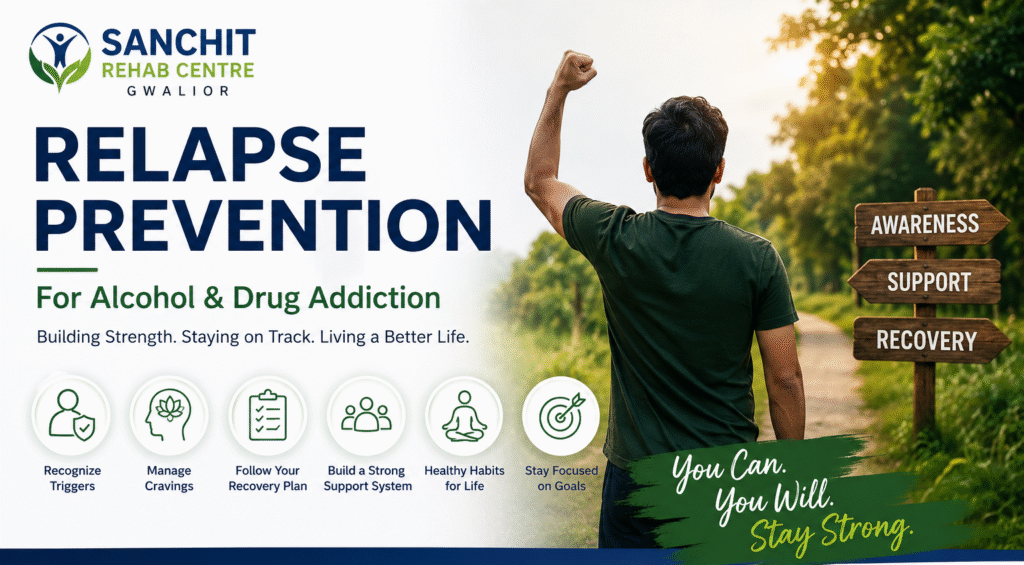
Relapse Prevention for Alcohol & Drug Addiction is one of the most important parts of successful addiction recovery. Many individuals complete detoxification and rehabilitation, but maintaining sobriety requires continuous support, healthy coping skills, and a strong recovery plan. At Sanchit Rehab Centre, we provide personalised relapse prevention programmes that help individuals stay committed to long-term recovery and build a healthier, addiction-free life.
Recovery is a journey, not a single event. Our relapse prevention approach focuses on identifying triggers, managing cravings, improving emotional well-being, and developing practical strategies to prevent alcohol and drug relapse.
What Is Relapse Prevention?
Relapse prevention is a structured therapeutic process that helps individuals recognise warning signs and avoid returning to alcohol or drug use. It teaches people how to handle stress, difficult emotions, social pressure, and high-risk situations without using substances.
At Sanchit Rehab Centre, relapse prevention is integrated into every stage of addiction treatment, including detox, therapy, rehabilitation, and aftercare support.
Why Relapse Prevention Is Important
Relapse Prevention for Alcohol & Drug Addiction is an essential part of successful addiction recovery. Addiction affects brain function, emotions, behaviour, and decision-making, making recovery a gradual process rather than a single event. Even after completing treatment, cravings, emotional triggers, and stressful situations may continue for some time. Without proper guidance and support, individuals may find it difficult to maintain long-term sobriety.
At Sanchit Rehab Centre, relapse prevention helps individuals recognise early warning signs, manage cravings, and develop healthier coping strategies before a relapse occurs.
Benefits of Relapse Prevention
- Reduces the risk of alcohol and drug relapse
- Helps manage cravings effectively
- Improves emotional control
- Builds confidence and self-discipline
- Encourages healthy lifestyle changes
- Strengthens long-term recovery
A strong relapse prevention plan gives individuals the tools they need to handle challenges and remain focused on recovery goals.
Common Relapse Triggers
Understanding personal triggers is a crucial step in Relapse Prevention for Alcohol & Drug Addiction. Triggers are situations, emotions, thoughts, or environments that may increase the urge to use alcohol or drugs again. Identifying these triggers early helps individuals take preventive action and maintain long-term sobriety.
Understanding personal triggers is a key step in preventing relapse. Common triggers include:
- Stress and anxiety
- Depression or emotional distress
- Conflict in relationships
- Social pressure
- Exposure to alcohol or drugs
- Loneliness or isolation
- Lack of routine
- Overconfidence in recovery
Our counsellors help patients identify their unique triggers and develop personalised coping strategies.
Warning Signs of Relapse
Relapse often begins before substance use occurs. Early warning signs may include:
- Increased stress or irritability
- Negative thinking patterns
- Avoiding support systems
- Skipping therapy or recovery meetings
- Romanticising past substance use
- Changes in sleep or eating habits
- Isolation from family and friends
Recognising these signs early allows individuals to seek help before relapse happens.

Healthy Coping Strategies for Long-Term Recovery
Successful recovery depends on replacing substance use with healthier habits.
Recommended Coping Strategies
- Regular exercise
- Yoga and meditation
- Healthy sleep routine
- Balanced nutrition
- Journaling and self-reflection
- Support groups
- Creative activities
- Spending time with supportive people
These habits improve physical and emotional health while reducing relapse risk.
Role of Family in Relapse Prevention
Family support can significantly influence recovery success. Loved ones can help by:
- Encouraging treatment participation
- Avoiding enabling behaviours
- Providing emotional support
- Maintaining healthy communication
- Recognising warning signs early
At Sanchit Rehab Centre, we involve families in the recovery process whenever appropriate.
Long-Term Recovery Support
Relapse prevention does not end when treatment is completed. Ongoing support is essential for maintaining sobriety.
Our long-term recovery services include:
- Follow-up counselling
- Recovery monitoring
- Relapse prevention sessions
- Family follow-up support
- Lifestyle guidance
- Emotional support
Continuous care helps individuals stay connected to recovery and manage challenges effectively.
How Sanchit Rehab Centre Supports Lasting Sobriety
Sanchit Rehab Centre combines evidence-based therapy, compassionate counselling, wellness activities, and aftercare support to promote lasting recovery. Our personalised approach helps individuals build resilience, improve emotional health, and develop the skills needed for a substance-free future.
We believe that relapse is not a failure; it is a signal that additional support may be needed. Early intervention and professional guidance can help individuals regain stability and continue their recovery journey.
Conclusion
Relapse Prevention for Alcohol & Drug Addiction is essential for achieving long-term sobriety and preventing future substance use. Through counselling, therapy, stress management, family support, and ongoing aftercare, Sanchit Rehab Centre helps individuals build a strong foundation for lasting recovery.
If you or your loved one is recovering from alcohol or drug addiction, professional relapse prevention support can make a significant difference. With the right guidance, commitment, and support system, a healthy and addiction-free life is possible.