
Mental Health Awareness is not just a topic—it is a powerful tool that can save lives, rebuild families, and restore hope after addiction. Addiction does not only harm the body; it deeply affects the mind, emotions, relationships, and career. After addiction, many individuals silently struggle with anxiety, depression, guilt, fear, and low self-esteem. Without proper Mental Health Awareness, these hidden issues can slow recovery, increase relapse risk, and damage family life and professional growth.
Timely and professional mental health education helps individuals recognize their emotions, seek the right help, and rebuild their lives with confidence. With the right support, recovery becomes not just possible—but sustainable. At Sanchit Rehab Centre in Gwalior, we believe that understanding mental health is the foundation of long-term recovery and a healthier, happier future.
Understanding Mental Health Awareness in Addiction Recovery
Mental Health Awareness means understanding how thoughts, emotions, and behaviors affect overall wellbeing—especially during addiction recovery.
In recovery, the mind needs as much care as the body. Many people believe quitting substances is enough, but emotional wounds often remain untreated.
Key Aspects of Mental Health Awareness
- Recognizing emotional triggers and stress – Helps individuals identify situations or feelings that lead to cravings or emotional distress, allowing them to respond calmly instead of reacting impulsively.
- Understanding anxiety, depression, and trauma – Creates awareness that these mental health conditions are common, treatable, and not signs of weakness, encouraging timely professional support.
- Learning healthy coping skills – Teaches safe and positive ways to manage stress, emotions, and challenges without turning to substances.
- Building emotional resilience – Strengthens the ability to face setbacks, pressure, and life difficulties without feeling overwhelmed or giving up.
-
Developing self-confidence and self-control – Empowers individuals to trust their decisions, set boundaries, and stay committed to recovery goals.
When individuals become aware of their mental health, they gain clarity, strength, and direction. This awareness helps them stay committed to recovery even during difficult times.
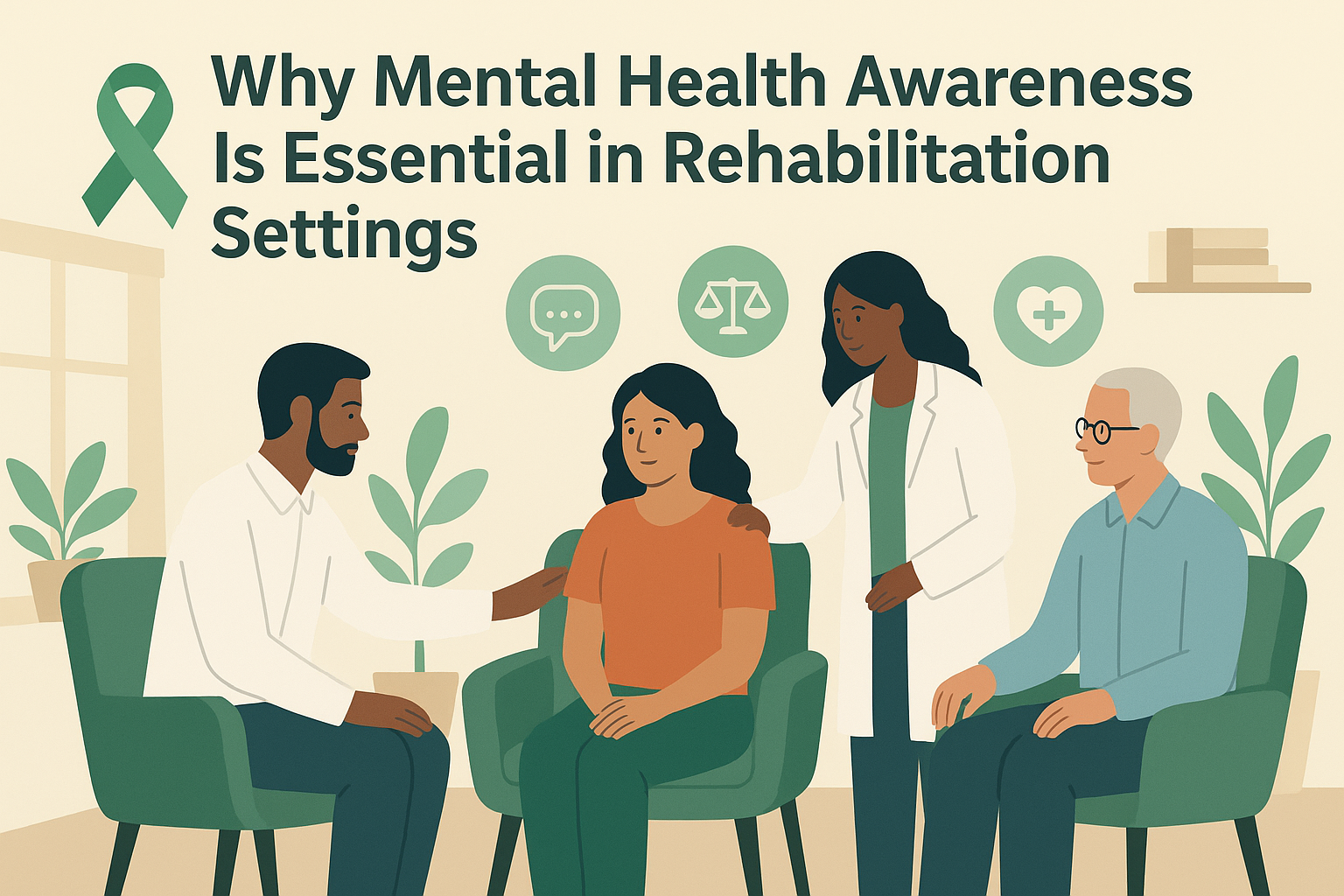
Why Mental Health Awareness Is Essential in Rehabilitation Settings
Rehabilitation is not only about detoxification. It is about healing the whole person—mind, body, and soul. Mental Health Awareness plays a critical role inside rehab centres.
Benefits of Mental Health Awareness in Rehab
- Reduces relapse risk – Helps individuals understand and manage emotional triggers early, lowering the chances of returning to substance use.
- Improves emotional stability – Supports better mood control and emotional balance during the ups and downs of recovery.
- Enhances treatment effectiveness – Allows therapies and counseling to work more deeply by addressing both mental and emotional needs.
- Encourages honest communication – Creates a safe space where patients feel comfortable sharing thoughts, fears, and struggles openly.
-
Builds trust between patients and therapists – Strengthens the therapeutic relationship, making recovery more effective and long-lasting.
Without mental health education, patients may feel confused, ashamed, or isolated. Awareness replaces fear with understanding and hope.
The Link Between Mental Health Disorders and Substance Abuse
There is a strong connection between mental health disorders and addiction. Many individuals use substances to escape emotional pain.
Common Co-Occurring Conditions
- Depression – Causes persistent sadness, low motivation, and loss of interest in daily activities, often leading individuals to seek relief through substances.
- Anxiety disorders – Create constant fear, worry, or restlessness that can push individuals toward substance use for temporary calm.
- PTSD (trauma) – Develops after painful or shocking experiences, leading to flashbacks, emotional numbness, and avoidance behaviors.
- Bipolar disorder – Involves extreme mood swings between emotional highs and deep lows, making emotional balance difficult without treatment.
-
Sleep disorders – Disrupt healthy sleep patterns, increasing stress, fatigue, and vulnerability to substance use.
Mental Health Awareness helps patients understand that addiction is not a moral failure but often a response to untreated emotional distress. Recognizing this link removes self-blame and encourages healing.

How Mental Health Awareness Reduces Stigma in Rehab Centres
Stigma is one of the biggest barriers to recovery. Many people avoid seeking help due to fear of judgment.
How Awareness Breaks Stigma
- Normalizes mental health conversations
- Encourages empathy and compassion
- Promotes acceptance and openness
- Reduces shame and guilt
-
Builds a supportive rehab environment
At Sanchit Rehab Centre, we actively promote Mental Health Awareness to create a safe space where patients feel respected and understood.
The Role of Mental Health Awareness in Personalized Treatment Plans
Every individual’s journey is unique. Mental Health Awareness allows rehab professionals to design personalized treatment plans that address specific emotional needs.
Personalized Care Includes
- Individual counselling – Provides one-on-one support to explore personal challenges, emotions, and recovery goals in a safe and confidential space.
- Group therapy – Encourages shared healing by connecting with others facing similar struggles, reducing loneliness and building mutual support.
- Stress management techniques – Teach practical ways to handle pressure and daily stress without turning to substances.
- Trauma-informed care – Focuses on understanding past trauma and treating individuals with sensitivity, safety, and respect.
- Mindfulness and relaxation practices – Help calm the mind, reduce anxiety, and improve emotional control through focused breathing and awareness.
When patients understand their mental health, they actively participate in treatment, leading to faster and stronger recovery outcomes.
How Family Mental Health Education Improves Recovery Outcomes
Addiction affects the entire family. Educating families through Mental Health Awareness creates a stronger support system.
Benefits for Families
- Better communication – Helps families express feelings and concerns openly without blame or misunderstanding.
- Reduced conflicts – Lowers tension and arguments by promoting patience, empathy, and mutual respect.
- Improved emotional understanding – Enables family members to recognize emotions, triggers, and mental health needs more compassionately.
- Healthy boundaries – Teaches families how to support recovery without enabling harmful behaviors.
- Long-term recovery support – Creates a stable, loving environment that encourages lasting sobriety and emotional wellbeing.
Family involvement helps patients feel loved, accepted, and motivated to stay sober.

Empowering Patients to Seek Help Through Mental Health Awareness
Many people suffer in silence because they do not understand their emotions. Mental Health Awareness empowers individuals to ask for help without fear.
Empowerment Leads To
- Early intervention – Allows mental health concerns to be addressed before they become severe or lead to relapse.
- Better emotional control – Helps individuals manage emotions calmly without feeling overwhelmed or impulsive.
- Increased confidence – Encourages belief in one’s ability to make healthy decisions and stay committed to recovery.
- Stronger self-esteem – Builds a positive self-image by replacing shame and guilt with self-respect and self-worth.
- Long-term mental wellness – Supports lasting emotional balance, resilience, and a healthier life beyond recovery.
Awareness transforms weakness into strength and confusion into clarity.
7 Powerful Reasons Mental Health Awareness Can Change Lives
1. Prevents Relapse
Understanding emotions reduces unhealthy coping behaviors.
2. Improves Physical Health
Mental wellbeing supports better sleep, appetite, and immunity.
3. Strengthens Family Relationships
Awareness improves empathy and emotional connection.
4. Builds Career Stability
Mental clarity improves focus, productivity, and decision-making.
5. Encourages Early Treatment
Recognizing symptoms leads to timely professional help.
6. Reduces Fear and Negativity
Education replaces myths with facts and hope.
7. Promotes Long-Term Recovery
Mental strength supports lifelong sobriety.
Conclusion
Mental Health Awareness is the backbone of true and lasting recovery from addiction. It helps individuals understand their emotions, heal hidden psychological wounds, and regain control over their thoughts and behaviors. When mental health is addressed alongside physical recovery, the chances of relapse reduce significantly, and overall quality of life improves.
At Sanchit Rehab Centre in Gwalior, we are committed to guiding individuals and families toward a healthier, balanced, and hopeful future. With professional care, compassionate support, and a strong focus on Mental Health Awareness, recovery becomes not only achievable—but sustainable for life.
Frequently Asked Questions (FAQs)
Q1. What is Mental Health Awareness?
Mental Health Awareness means understanding emotional wellbeing, recognizing mental health conditions, and knowing when and how to seek help.
Q2. Why is Mental Health Awareness important in addiction recovery?
It helps identify emotional triggers, reduces relapse risk, and supports long-term recovery.
Q3. Can mental health issues cause addiction?
Yes. Many people use substances to cope with untreated mental health conditions.
Q4. How does family involvement help recovery?
Educated families provide emotional support, reduce stress, and improve recovery outcomes.
Q5. Is mental health treatment confidential?
Yes. All consultations and treatments at Sanchit Rehab Centre are strictly confidential.
Q6. How can I start treatment?
Simply contact us through our website or phone for a private consultation.