
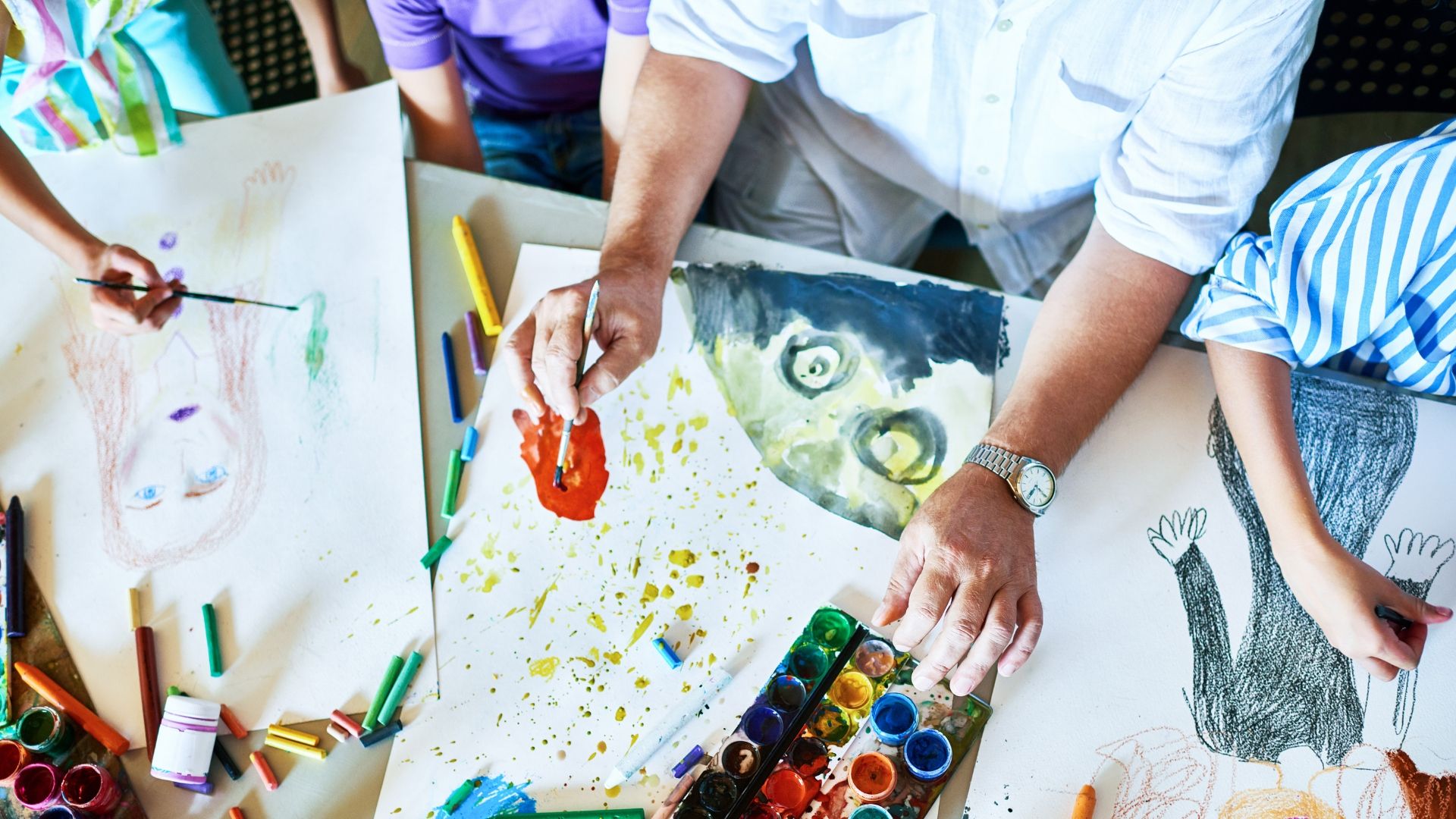
Drug addiction affects not only the body but also emotions, thoughts, and identity. Many individuals struggle to express pain, guilt, fear, or trauma through words alone. This is where creative therapy for drug recovery becomes a powerful healing tool. Art and music offer a safe, non-verbal way to express emotions, release stress, and rebuild mental strength.
For small business owners, parents, or community leaders supporting recovery, understanding creative therapy helps recognise why modern Nasha Mukti Kendras go beyond medical treatment. This article explains how art and music therapy support addiction recovery, their benefits, and why creative expression is essential for long-term healing at Sanchit Nasha Mukti Kendra, Gwalior.
What Is Creative Therapy for Drug Recovery
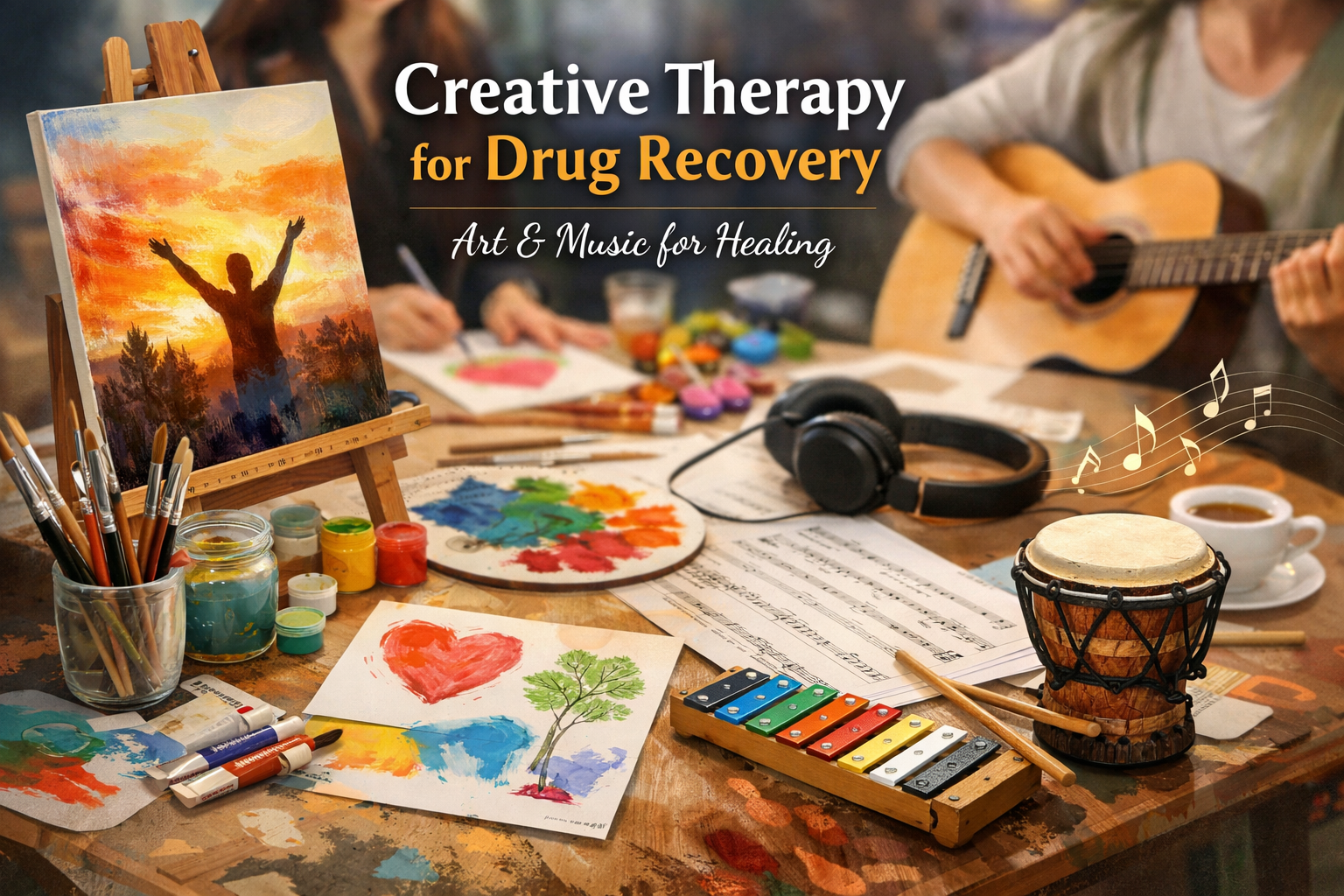
Creative therapy for drug recovery is a therapeutic approach that uses artistic and musical activities to support emotional, psychological, and behavioural healing during addiction recovery. It helps individuals express feelings that are difficult to verbalize.
Creative therapy is especially effective because:
- It reduces emotional resistance
- It encourages self-reflection
- It promotes calmness and focus
- It supports holistic recovery
This therapy complements medical treatment and counselling in Nasha Mukti Kendras.
Why Creative Expression Matters in Addiction Recovery
Addiction often suppresses emotions or causes emotional overload. Many individuals feel disconnected from themselves and others.
Creative therapy helps by:
- Giving emotions a healthy outlet
- Reducing inner tension and anxiety
- Improving self-awareness
- Rebuilding confidence and identity
The role of art and music in recovery is to heal the mind gently without pressure or judgment. These creative therapies provide a calming and supportive space where individuals can relax, release emotional stress, and rebuild mental balance at their own pace.
Understanding Art Therapy for Addiction Recovery
Art therapy for addiction recovery uses drawing, painting, sculpting, or crafts as a form of emotional communication.
How art therapy helps
- Allows expression without words
- Helps process trauma and stress
- Encourages mindfulness and patience
- Builds a sense of achievement
Patients do not need any artistic skills or prior experience to benefit from creative therapy. The focus is entirely on emotional expression and self-discovery, not perfection or technique. Through simple art and music activities, individuals feel safe to express thoughts and feelings that may be difficult to put into words, supporting deeper healing and confidence in recovery.
Benefits of Art Therapy in Drug Recovery
Art therapy offers multiple mental and emotional benefits.
Key benefits include:
- Reduced anxiety and stress
- Improved emotional regulation
- Better focus and concentration
- Increased self-esteem
- Healthy emotional release
In Nasha Mukti Kendras, art therapy helps patients feel safe, calm, and understood.
Music Therapy for Drug Recovery
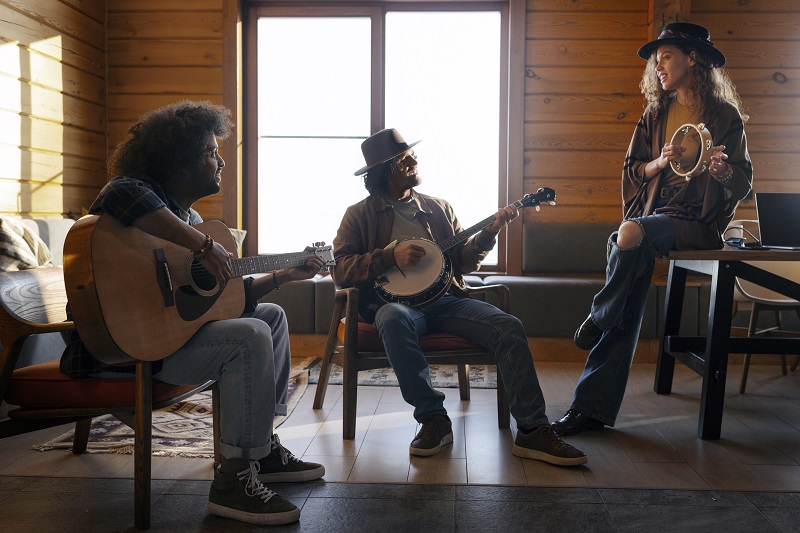
Music therapy uses listening, singing, rhythm, or instruments to support healing. Music directly affects brain chemistry and emotional balance.
How music therapy supports recovery
- Calms the nervous system
- Reduces cravings and restlessness
- Improves mood and motivation
- Enhances emotional connection
Music therapy for drug recovery is effective across all age groups because it naturally connects with emotions and memory. Whether young or old, individuals respond positively to music, making it a powerful and universal tool for emotional healing and sustained recovery.
Role of Art and Music in Recovery
The role of art and music in recovery goes beyond entertainment. They act as therapeutic tools that reshape emotional responses and thought patterns.
Art and music help:
- Release suppressed emotions
- Improve emotional stability
- Strengthen coping skills
- Encourage positive habits
They support both early recovery and long-term relapse prevention.
Creative Therapy in Nasha Mukti Kendras
Modern Nasha Mukti Kendras integrate creative therapy into daily recovery routines.
Common creative therapy activities include:
- Drawing and painting sessions
- Clay modelling and craft work
- Group music sessions
- Guided music listening
- Rhythm and drumming circles
These activities promote emotional healing alongside medical care.
Creative Therapy and Mental Health Healing
Mental health challenges such as anxiety, depression, and emotional trauma often accompany addiction.
Creative therapy supports mental health by:
- Reducing emotional overload
- Encouraging emotional awareness
- Improving mood balance
- Building emotional resilience
This makes creative therapy for drug recovery a vital part of holistic treatment.
Creative Therapy for Stress and Craving Management
Creative therapy helps manage them by:
- Shifting focus away from urges
- Providing calm mental engagement
- Reducing stress hormones
- Creating positive emotional experiences
Music and art offer healthy alternatives to substance use.
Group Creative Therapy and Social Healing
Addiction often causes isolation. Group creative therapy rebuilds social connections.
Benefits of group sessions include:
- Improved peer interaction
- Shared emotional expression
- Increased trust and cooperation
- Reduced feelings of loneliness
Group art and music sessions strengthen community support within rehab centres.
Why Small Business Owners Should Understand Creative Therapy
Small business owners may employ or support individuals in recovery.
Understanding creative therapy helps them:
- Appreciate holistic recovery approaches
- Support emotionally healthier environments
- Reduce stigma around addiction treatment
- Encourage long-term recovery success
Healthy recovery leads to better focus, responsibility, and productivity.
Long-Term Benefits of Creative Therapy for Drug Recovery
Creative therapy supports sustainable recovery outcomes. Long-term benefits include:
- Improved emotional balance
- Reduced relapse risk
- Better self-expression
- Stronger mental clarity
- Healthier relationships
Art and music help individuals rediscover purpose and inner peace.
Conclusion
If you or someone you know is struggling with addiction, seek help from a trusted Nasha Mukti Kendra in Gwalior that specialises in Creative Therapy for Drug Recovery, combining Creative Therapy for Drug Recovery with medical and psychological care. True healing begins when Creative Therapy for Drug Recovery allows expression, emotional release, and inner transformation.
Frequently Asked Questions
What is creative therapy for drug recovery?
It is a therapeutic approach that uses art and music to support emotional healing and mental recovery during addiction treatment.
Is art therapy effective for addiction recovery?
Yes. Art therapy helps express emotions, reduce stress, and improve self-awareness, supporting long-term recovery.
How does music therapy help in drug recovery
Music therapy calms the mind, improves mood, and reduces cravings by positively affecting brain chemistry.
Is creative therapy used in Nasha Mukti Kendras?
Many modern Nasha Mukti Kendras include creative therapy as part of holistic recovery programs.
Can creative therapy prevent relapses?
Yes. By improving emotional control and coping skills, creative therapy lowers relapse risk.