
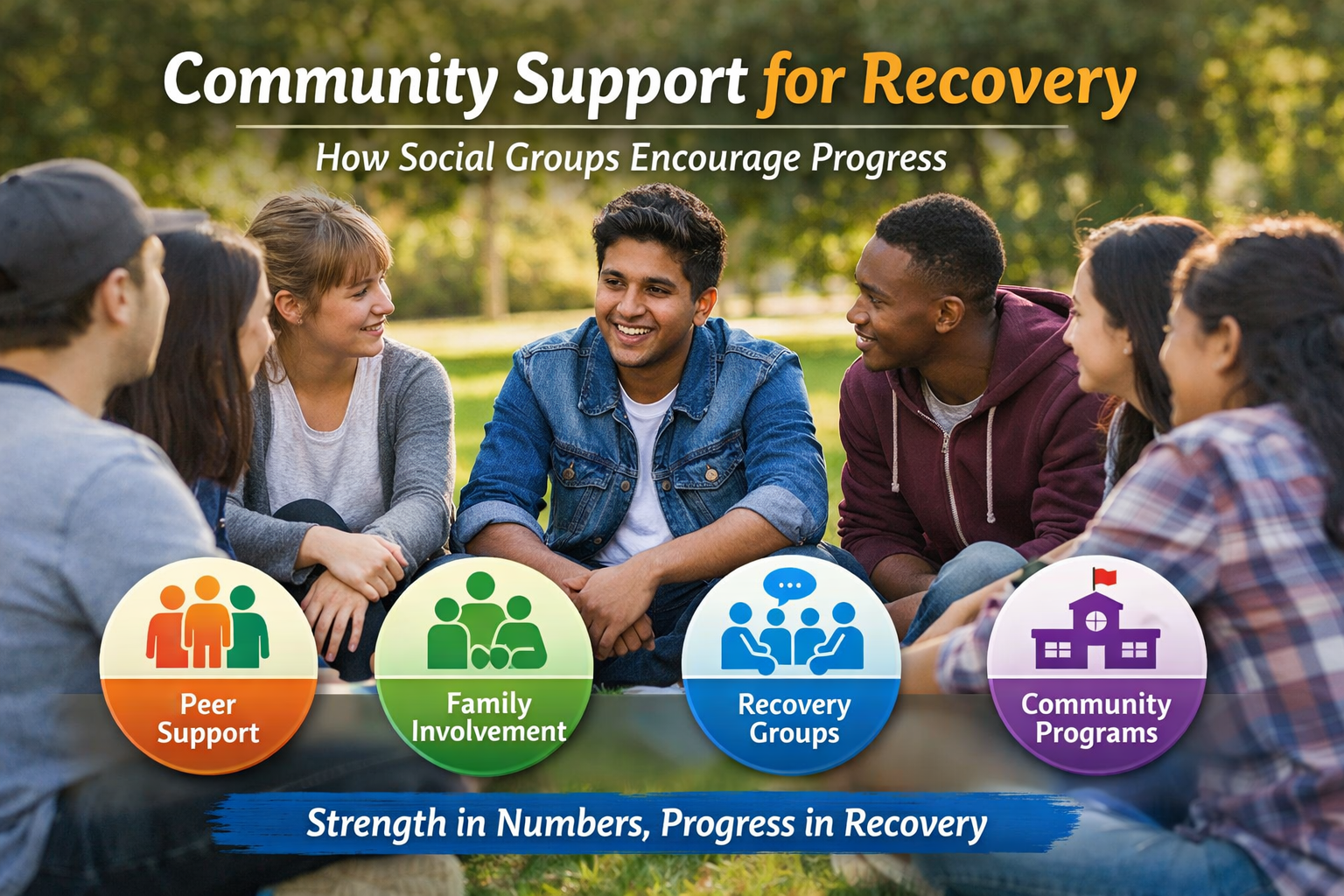
 Recovery from substance abuse is not just about quitting harmful habits; it is about rebuilding life with the right guidance, motivation, and emotional strength. For school and college-going students, this journey can feel overwhelming due to peer pressure, academic stress, and emotional confusion. This is where Community Support for Recovery plays a powerful role.
Being part of supportive social groups helps students feel understood, accepted, and motivated to move forward. Instead of facing recovery alone, they gain strength from peers who share similar struggles and goals. At Sanchit Rehab Centre In Gwalior, this article explains how community support, social groups, and positive peer networks encourage real progress in recovery in a simple and student-friendly way.
What Is Community Support for Recovery
Community Support for Recovery refers to the help, guidance, and encouragement individuals receive from social groups, peers, mentors, families, and community-based programs during the recovery process.
For students, community support can include:
- School or college awareness groups
- Peer support circles
- Youth counseling sessions
- Community-based recovery programs
- Support from teachers, counselors, and family
These groups focus on emotional healing, confidence building, and healthy decision-making.
Why Community Support Is Important for Students
Students are at a sensitive stage of life where habits, mindset, and identity are still forming. Without support, recovery can feel lonely and confusing.
Key reasons community support matters for students
- Reduces feelings of isolation and shame
- Builds emotional strength and confidence
- Encourages positive peer influence
- Improves focus on studies and future goals
- Promotes healthy coping skills
Community Support for Recovery helps students realize they are not alone and that change is possible.

How Social Groups in Addiction Recovery Help
Social groups in addiction recovery create a safe environment where students can share experiences without fear of judgment.
Benefits of social groups in addiction recovery
- Open communication and emotional expression
- Learning from others’ recovery journeys
- Mutual motivation and accountability
- Development of social skills and self-respect
When students see others making progress, it inspires them to stay committed to their own recovery.
Role of Peer Support in Recovery
Peer support is one of the strongest elements of Community Support for Recovery. Students often feel more comfortable talking to people their own age.
How peer support helps
- Builds trust and emotional comfort
- Reduces stress and anxiety
- Encourages healthy friendships
- Promotes responsible behavior
Positive peer influence can replace harmful peer pressure and guide students toward better choices.
Social Support for Substance Abuse Recovery
Social support for substance abuse recovery includes emotional, practical, and moral help from people around the student.
Types of social support
- Emotional support: Listening, empathy, encouragement
- Informational support: Guidance, education, awareness
- Practical support: Study help, activity involvement, routine building
This support system helps students stay balanced and focused during recovery.
Community-Based Recovery Programs for Youth
Community-based recovery programs are designed to support young people in a structured yet friendly environment.
Common features
- Group counseling sessions
- Life skills training
- Stress management workshops
- Educational and career guidance
- Sports, art, and cultural activities
These programs help students develop discipline, self-control, and confidence while staying connected to positive communities.
Family and Community Support Working Together
Recovery becomes stronger when family and community support work together.
How families contribute
- Providing emotional safety
- Encouraging healthy routines
- Supporting academic goals
- Avoiding judgment and blame
When families collaborate with community groups, students feel supported at every level of life.
Positive Impact on Academic and Personal Growth
Community Support for Recovery does not only help with quitting substance use; it also improves overall life quality.
Positive outcomes include
- Better concentration and memory
- Improved academic performance
- Stronger self-discipline
- Clear life goals and ambitions
- Healthy relationships
Students begin to see recovery as a path to success, not a punishment.
Healthy Activities That Strengthen Community Support
Social groups often involve students in healthy activities that support recovery.
Examples
- Sports and fitness groups
- Music, art, and creative therapy
- Meditation and mindfulness sessions
- Social service and volunteering
- Group discussions and workshops
These activities reduce stress and help students discover positive interests.
Challenges Without Community Support
Lack of community support can make recovery harder, especially for students.
Common challenges
- Feelings of loneliness
- Increased risk of relapse
- Low self-confidence
- Poor academic focus
- Emotional instability
Community Support for Recovery acts as a protective shield against these challenges.
How Students Can Access Community Support
Students can take simple steps to connect with supportive groups.
Practical steps
- Talk to a trusted teacher or counselor
- Join school or college wellness programs
- Participate in youth awareness groups
- Seek guidance from community recovery centers
- Stay connected with positive peers
Asking for help is a sign of strength, not weakness.
Role of Nasha Mukti Kendras in Community Support
Nasha Mukti Kendras play an important role in building structured Community Support for Recovery.
Their contribution includes
- Professional counseling
- Youth-focused group therapy
- Family guidance programs
- Long-term aftercare support
- Community awareness initiatives
They help students recover safely while staying connected to society.
Summary
Community Support for Recovery is a powerful force that helps students overcome addiction, rebuild confidence, and achieve personal and academic success. Social groups, peer support, family involvement, and community programs—including guidance from a Nasha Mukti Kendra—work together to create a strong foundation for long-term recovery.
If you or someone you know is struggling, do not face it alone. Reach out to trusted adults, supportive peers, or a reliable Nasha Mukti Kendra and community recovery programs. A healthier, brighter future begins with the right support system.
Frequently Asked Questions
Q1. What is community support for recovery
Community support for recovery means getting help and encouragement from social groups, peers, family, and community programs during the recovery journey.
Q2. How do social groups help students in recovery
Social groups provide emotional support, shared experiences, motivation, and positive peer influence that help students stay focused on recovery.
Q3. Why is peer support important in addiction recovery
Peer support helps students feel understood and accepted, reducing stress and increasing confidence during recovery.
Q4. Can community support improve academic performance
Yes, community support improves focus, emotional balance, and discipline, leading to better academic results.
Q5. Are community recovery programs safe for students
Yes, community-based recovery programs are designed to be supportive, educational, and age-appropriate for students.