
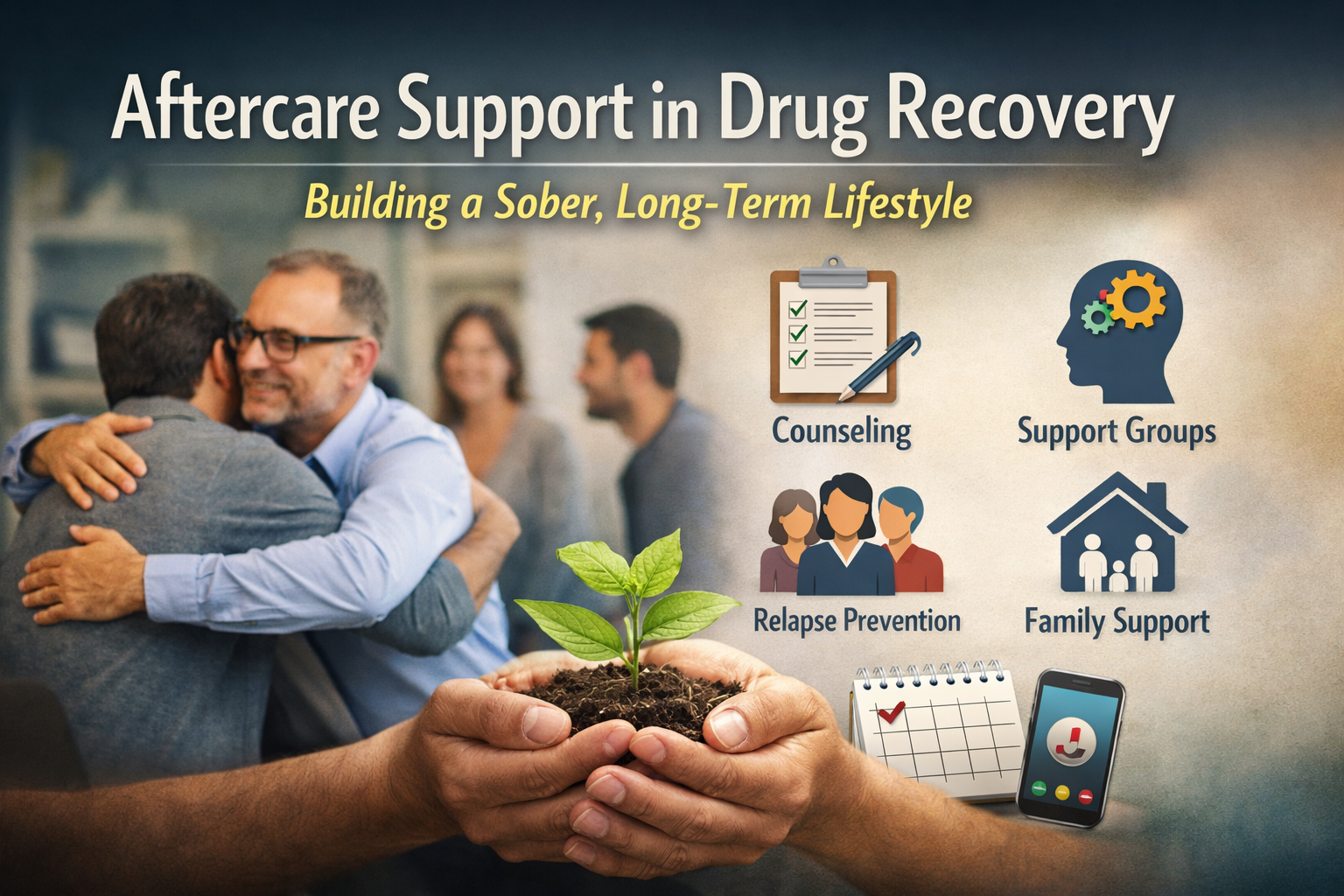
Aftercare Support in Drug Recovery helps individuals stay sober after rehab by providing ongoing guidance and emotional support. It reduces relapse risk by helping people manage stress, triggers, and daily challenges. Aftercare turns recovery into a stable, long-term lifestyle.
Completing treatment at a Nasha Mukti Kendra is a powerful milestone—but it’s not the finish line. True, lasting recovery depends on what happens after rehab, and this is where Aftercare Support in Drug Recovery becomes essential at Sanchit Rehab Centre in Gwalior. Aftercare Support in Drug Recovery at Sanchit Rehab Centre in Gwalior provides continued guidance, structure, and emotional stability once treatment ends. Without Aftercare Support in Drug Recovery, maintaining sobriety becomes difficult, but with strong Aftercare Support in Drug Recovery at Sanchit Rehab Centre in Gwalior, long-term healing and relapse prevention become achievable.
For small business owners, entrepreneurs, and working professionals, relapse can mean disrupted operations, financial loss, and broken trust. Structured aftercare ensures individuals don’t just get sober—but stay sober, rebuild discipline, and return to life with confidence and clarity.
In this article, we’ll explore the importance of aftercare in addiction recovery, the types of drug addiction aftercare programs available, and why long-term guidance is essential for sustainable success.
Aftercare Support in Drug Recovery – Why Long-Term Guidance Matters
What Is Aftercare Support in Drug Recovery?
Aftercare support refers to ongoing guidance, monitoring, and emotional support provided after primary addiction treatment ends. It bridges the gap between a protected rehab environment and the real world—where stress, triggers, and responsibilities return.
Key Goals of Aftercare Programs
• Prevent relapse
• Reinforce healthy routines
• Build emotional resilience
• Support mental health stability
• Encourage accountability
Aftercare transforms short-term recovery into long-term sobriety.
Importance of Aftercare in Addiction Recovery
Many relapses occur within the first 6–12 months after treatment. This happens because life pressures return faster than coping skills mature.
Why Aftercare Is Non-Negotiable
• Addiction is a chronic condition, not a one-time issue
• Triggers exist in daily life—work stress, social circles, finances
• Emotional lows can resurface unexpectedly
• Without guidance, old habits return easily
• Addiction is a chronic condition, not a one-time issue: Addiction affects the brain and behavior over a long period, which means recovery requires continuous care, not just short-term treatment. Ongoing support is needed to manage cravings and prevent relapse.
• Triggers exist in daily life—work stress, social circles, finances: Everyday pressures such as job responsibilities, social environments, and money problems can remind a person of past substance use and increase the risk of relapse if not handled properly.
• Emotional lows can resurface unexpectedly: Feelings like anxiety, loneliness, frustration, or sadness may return even after rehab, making individuals emotionally vulnerable without proper support.
• Without guidance, old habits return easily: In the absence of counseling and structured aftercare, people may slip back into unhealthy routines and coping mechanisms they used before recovery.
Aftercare support in drug recovery reduces relapse risk and builds stability during this vulnerable phase.
How Aftercare Support Helps Prevent Relapse
Relapse doesn’t happen suddenly—it develops through emotional and behavioral warning signs.
Aftercare Works by Addressing
• Emotional triggers such as stress, anxiety, and loneliness
• Behavioral patterns like isolation and routine breakdown
• Environmental risks including peer pressure and work stress
• Mental health challenges such as depression and burnout
Common Relapse Prevention Tools
• Regular counseling sessions
• Structured daily routines
• Accountability check-ins
• Stress management techniques
• Peer and family support
Types of Drug Addiction Aftercare Programs
Effective aftercare is personalized, not one-size-fits-all. Leading Nasha Mukti Kendras offer multiple aftercare options.
Outpatient Counselling
Weekly or bi-weekly therapy sessions focused on coping skills and emotional regulation. Ideal for working professionals and business owners.
Support Group Meetings
Group therapy or 12-step-style programs that offer peer accountability and shared experiences, reducing isolation and shame.
Family Counselling
Helps repair trust, improve communication, educate families on relapse warning signs, and create a supportive home environment.
Sober Living and Transitional Support
Structured living environments with rules and accountability, especially helpful for high-risk individuals.
Tele-Aftercare and Online Support
Virtual therapy sessions, phone check-ins, and digital monitoring—perfect for busy professionals and entrepreneurs.
Aftercare Support for Small Business Owners and Professionals
Business owners face unique recovery challenges such as long working hours, financial pressure, decision fatigue, and social drinking culture.
Why Aftercare Is Crucial for Entrepreneurs
• Prevents stress-triggered relapse
• Improves focus and productivity
• Supports leadership stability
• Helps rebuild professional credibility
A well-designed aftercare support in drug recovery plan allows individuals to heal without stepping away from responsibilities.
Role of Mental Health in Long-Term Recovery
Addiction rarely exists alone. Anxiety, depression, trauma, and burnout often coexist.

Aftercare Addresses Mental Health By
• Offering regular psychological counseling
• Teaching emotional regulation strategies
• Managing work-life balance
• Preventing emotional exhaustion
Ignoring mental health increases relapse risk—aftercare keeps both mind and behavior aligned.
Building Structure Through Aftercare
One major benefit of drug addiction aftercare programs is routine rebuilding.
Structured Aftercare Encourages
• Consistent sleep cycles
• Healthy eating habits
• Time management skills
• Goal-setting and progress tracking
Structure replaces chaos, which is essential for long-term sobriety.
Family and Community Support in Aftercare
Recovery doesn’t happen in isolation.
Family Involvement Helps By
• Reducing misunderstandings
• Creating emotional safety
• Supporting accountability
• Preventing enabling behaviors
Community-based aftercare programs strengthen social reintegration and confidence.
Long-Term Benefits of Aftercare Support in Drug Recovery
Aftercare is not just about avoiding relapse—it’s about life transformation.
Key Long-Term Benefits
• Sustained sobriety
• Improved emotional intelligence
• Stronger relationships
• Better work performance
• Renewed self-worth
People who commit to aftercare are significantly more likely to maintain long-term recovery.
How to Choose the Right Aftercare Program
Not all aftercare programs are equal.
What to Look For
• Personalized recovery plans
• Licensed counselors and therapists
• Flexible scheduling options
• Family involvement opportunities
• Proven relapse prevention strategies
A trusted Nasha Mukti Kendra will treat aftercare as essential—not optional.
Summary : Recovery Is a Journey, Not an Event
Aftercare Support in Drug Recovery is the missing link between treatment and lifelong sobriety. It provides guidance when motivation fluctuates, structure when discipline weakens, and support when challenges arise.
Key Takeaways
• Aftercare prevents relapse
• Supports mental and emotional stability
• Helps professionals balance recovery and work
• Strengthens family and social connections
FAQs: Aftercare Support in Drug Recovery
Q1. How long should aftercare support last?
Aftercare typically lasts 6–24 months, depending on individual risk factors, lifestyle, and progress.
Q2. Is aftercare necessary if rehab was successful?
Yes. Rehab starts recovery; aftercare sustains it by managing real-world challenges.
Q3. Can aftercare be done alongside work?
Absolutely. Many aftercare programs offer flexible schedules and online support.
Q4. What happens if aftercare is skipped?
Skipping aftercare increases the risk of relapse, emotional instability, and loss of progress.
Q5. Does aftercare include family counseling?
Yes. Most effective aftercare programs actively involve families for long-term success.