
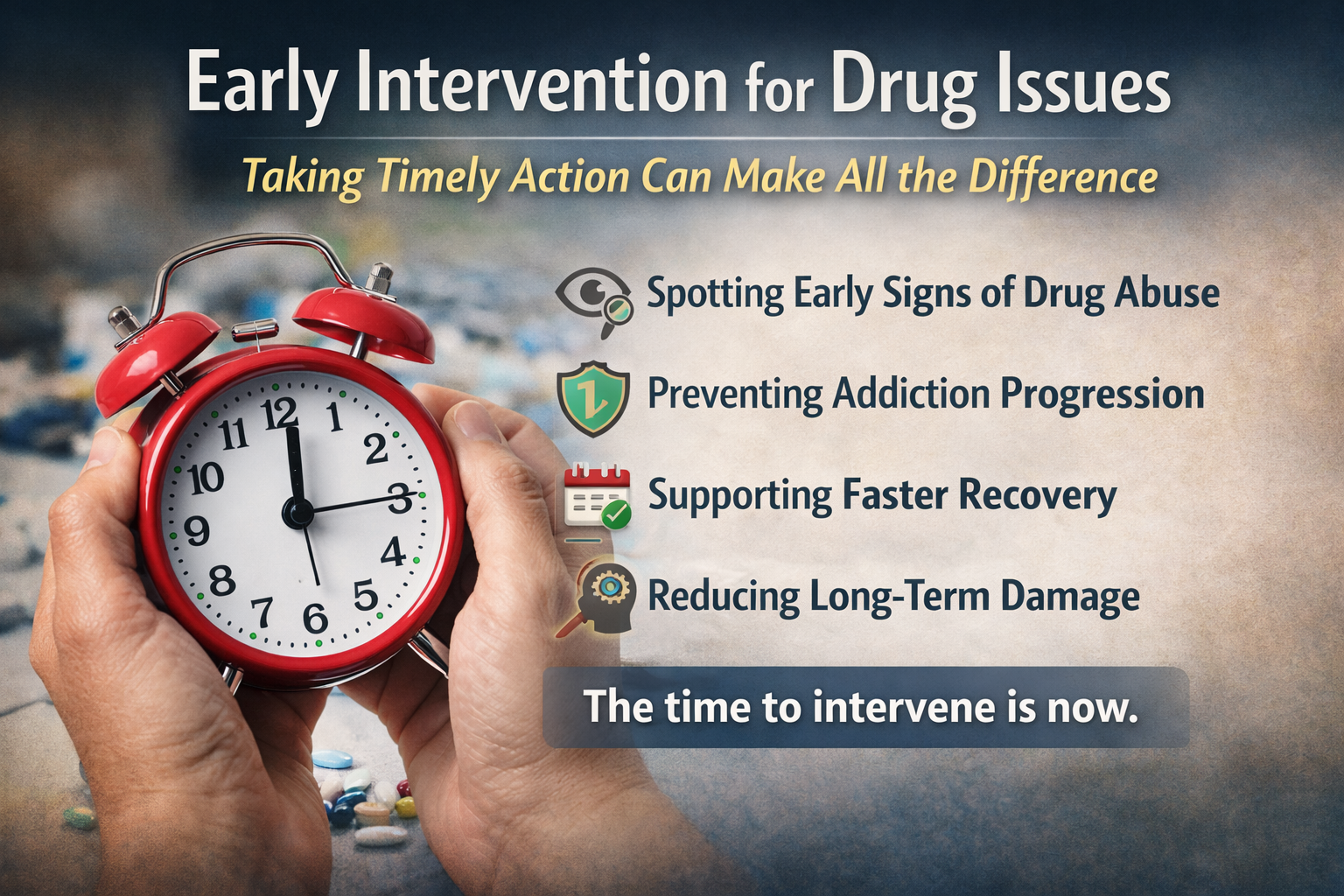
Drug addiction rarely begins suddenly. It develops slowly, often unnoticed, until it starts affecting health, work, relationships, and decision-making. This is why Early Intervention for Drug Issues is one of the most powerful tools in preventing long-term addiction and serious life consequences.For small business owners and working professionals, drug-related problems can quietly impact productivity, leadership, finances, and reputation. Taking timely action with the support of Sanchit Nasha Mukti Kendra in Gwalior not only protects personal health but also safeguards professional stability. Understanding early signs and responding promptly through Sanchit Nasha Mukti Kendra in Gwalior can make recovery easier, faster, and more sustainable.
This article explains why early intervention matters, how to identify warning signs, and how timely action in drug addiction recovery leads to better outcomes.
Early Intervention for Drug Issues – Why Timely Action Is Important
What Is Early Intervention for Drug Issues?
Early Intervention for Drug Issues refers to identifying substance use problems at an early stage and taking corrective action before addiction becomes severe. Early Intervention for Drug Issues focuses on awareness, timely support, counseling, and preventive treatment rather than crisis-based recovery. Through Early Intervention for Drug Issues, individuals receive guidance before dependency grows, making Early Intervention for Drug Issues a crucial step in stopping addiction early and ensuring healthier long-term outcomes.
The goal is not punishment or fear, but guidance, education, and structured help that stops drug use from turning into dependency.
Why Early Intervention Is Critical in Drug Addiction
Delaying action allows addiction to strengthen its hold on both the brain and behavior. Early Intervention for Drug Issues interrupts this cycle before damage becomes long-term. With this, individuals can address problems early, preventing escalation and reducing harm. Consistent ensures timely support, guidance, and treatment, making recovery easier and more effective. Emphasizing early intervention for drug Issues is essential to stop addiction before it takes a deeper hold.
Key reasons early intervention is important
• Prevents escalation from experimentation to addiction
• Reduces physical and mental health damage
• Lowers treatment time and cost
• Improves recovery success rates
• Protects family, career, and social life
Timely action in drug addiction recovery can often mean the difference between short-term treatment and years of struggle.
Early Signs of Drug Abuse You Should Not Ignore
Recognizing early signs of drug abuse is the first step toward early intervention for drug issues. These signs may appear subtle but become clearer over time.
Behavioral Signs
- Sudden mood swings or irritability: The person may react angrily to small issues or shift emotions quickly without clear reason.
- Social withdrawal or secrecy: They may avoid family and friends, spend more time alone, or hide their activities.
- Declining work performance: Lack of focus, frequent mistakes, absenteeism, or reduced productivity becomes noticeable.
-
Loss of interest in responsibilities: Daily duties at work, home, or studies are neglected or ignored.
Physical Signs
- Changes in sleep or appetite: The person may sleep too much or too little and show sudden weight gain or loss.
- Frequent fatigue or restlessness: Constant tiredness, weakness, or inability to sit calmly is commonly observed.
- Neglect of personal hygiene: Reduced concern for cleanliness, grooming, or overall appearance.
- Red or tired-looking eyes: Eyes may appear bloodshot, dull, or strained due to substance use or poor sleep.
Emotional and Mental Signs
- Anxiety or unexplained fear: Persistent nervousness, panic, or fear without an obvious cause.
- Depression or low motivation: Feelings of sadness, hopelessness, or lack of interest in life activities.
- Poor decision-making: Increased impulsive behavior and difficulty thinking clearly or responsibly.
- Increased stress tolerance issues: Small problems feel overwhelming, leading to frustration or emotional breakdowns.
Why Small Business Owners Must Act Early
Entrepreneurs and business owners face constant stress, deadlines, and financial pressure. These factors can increase vulnerability to substance use and delay seeking help.

How drug issues affect business owners
- Reduced focus and productivity: Substance use affects concentration, decision-making, and energy levels, leading to missed deadlines and lower work efficiency.
- Poor leadership decisions: Impaired judgment can result in risky choices, lack of strategic planning, and ineffective team management.
- Financial mismanagement: Addiction may cause careless spending, misuse of business funds, delayed payments, or poor budgeting decisions.
-
Damaged professional reputation: Unreliable behavior, broken commitments, or ethical issues can reduce trust among clients, partners, and employees.
Early intervention for drug issues helps business owners regain control before addiction starts affecting employees, clients, and long-term business growth.
Timely Action in Drug Addiction Recovery Saves Lives
Waiting for a “rock bottom” moment is a dangerous myth. Most successful recoveries begin when action is taken early.
Benefits of timely action in drug addiction recovery
• Shorter and less intensive treatment
• Lower relapse risk
• Better mental health stability
• Faster return to normal routines
Early treatment allows individuals to recover while continuing work and family responsibilities.

Role of Family and Colleagues in Early Intervention
Often, individuals struggling with drug issues do not recognize the problem themselves. Family members, friends, and colleagues play a crucial role.
How loved ones can support early intervention
- Observe behavior without judgment: Notice changes in habits, mood, or routine without blaming or criticizing, which helps build trust.
- Communicate concerns calmly: Share worries in a supportive, respectful tone instead of arguing, so the person feels heard rather than attacked.
- Encourage professional help: Gently suggest counseling, detox, or rehab services and reassure them that seeking help is a sign of strength.
-
Avoid enabling behaviors: Do not cover up mistakes, provide money, or excuse harmful actions, as this can delay recovery.
Supportive conversations can open the door to recovery instead of resistance.
How Nasha Mukti Kendras Support Early Intervention
Modern Nasha Mukti Kendras are not just for severe addiction cases. They offer preventive and early-stage support programs.
Early intervention services may include
- Assessment and screening: Professionals evaluate substance use patterns, mental health, and lifestyle to understand the severity and best treatment approach.
- One-on-one counseling: Personalized therapy sessions help individuals identify root causes, build coping skills, and regain emotional control.
- Stress and trigger management: Patients learn healthy ways to handle stress, cravings, and situations that may lead to substance use.
- Short-term detox if required: Medically supervised detox helps safely remove substances from the body and manage withdrawal symptoms.
-
Education and relapse prevention: Awareness programs teach long-term strategies to avoid relapse and maintain a healthy, substance-free life.
Early care reduces the need for long-term institutional treatment.
Mental Health and Early Drug Intervention
Mental health issues like anxiety, depression, and burnout often contribute to early drug use. Addressing these issues early is essential.
Early intervention helps by
- Treating root emotional causes: Early support helps identify and heal underlying issues like stress, trauma, or anxiety that often lead to substance use.
- Teaching healthy coping skills: Individuals learn positive ways to handle emotions, pressure, and life challenges without relying on substances.
- Reducing dependency patterns: Timely intervention prevents casual use from turning into long-term addiction or habitual dependence.
- Improving emotional regulation: Therapy and guidance help people understand, manage, and respond to their emotions in a balanced way.
Ignoring mental health increases the risk of addiction progression.
Common Barriers to Early Intervention
Despite clear benefits, many people delay action due to fear or stigma.
Common reasons for delay
- Fear of social judgment: People avoid seeking help because they worry about being labeled or judged by society.
- Denial of the problem: Individuals convince themselves that their substance use is under control and not serious.
- Belief that drug use is temporary: Many assume they can stop anytime and that the habit will end on its own.
- Worry about professional image: Concerns about career impact or loss of respect delay asking for support.
Education and awareness help break these barriers and encourage timely help-seeking.
Long-Term Benefits of Early Intervention for Drug Issues
Early intervention does more than stop drug use—it restores quality of life.
Long-term benefits include
- Stronger emotional resilience: Individuals become better equipped to handle stress and emotional challenges without substance use.
- Better physical health: The body recovers over time, leading to improved energy, immunity, and overall wellbeing.
- Improved work performance: Focus, productivity, and decision-making skills improve, supporting career growth.
- Healthier relationships: Trust, communication, and emotional connection with family and others gradually strengthen.
-
Reduced relapse chances: Ongoing support and coping strategies help maintain long-term, substance-free recovery.
People who receive early help are more likely to maintain lifelong recovery.
How to Take the First Step Toward Early Intervention
Taking action does not mean drastic measures immediately. It starts with awareness and guidance.
Practical steps
- Acknowledge early signs
- Seek professional assessment
- Begin counseling or support programs
- Involve trusted family members
- Commit to consistent follow-up
Small steps taken early prevent big problems later.
Summary: Early Action Creates Stronger Recovery
Early Intervention for Drug Issues is one of the most effective ways to prevent addiction from taking control of life and career. Recognizing early signs of drug abuse and taking timely action in drug addiction recovery reduces harm, shortens treatment, and improves long-term success.
Key takeaways
• Addiction grows silently when ignored
• Early signs must be taken seriously
• Timely intervention improves recovery outcomes
• Professional support makes recovery manageable
FAQs: Early Intervention for Drug Issues
What is meant by early intervention for drug issues?
It means identifying and addressing drug use problems at an early stage before addiction becomes severe.
Why is timely action important in drug addiction recovery?
Timely action reduces health risks, shortens treatment duration, and increases the chances of long-term recovery.
What are the most common early signs of drug abuse?
Behavioral changes, mood swings, poor work performance, and emotional instability are common early signs.
Can early intervention prevent full addiction?
Yes. Early intervention can stop drug use from progressing into dependency and long-term addiction.
Who should seek early intervention services?
Anyone noticing early drug use patterns, increasing dependence, or emotional instability should seek help early.