
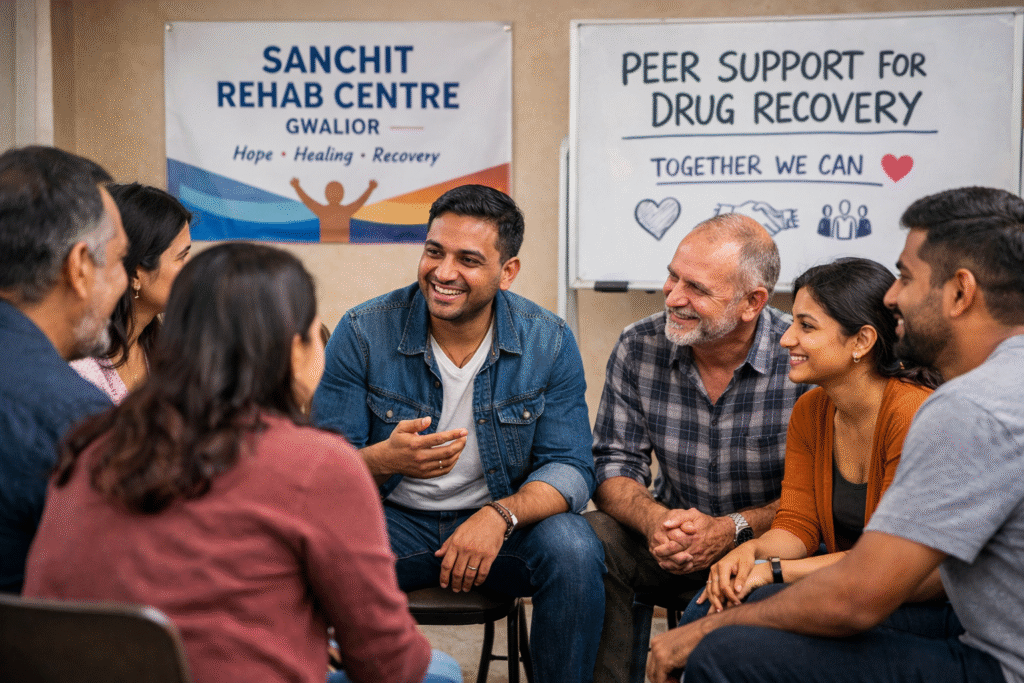
Drug addiction does not affect only individuals—it impacts families, workplaces, and small businesses alike. For small business owners, addiction can lead to reduced productivity, workplace conflict, absenteeism, and emotional strain. One of the most effective yet often underestimated recovery tools is Peer Support for Drug Recovery, as practiced at Sanchit Rehab Centre in Gwalior, where structured group interaction plays a key role in long-term healing.
Peer support creates a sense of belonging, accountability, and motivation that individual treatment alone cannot always provide. In Nasha Mukti Kendras and rehabilitation programs, structured group interaction has proven to be a powerful driver of long-term recovery.
This article explains how peer support works, why group interaction improves motivation, and how recovery centers and business leaders can support sustainable healing.
Understanding Peer Support for Drug Recovery
Peer support for drug recovery refers to structured or informal group interactions where individuals recovering from substance abuse connect with others who share similar experiences. These groups may be facilitated by counselors or operate as peer-led support systems.
Unlike lectures or one-on-one therapy, peer support emphasizes shared understanding, empathy, and mutual encouragement.

Why Peer Support Is Different From Traditional Therapy
Traditional therapy focuses on diagnosis and treatment plans. Peer support adds a human connection that builds trust faster.
Key differences include:
- Shared lived experiences rather than clinical observation
- Emotional validation without judgment
- Practical advice from people who have “been there”
- Long-term motivation through group accountability
For small business owners managing employees or family members in recovery, this model offers stability and emotional reinforcement.
The Psychology Behind Group Interaction and Motivation
Motivation is one of the biggest challenges in addiction recovery. Many individuals start treatment with hope but lose momentum over time. Group interaction directly addresses this issue.
How Group Interaction Strengthens Motivation
Group environments activate psychological mechanisms that increase commitment and consistency.
These include:
- Social accountability: People are more likely to stay committed when others notice their progress.
- Emotional reinforcement: Encouragement from peers feels more authentic than advice alone.
- Reduced isolation: Addiction thrives in loneliness; recovery thrives in connection.
- Positive role modeling: Seeing others succeed builds belief in personal recovery.
This is why group therapy for drug addiction consistently shows higher retention rates than isolated treatment.
Key Benefits of Peer Support in Addiction Recovery
1. Emotional Safety and Trust
Peer groups create a non-judgmental space where individuals can speak openly. This emotional safety encourages honesty, which is critical for healing.
Benefits include:
- Reduced shame and guilt
- Increased openness in sharing triggers
- Faster emotional processing
2. Accountability Through Shared Commitment
Accountability is a powerful motivator in recovery. Peer support introduces accountability without pressure.
Group accountability helps by:
- Encouraging regular attendance
- Reinforcing daily discipline
- Making relapse prevention a shared goal
This approach is widely used in support groups for substance abuse across India.
3. Learning Practical Coping Strategies
Peer groups exchange real-world coping methods that work in daily life.
Examples include:
- Managing cravings at work
- Handling stress without substances
- Navigating social pressure
- Rebuilding family trust
These insights are especially valuable for working professionals and entrepreneurs.
Role of Peer Groups in Nasha Mukti Kendras
Here is the revised sentence with Peer Support for Drug Recovery added multiple times in a natural, SEO-friendly way:
Modern Nasha Mukti Kendras integrate Peer Support for Drug Recovery into their treatment framework because Peer Support for Drug Recovery significantly improves long-term recovery outcomes. Through structured Peer Support for Drug Recovery, individuals build motivation, accountability, and emotional strength, making Peer Support for Drug Recovery a core element of successful rehabilitation programs.
Structured Peer Support Programs
Most centers use:
- Daily group counseling sessions
- Peer mentoring systems
- Recovery sharing circles
- Motivational group workshops
These programs strengthen emotional resilience and commitment.
Peer Mentoring in Drug Recovery
Peer mentors are individuals who are further along in recovery and guide newcomers.
Benefits include:
- Faster adjustment to rehab routines
- Reduced fear of withdrawal and change
- Hope through real recovery examples
Peer mentoring plays a major role in maintaining motivation after discharge.
Why Peer Support Matters for Small Business Owners
Addiction recovery is not just a personal issue—it affects business operations, employee morale, and leadership effectiveness. Peer Support for Drug Recovery plays a critical role in addressing these challenges by improving motivation, accountability, and emotional stability. When workplaces encourage Peer Support for Drug Recovery, employees feel supported rather than isolated. Strong Peer Support for Drug Recovery systems help leaders manage recovery-related issues more effectively, creating healthier teams, smoother operations, and a more resilient work culture.
Workplace Impact of Addiction
Addiction can lead to:
- Frequent absenteeism
- Reduced performance
- Workplace conflict
- Safety risks
- High employee turnover
Supporting recovery benefits both the individual and the organization.
How Peer Support Helps Business Stability
Peer support programs help business owners by:
- Supporting employee recovery without stigma
- Reducing relapse-related disruptions
- Improving workplace morale
- Encouraging long-term employee retention
Some businesses now collaborate with rehabilitation centers to support employee wellness.
Group Therapy for Drug Addiction vs Individual Counseling
Both approaches are valuable, but their combined use delivers the best results.
| Aspect | Individual Therapy | Group Therapy |
|---|---|---|
| Emotional Expression | Private | Shared |
| Accountability | Therapist-led | Peer-driven |
| Motivation | Internal | Collective |
| Cost Effectiveness | Higher | More affordable |
Benefits of group therapy in rehab include sustained motivation and stronger relapse prevention.
Community Support for Addiction Recovery
Importance of Ongoing Group Interaction
Post-rehab peer support helps with:
- Re-entry into work life
- Stress management
- Avoiding old triggers
- Maintaining sobriety
This ongoing connection prevents isolation, which is a major relapse risk.
Types of Community Peer Support
- Weekly support meetings
- Alumni recovery groups
- Family-inclusive peer sessions
- Online recovery communities
These resources strengthen long-term recovery outcomes.
How Peer Support Builds Long-Term Motivation
Motivation is not a one-time decision; it must be renewed daily.
Peer support reinforces motivation through:
- Regular success reminders
- Shared milestones
- Group celebrations of progress
- Honest relapse discussions without shame
This environment keeps recovery realistic and achievable.
Practical Ways Nasha Mukti Kendras Can Strengthen Peer Support
Rehabilitation centers can enhance outcomes by:
- Creating small, consistent groups
- Encouraging peer leadership roles
- Mixing age and professional backgrounds
- Including motivational group activities
- Providing post-treatment peer follow-ups
These practices improve trust, engagement, and success rates.
Summary: Why Peer Support for Drug Recovery Works
Peer Support for Drug Recovery is not just a treatment method—it is a motivation system built on trust, shared experience, and accountability. In a well-structured Nasha Mukti Kendra, group interaction reduces isolation, strengthens emotional resilience, and helps individuals stay committed to long-term recovery.
For small business owners, investing in recovery support creates healthier employees, stable operations, and a positive work culture.

Frequently Asked Questions (FAQs)
1. What is peer support for drug recovery?
Peer support for drug recovery involves group interaction where individuals share experiences, encouragement, and accountability to stay motivated and maintain sobriety.
2. How does group interaction help prevent relapse?
Group interaction reduces loneliness, builds accountability, and provides emotional support, which are key factors in preventing relapse.
3. Is peer support effective for working professionals?
Yes. Peer support offers practical coping strategies and emotional understanding that fit real-life work pressures and responsibilities.
4. Can small businesses support employee recovery?
Small businesses can support recovery by encouraging treatment, reducing stigma, and connecting employees with peer support-based rehabilitation programs.
5. Is peer support used in Nasha Mukti Kendras?
Yes. Most modern Nasha Mukti Kendras include structured peer support and group therapy as core elements of addiction treatment.