
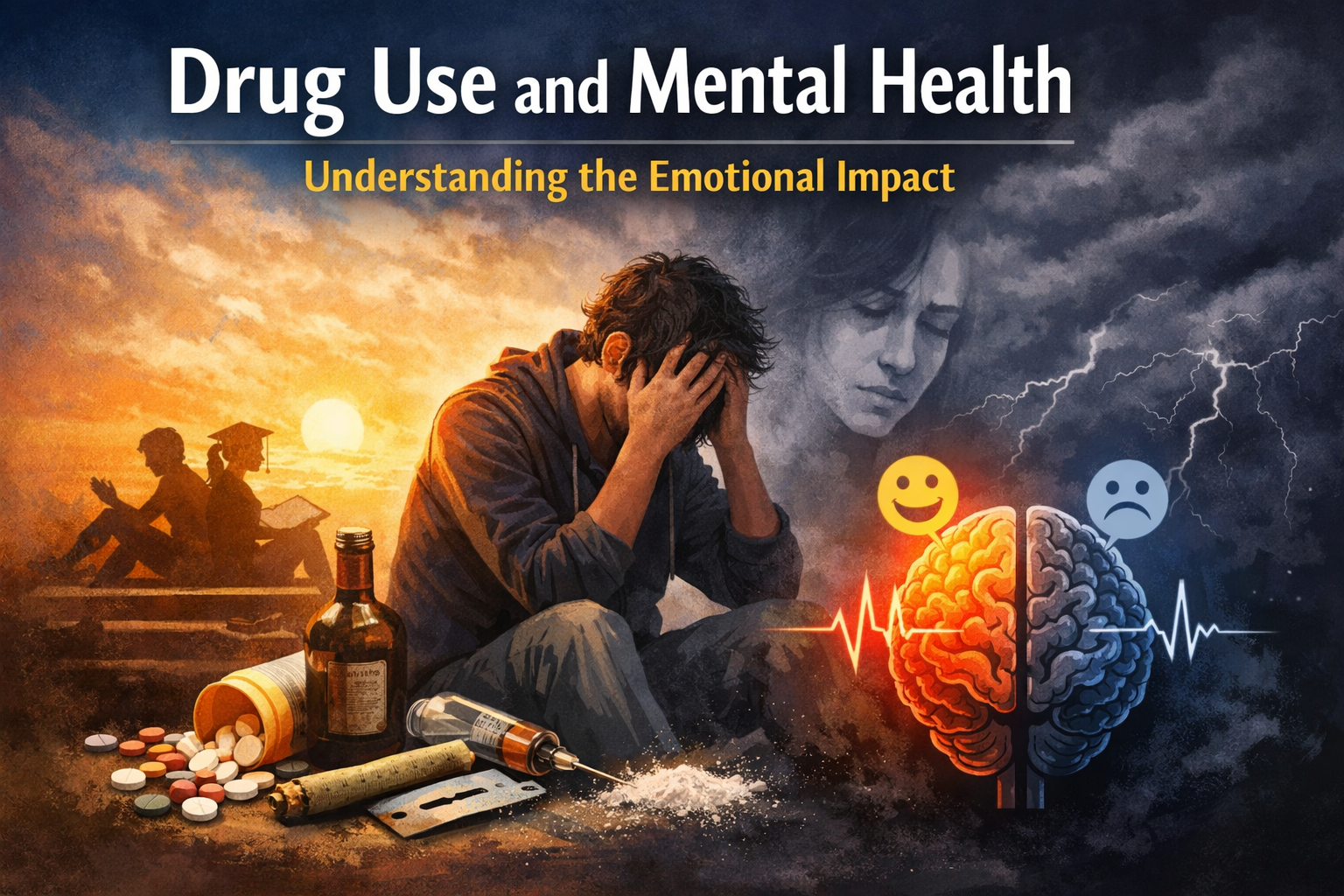
Drug Use and Mental Health are deeply connected, especially among college students facing stress and social pressure. What feels like short-term relief can silently harm emotions, focus, and mental stability. Awareness is the first step toward protecting a healthy and successful future.
How Drug Use Affects the Brain and Emotions
The brain works through chemical messengers that control mood, pleasure, focus, and stress response, which clearly explains the connection between Drug Use and Mental Health. Drugs artificially stimulate or suppress these chemicals, creating short-term feelings of happiness, relaxation, or energy. Over time, the brain becomes dependent on these substances to feel normal. This dependency weakens natural emotional control and reduces the brain’s ability to handle stress and daily challenges, further impacting Drug Use and Mental Health.
As a result, people may experience mood swings, irritability, anxiety, or emotional numbness. Concentration and memory may also decline, making academic and personal responsibilities difficult to manage. This clearly shows how Drug Use and Mental Health are deeply connected and cannot be separated so one thing you can do is visit a Sanchit Rehab Centre in gwalior.

Emotional Effects of Drug Use
Drug use directly impacts emotional balance. Some common emotional effects include:
- Increased anxiety and nervousness
- Sudden anger or sadness
- Loss of motivation and interest in daily activities
- Emotional dependency on substances
- Social withdrawal and isolation
- Low self-confidence
Increased Anxiety and Nervousness
Drug use can disturb the brain’s natural chemical balance, making a person feel constantly worried, restless, or fearful without any clear reason. Small problems may start feeling overwhelming, and the individual may struggle to relax, sleep properly, or concentrate on studies.
Sudden Anger or Sadness
Substances affect emotional control, causing rapid mood changes. A person may feel happy one moment and irritated or sad the next. These emotional swings can damage relationships with friends and family and make daily life stressful.
Loss of Motivation and Interest in Daily Activities
Drug use reduces natural energy and motivation levels. Activities like studying, hobbies, socializing, or exercising may no longer feel enjoyable. This can lead to poor academic performance and reduced personal growth.
Emotional Dependency on Substances
Some individuals begin relying on drugs to feel confident, relaxed, or happy. Instead of handling emotions naturally, they depend on substances to cope with stress or sadness, increasing the risk of addiction and emotional weakness.
Social Withdrawal and Isolation
As drug use increases, individuals may avoid friends, family, and social activities. They may prefer being alone or spending time only with people who support their substance use, which weakens healthy relationships and emotional support systems.
Low Self-Confidence
Drug dependency often affects self-image and decision-making, showing the strong impact of Drug Use and Mental Health. People may feel guilty, ashamed, or powerless, leading to reduced confidence in their abilities, appearance, and future goals.
These emotional changes often develop slowly and may not be noticed at first. However, over time, the effects of Drug Use and Mental Health can interfere with relationships, academic performance, and personal growth.
Common Substances and Their Mental Impact
Different substances affect mental health in different ways.
Alcohol
Alcohol reduces self-control and increases impulsive behavior. It may temporarily reduce stress but often increases anxiety, sadness, and poor decision-making later. Long-term alcohol use can lead to depression and emotional instability.
Cannabis
Cannabis can reduce concentration, motivation, and memory. Some individuals experience increased fear, paranoia, or lack of emotional clarity, which affects daily functioning.
Stimulants
Energy drugs and stimulants create short bursts of energy and confidence but often lead to emotional crashes, exhaustion, and increased stress levels.
Misused Prescription Medicines
Improper use of medicines can cause emotional dependency, mood swings, and withdrawal symptoms that affect mental balance.

Long-Term Mental Effects of Drugs
Prolonged drug use can permanently affect emotional health. The long-term mental effects of drugs include:
- Chronic anxiety disorders
- Depression and emotional instability
- Reduced memory and learning ability
- Poor emotional control
- Decreased motivation and confidence
- Increased social isolation
These effects may continue even after stopping drug use if proper treatment and emotional rehabilitation are not provided.
Stress, Peer Pressure, and Mental Vulnerability
College students often face academic pressure, competition, relationship challenges, and future uncertainty, which strongly affects Drug Use and Mental Health. Peer influence sometimes encourages substance use as a way to cope or fit in socially. Unfortunately, this creates a harmful cycle where stress leads to drug use, and drug use increases emotional problems, further damaging Drug Use and Mental Health. Over time, dependency forms, and mental health deteriorates.
Breaking this cycle requires emotional awareness, healthy coping skills, and supportive environments to protect and improve Drug Use and Mental Health.
Dual Diagnosis and Emotional Health
Many individuals suffer from both addiction and mental health disorders simultaneously, highlighting the close connection between Drug Use and Mental Health. This condition requires proper care through dual diagnosis treatment. It focuses on treating emotional conditions such as anxiety or depression along with addiction recovery. Addressing both issues together improves long-term recovery success and emotional stability.
Holistic Addiction Treatment and Emotional Healing
Recovery is not just about stopping drug use. Holistic addiction treatment plays a vital role in improving Drug Use and Mental Health by supporting the mind, body, and emotions together. This approach includes counseling, stress management, physical activity, balanced nutrition, mindfulness practices, and emotional therapy. It strengthens coping abilities, restores confidence, and improves emotional balance.
Warning Signs That Should Not Be Ignored
Recognizing early warning signs helps prevent severe mental health problems.
Emotional Signs
- Persistent sadness
- Mood swings
- Increased irritability
- Anxiety
- Loss of motivation
Behavioral Signs
- Poor academic performance
- Isolation
- Sleep problems
- Avoiding responsibilities
- Risk-taking behavior
Early intervention ensures faster recovery.
How Students Can Protect Their Mental Health
Students can reduce risks by practicing healthy habits such as:
- Maintaining a regular sleep schedule
- Managing stress through exercise and planning
- Seeking emotional support when needed
- Avoiding high-risk environments
- Building positive social connections
- Practicing relaxation techniques
Healthy choices strengthen emotional resilience.
When to Seek Professional Help
If drug use begins affecting emotional health, studies, or relationships, professional support becomes essential. Rehabilitation centers provide structured treatment, emotional counseling, relapse prevention strategies, and long-term support for recovery.
Conclusion
Understanding the relationship between Drug Use and Mental Health helps individuals make informed decisions and protect emotional well-being. Awareness, early action, and professional care play a key role in building a healthy and successful future. Nasha mukti kendra Gwalior provides expert guidance, compassionate care, and structured recovery programs to support long-term healing and emotional stability.
Frequently Asked Questions (FAQs)
1. How are Drug Use and Mental Health connected?
Drug Use and Mental Health are closely linked because drugs directly affect brain chemicals that control emotions, focus, stress, and behavior. Regular drug use weakens emotional control and increases mental health problems.
2. Can drug use cause mental health disorders?
Yes. Long-term drug use can trigger or worsen mental health disorders such as anxiety, depression, emotional instability, and poor stress tolerance. This shows how strongly Drug Use and Mental Health influence each other.
3. Why are college students more vulnerable to Drug Use and Mental Health issues?
College students face academic pressure, social expectations, peer influence, and future uncertainty. These stresses increase vulnerability, making Drug Use and Mental Health concerns more common in this age group.
4. How does drug use affect emotions and behavior?
Drug use can cause mood swings, irritability, emotional numbness, low motivation, and anxiety. Over time, these changes disrupt emotional balance and clearly highlight the impact of Drug Use and Mental Health.
5. Can occasional drug use still affect mental health?
Yes. Even occasional drug use can interfere with emotional regulation, sleep quality, concentration, and decision-making. Drug Use and Mental Health are affected even before addiction develops.