

The main causes of substance abuse and brain chemistry changes occur when social stress, trauma, and artificial chemical surges disrupt dopamine pathways and prefrontal cortex function, making dependency a biological condition rather than a lack of willpower. If you or a loved one are struggling, recognizing that addiction is a treatable health condition—not a personal failure—is the first step toward reclaiming your life.
Read on to explore how drugs alter brain pathways, the social factors driving dependency, the four stages of addiction, and evidence-based medical recovery pathways.
Causes of Substance Abuse And Brain Chemistry
Substance abuse is often misunderstood as a simple lack of self-control or a moral failure. Many people assume that someone struggling with drugs or alcohol can simply choose to stop. However, modern science and medical research paint a very different picture. At Sanchit Nasha Mukti Kendra, Gwalior, we understand that addiction is a complex health condition driven by changes in brain chemistry, severe environmental stress, and social factors.
To overcome addiction, it is essential to look beyond willpower and understand the true causes of substance abuse and brain chemistry interactions. Knowing these underlying drivers helps families, caregivers, and individuals approach recovery with empathy, proper care, and evidence-based treatments.
Addiction is classified as a chronic brain disorder. Expecting an individual to recover using sheer determination without medical treatment is similar to expecting a diabetic patient to regulate insulin without medication.
What Happens to Brain Chemistry in Substance Abuse?
The human brain relies on chemical messengers called neurotransmitters to regulate mood, motivation, memory, and decision-making. When a person uses drugs or alcohol, these substances alter normal chemical balances, leading to physical dependence and intense cravings.
Understanding the primary causes of substance abuse and brain chemistry changes reveals why stopping usage through willpower alone is so difficult.
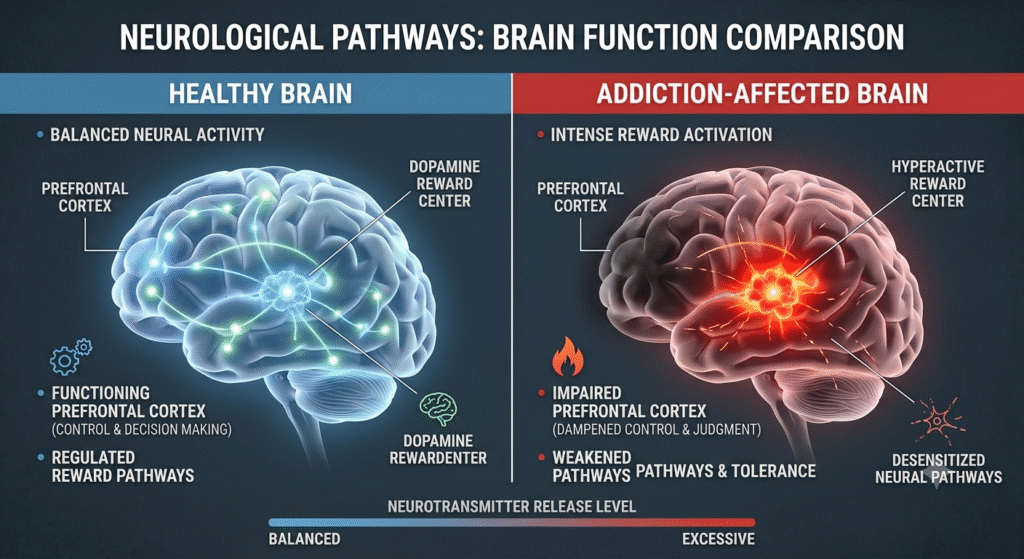
Key Brain Pathways Affected by Addiction
1. The Dopamine Pathway & Reward System:
- Dopamine creates natural motivation and pleasure during daily activities.
- Addictive substances cause an artificial dopamine surge up to ten times higher than natural rewards.
- Over time, the brain reduces natural dopamine production, making natural pleasures feel unrewarding and causing intense cravings.
2. Neurotransmitter Disruption (GABA, Glutamate & Serotonin):
- GABA and Glutamate: Alcohol and sedatives alter brain firing speed, leading to dangerous physical withdrawal symptoms when stopped suddenly.
- Serotonin: Disrupted serotonin pathways trigger emotional instability, severe depression, and anxiety during early sobriety.
3. Impairment of the Prefrontal Cortex:
- The prefrontal cortex manages impulse control, logical thinking, and long-term planning.
- Chronic substance use damages communication with the reward centre, making drug-seeking behaviour feel automatic
Social and Environmental Drivers of Addiction
While chemical shifts occur inside the body, social and environmental influences act as the primary initial triggers for drug exposure. Addiction rarely occurs in isolation, especially within Indian families and social settings.
| Social Factor | Mechanism of Impact | Long-Term Effect |
| Family Dynamics | Exposure to domestic conflict, adverse childhood experiences, or parental drug use. | Normalises substance reliance as an emotional coping tool. |
| Peer Pressure | Need for social acceptance during adolescence or young adulthood. | Leads to casual experimentation that escalates into dependence. |
| Socioeconomic Stress | Academic pressure, unemployment, financial instability, and poverty. | Elevates chronic cortisol levels, weakening self-control mechanisms. |
| Cultural Stigma | Fear of societal judgment in Indian communities leads to family silence. | Delays early medical intervention, allowing dependency to worsen. |
Key Takeaway: Environmental stressors often trigger the initial substance use, but altered causes of substance abuse and brain chemistry factors lock the dependency into place.
Recognising the 4 Stages of Addiction
Early identification allows families to intervene before severe organ damage or life-threatening crises occur.
- Stage 1: Experimentation: Substance use occurs occasionally due to curiosity, peer presence, or social gatherings.
- Stage 2: Regular Use: Usage develops into a routine pattern to relieve workplace, emotional, or personal stress.
- Stage 3: High-Risk Usage & Tolerance: The brain requires higher dosages to achieve the same chemical response. Financial secrecy and mood swings begin.
- Stage 4: Chemical Dependency: The individual experiences painful physical withdrawal symptoms when sober and loses the ability to stop without clinical intervention.
Medical & Therapeutic Recovery Pathways
Because chronic substance use alters neural pathways, complete recovery requires structured professional treatment rather than basic promises.
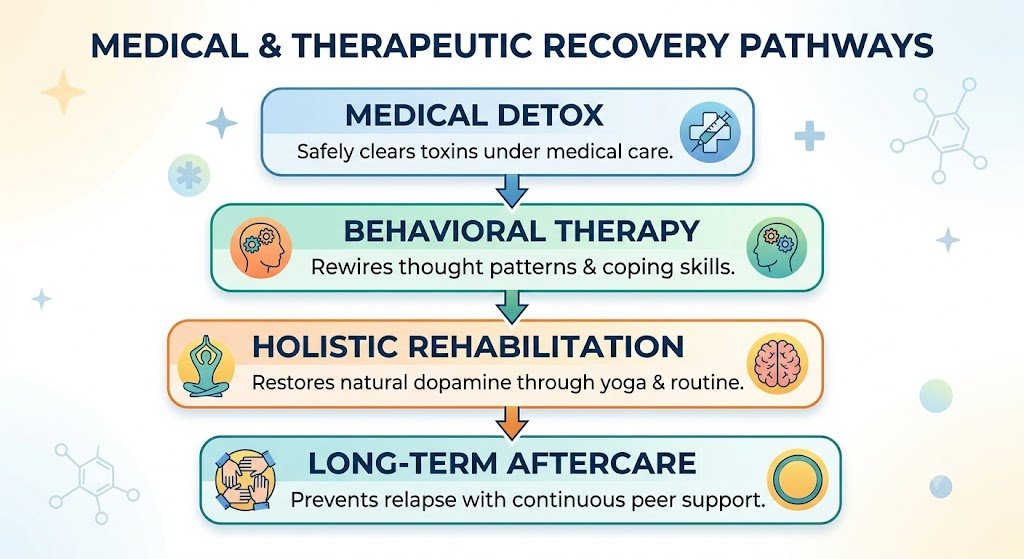
Core Recovery Steps
- Medical Detoxification: Safely manages withdrawal symptoms under professional healthcare monitoring.
- Cognitive Behavioural Therapy (CBT): Re-trains emotional responses, helps identify triggers, and prevents relapse.
- Family Counselling: Educates loved ones on how to eliminate codependency and create a healthy home atmosphere.
- Holistic Lifestyle Rehabilitation: Combines daily meditation, physical exercise, balanced nutrition, and structured peer groups to repair natural dopamine production.
Stopping addictive substances cold turkey without medical oversight can be dangerous depending on the substance. Always consult a specialised clinical centre before stopping heavy substance use.
Essential Resources for Treatment & Guidance
Families searching for reliable treatment and guidance can explore our dedicated medical programs:
-
Learn about our main treatment facility at our rehab centre in India.
-
Read our guide on what a nasha mukti kendra how it works to understand residential care schedules.
-
Learn the early behavioural warning signs by checking what the 5 warning signs of addiction.
-
Explore structured psychotherapy options through individual therapy for addiction at Sanchit Rehab.
-
Read detailed strategies on relapse prevention for alcohol and drug addiction.
-
Understand how group therapy helps healing in peer support in alcohol recovery.
-
Review safe clinical detoxification at our detox centre for safe alcohol and drug detox treatment.
-
Learn about regional care options for substance abuse treatment in Madhya Pradesh.
Conclusion
Addiction is a complex medical condition driven by neural changes, environmental stressors, and social pressures. Real recovery begins when we shift from judgment to understanding, recognizing that breaking free requires structured medical treatment, professional therapy, and family empathy.
By choosing a trusted nasha mukti kendra in gwalior, Madhya Pradesh, individuals receive the compassionate care, clinical guidance, and structured environment needed to heal completely and maintain long-term sobriety.
Frequently Asked Questions
Q1. What are the main causes of substance abuse and brain chemistry changes?
Ans: The primary causes of substance abuse and brain chemistry changes involve repeated drug or alcohol exposure that forces excessive releases of dopamine, GABA, and serotonin. Over time, the brain shuts down its natural chemical production, causing physical dependence, cravings, and impaired impulse control.
Q2. Why is willpower alone ineffective against drug dependency?
Ans: Willpower relies on an intact prefrontal cortex. Because chronic substance abuse physically alters the prefrontal cortex and reward pathways, a person’s decision-making ability is chemically impaired. Medical detox and professional therapy are necessary to restore function.
Q3. How do social factors increase addiction risk in Indian households?
Ans: High academic or career stress, domestic conflicts, economic worries, peer pressure, and heavy cultural stigma regarding mental health all push individuals toward using substances as an escape tool.
Q4. How long does it take for brain chemistry to balance after treatment?
Ans: Brain balance begins restoring within weeks of sobriety, though full neural pathway healing usually takes anywhere from 6 to 18 months, supported by therapy, healthy nutrition, and structured living routines.