
Sanchit Rehab provides professional rehabilitation and recovery support for individuals searching for a trusted Nasha Mukti Kendra in Chhatarpur. The centre offers structured treatment programs that include detoxification, counselling, therapy sessions, and mental health support to help patients recover from addiction effectively.

Chhatarpur’s economy has two faces. The first is Khajuraho’s international tourism — hotels, guides, transport operators, and the hospitality workforce that serves millions of visitors. This tourism economy creates a specific addiction risk: hospitality workers with seasonal income, exposure to alcohol through their professional environment, and the normalisation of drinking that comes with tourist service culture. Alcohol dependency in Chhatarpur’s tourism workforce is a documented and underreported reality.
The second face is Bundelkhand’s agricultural crisis — the farming communities of Lavkush Nagar, Bijawar, Nowgong, and Rajnagar tehsils, where drought cycles, falling groundwater, and crop failures have sustained a generation of economic distress. Mahua dependency and alcohol use as a response to chronic hopelessness are the primary addiction patterns in this population. Opioid exposure from the Vindhya-Bundelkhand corridor adds a third layer — present in both rural and urban Chhatarpur.
Our Medical Team and EEAT Credentials
Sanchit Nasha Mukti Kendra’s senior psychiatrist brings post-graduate addiction medicine training and two decades of clinical experience with MP’s Bundelkhand belt specifically. Chhatarpur, Tikamgarh, Sagar, Damoh, and the wider central Bundelkhand patient population are known ground for this team — not abstractions. The cultural dynamics of Bundelkhand’s farming communities, the mahua tradition, the agricultural stress context, and the specific shame barriers that delay treatment here are clinical practice, not theoretical knowledge.
The centre holds MP government registration under the Mental Healthcare Act 2017 — the highest legal assurance for addiction treatment in Madhya Pradesh. This registration is verifiable. Any family can ask for the certificate at the first point of contact, and Sanchit provides it without hesitation. Government registration is the non-negotiable starting criterion for any family evaluating a rehabilitation centre.
Services at Sanchit Nasha Mukti Kendra-
1.Alcohol and Mahua De-Addiction Program:
Medical detox for alcohol and mahua dependency — seizure prevention medication, cardiac monitoring, and supervised withdrawal management under 24/7 clinical supervision. For Chhatarpur’s farming community patients with long-duration mahua dependency, the detox protocol accounts for the variable alcohol content and purity patterns specific to traditional mahua production.
2.Drug Addiction Treatment:
Cannabis is the most common drug addiction from Chhatarpur’s youth population. Prescription drug misuse is rising. Opioid cases from the Vindhyan corridor are present. All substance types are treated with medically supervised detox followed by residential CBT rehabilitation and specific aftercare for Chhatarpur’s environment.
3.Individual Counselling — Bundelkhand Context:
CBT sessions calibrated to Bundelkhand’s specific cognitive patterns: agricultural fatalism, economic hopelessness, the masculine identity of the farming community patient, and the cultural frameworks around mahua and alcohol that normalise dependency for decades. The counsellor’s Bundelkhand experience means these sessions address the actual patterns driving addiction — not generic urban CBT applied to a rural patient.
4.Family Counselling:
Family sessions in person on visiting days (3.5 hours from Chhatarpur) or via video call between visits. For Bundelkhand’s agricultural families, counselling addresses the enabling patterns common in communities where protecting family honour means concealing problems — and where concealment has sustained addiction for years.
5.Group Therapy:
Daily structured group sessions with peer patients. For Chhatarpur’s farming community patients — who have typically carried the weight of addiction in complete privacy — the group setting provides the first experience of honest peer conversation about recovery. This experience is often the turning point in a patient’s commitment to the program.
6.Aftercare and Relapse Prevention:
A written Chhatarpur-specific aftercare plan — covering Bundelkhand’s agricultural stress calendar, mahua availability in village social life, Khajuraho tourism season triggers, specific social contacts representing relapse risk, and follow-up counselling schedule — is built before every discharge. The plan is designed for the specific environment the patient is returning to.
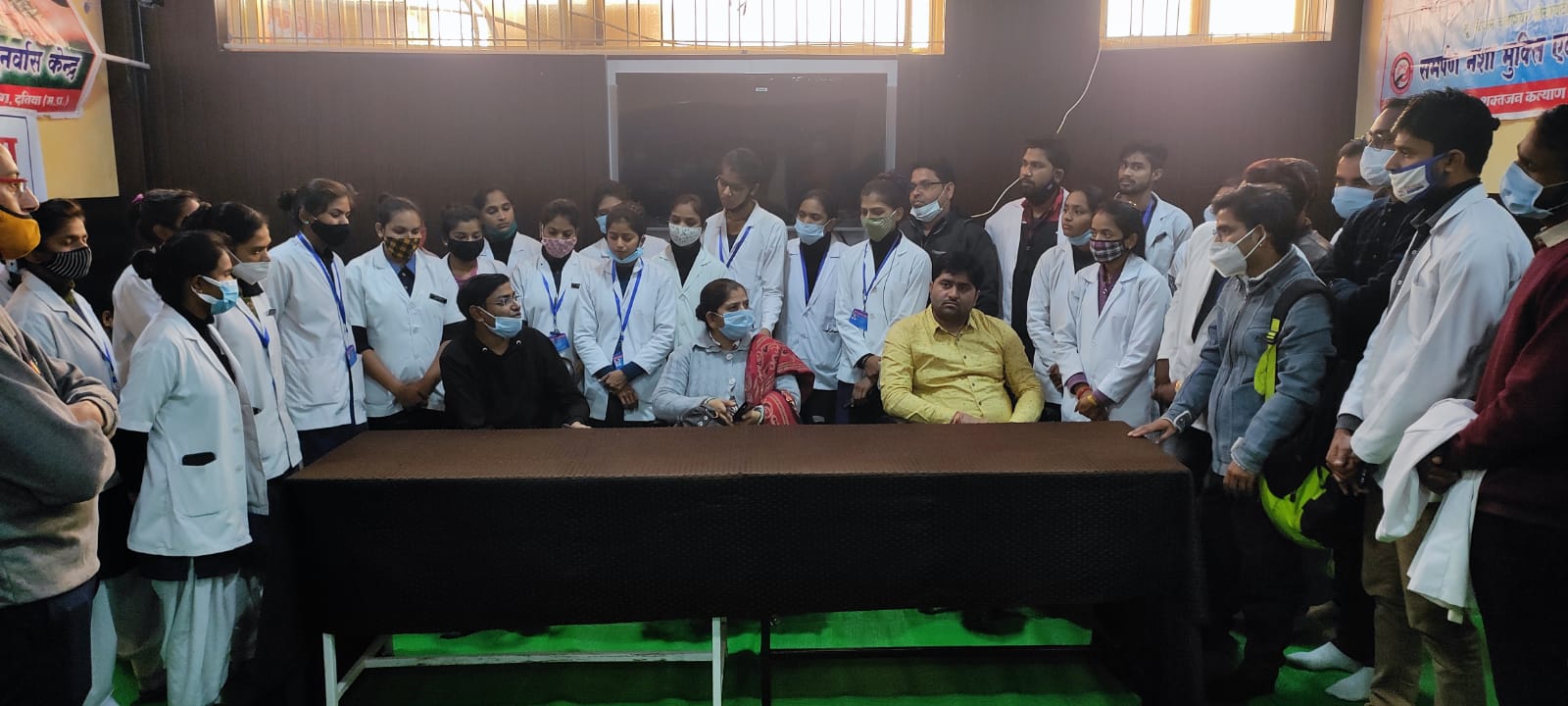
Treatment Process at Sanchit
Step 1 — First Call
Call +91-7828991573. A trained counsellor answers immediately — assessing the case, answering questions, and giving honest guidance. No sales pressure. No commitment required at the first call.
Step 2 — Admission and Day 1 Assessment
Senior psychiatrist conducts comprehensive medical and psychological assessment. Written personalised treatment plan prepared — specific to the substance, severity, Chhatarpur’s context, and the patient’s life situation.
Step 3 — Medical Detox
7–14 days of medically supervised withdrawal. 24/7 nursing with daily doctor review. All substance types managed with clinically approved protocols under continuous clinical supervision.
Step 4 — Residential Rehabilitation
30–90 days: individual CBT, group therapy, family sessions, yoga, gym, motivational and spiritual program, structured daily routine. Every component is evidence-based and clinically delivered.
Step 5 — Discharge with Written Aftercare
Discharge when clinically appropriate — never premature. Written Chhatarpur-specific aftercare plan provided. Follow-up access maintained. Recovery does not end at discharge.
Why Sanchit Is the Right Choice for Chhatarpur
The evidence-based argument for Sanchit is simple: it is the only real, registered, clinically staffed residential option accessible from Chhatarpur. The competitors appearing in search results carry either a Jhansi phone number (Samarpan) or list Chhatarpur on a Rajasthan website (a different state entirely). Neither has a physical presence in Chhatarpur or the surrounding Bundelkhand district.
Sanchit has the proximate advantage — 3.5 hours, same-state registration, visiting days practical — and the clinical advantage — 6,000+ recoveries, resident psychiatrist, Bundelkhand-specific counselling experience. Both together make Sanchit the clear and only credible answer for Chhatarpur families who need serious residential addiction treatment. Sanchit is among India’s most trusted rehabilitation centres.
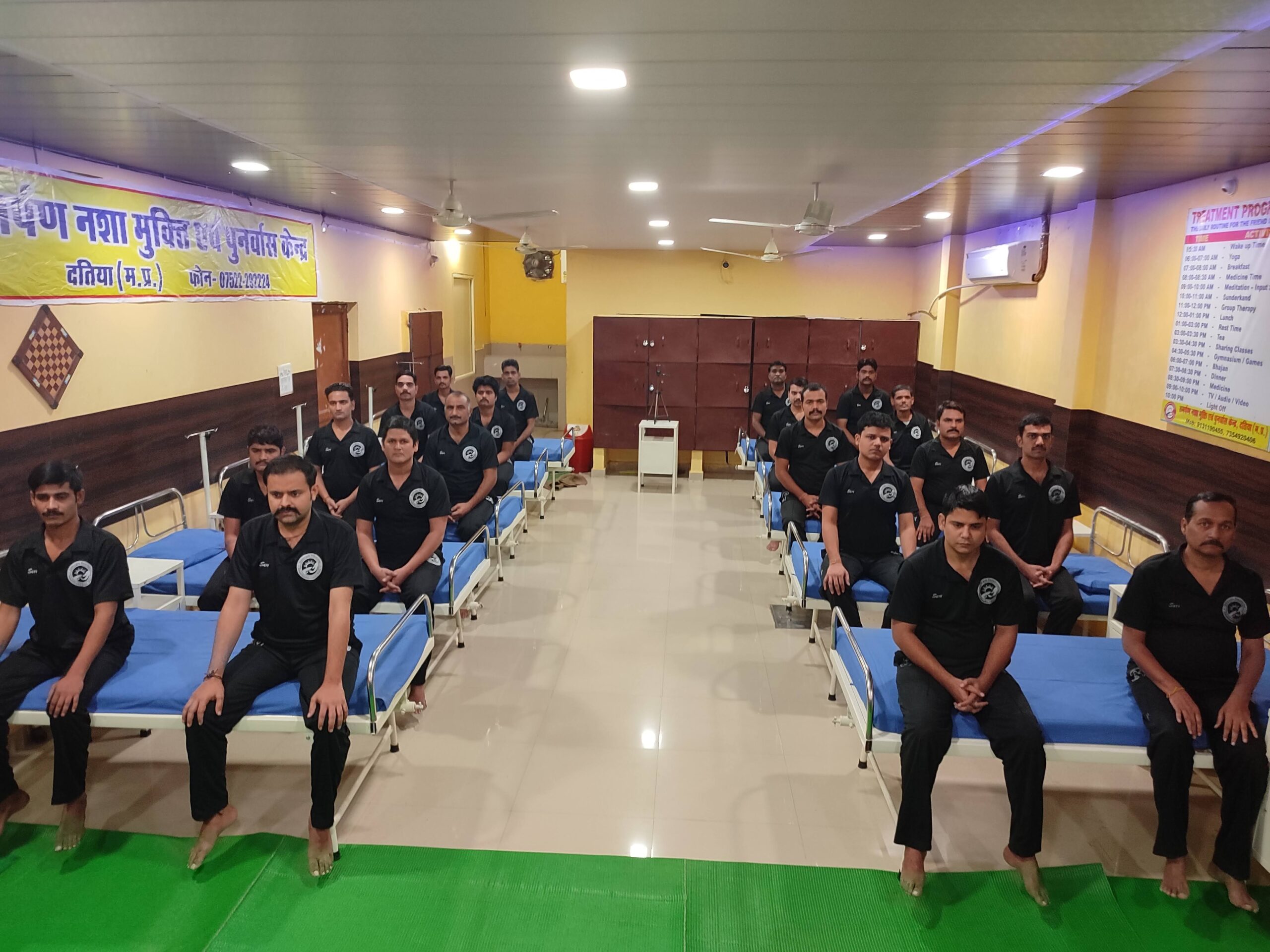
Signs That Your Family Member Needs a De-Addiction Centre
These specific signs indicate that home management is no longer sufficient and professional residential treatment is needed:
- They have tried to stop mahua or alcohol repeatedly and experienced severe withdrawal each time
- The quantity consumed is increasing, not decreasing, despite family awareness
- Health is visibly deteriorating — liver issues, weight loss, tremors, chronic illness
- Agricultural or livelihood responsibilities are being neglected due to substance use
- Family relationships are severely damaged by addiction-related behaviour
- Previous attempts with local help or home intervention have all failed
If three or more of these apply, residential treatment at Sanchit Nasha Mukti Kendra is the clinically indicated next step. Read more about the signs that require professional addiction treatment.
Contact Sanchit Nasha Mukti Kendra — Chhatarpur Helpline
| Chhatarpur Helpline — 24 Hours, 7 Days | |
| 📞 Primary Helpline | +91-7828991573 |
| 📞 Alternate Numbers | +91-8302102094 | +91-9755870972 |
| sanchitrehab@gmail.com | |
| 🌐 Website | sanchitrehab.com |
| 📍 Centre Location | Sanchit Nasha Mukti Kendra, Gwalior, Madhya Pradesh — 200km / 3.5 hours from Chhatarpur |
| ⏰ Available | 24 hours a day, 7 days a week — including weekends and public holidays |
📞 Call Now — Free Confidential Consultation
Frequently Asked Questions –
Q1. How far is Sanchit Nasha Mukti Kendra from Chhatarpur?
200km / 3.5 hours by road or train. Pickup from Chhatarpur is arranged after the first call. Call +91-7828991573.
Q2. Is mahua addiction treatable at Sanchit?
Yes. Mahua creates clinical alcohol dependency. Medical detox followed by 30–60 days of residential rehabilitation is effective. Sanchit’s team has specific experience with Bundelkhand mahua cases.
Q3. Is there a genuine local centre in Chhatarpur?
No. Every listing for “nasha mukti kendra chhatarpur” carries a Jhansi or UP phone number with no local presence. Sanchit in Gwalior — 3.5 hours away — is the nearest genuine option.
Q4. Is treatment affordable for Chhatarpur’s distressed farming families?
Yes. Sharing ward at Sanchit is priced within reach of agricultural families. Medical quality is identical across all accommodation levels. Call for transparent pricing — no pressure.
Q5. Can Chhatarpur families visit during treatment?
Yes. 3.5 hours makes visiting days practical. In-person family counselling on scheduled visiting days, video call between visits.
Q6. What aftercare addresses Bundelkhand’s agricultural stress context?
Written Chhatarpur-specific aftercare plan — agricultural stress calendar, mahua social contexts in village life, specific trigger management, and follow-up counselling schedule. Built before every discharge.