

Guna is one of those MP cities where addiction goes largely unaddressed — not because the problem is small, but because the infrastructure to address it simply does not exist locally. Every search result for “nasha mukti kendra in Guna” resolves to a Jhansi phone number, a UP-based listing, or a generic template page with no physical Guna presence. For families here who have spent months or years managing a family member’s addiction, this absence of real local options is a crisis in itself.
Sanchit Nasha Mukti Kendra in Gwalior is the genuine answer. 200km from Guna — 3.5 hours on the NH-3 or by the Guna–Gwalior train. MP government-registered. 6,000+ documented recoveries. A resident senior psychiatrist leading a clinical team with two decades of Chambal-Malwa transition belt experience. Pickup from Guna is arranged 24×7 after the first call. This is what real addiction treatment looks like for Guna families.
Guna’s Addiction Profile — Highway Corridor and Tribal Belt
Guna sits at an important geographic intersection. The NH-3 (Agra–Mumbai National Highway) passes through the district, carrying one of India’s busiest overland drug supply routes. Drug accessibility in Guna — cannabis, synthetic drugs, opioids — is significantly higher than in comparable MP cities not on major highway corridors. The youth population of Guna, particularly in the 16–28 age group, shows rising substance exposure patterns consistent with this highway proximity.
Guna also borders the Chambal ravine belt and is adjacent to the Shivpuri district’s Saharia tribal population. The Saharia community — designated as a Particularly Vulnerable Tribal Group (PVTG) — faces severe alcohol dependency driven by economic marginalisation, displacement from traditional forest land, and the absence of alternative livelihood structures. Sanchit’s counselling team has specific experience with Saharia community patients from the Shivpuri-Guna belt and treats this population with the cultural sensitivity and trauma-aware approach their specific context requires.
Our Team — Built for MP’s Central Belt
Sanchit’s medical leadership — senior psychiatrist and lead counsellor — has treated patients from Guna, Ashoknagar, Shivpuri, Vidisha, and across MP’s central and Chambal transition belt for over two decades. The team’s understanding of this region is not theoretical. It is built from thousands of patient cases, from families in agricultural distress, from tribal communities in displacement, from highway corridor youth with drug exposure.
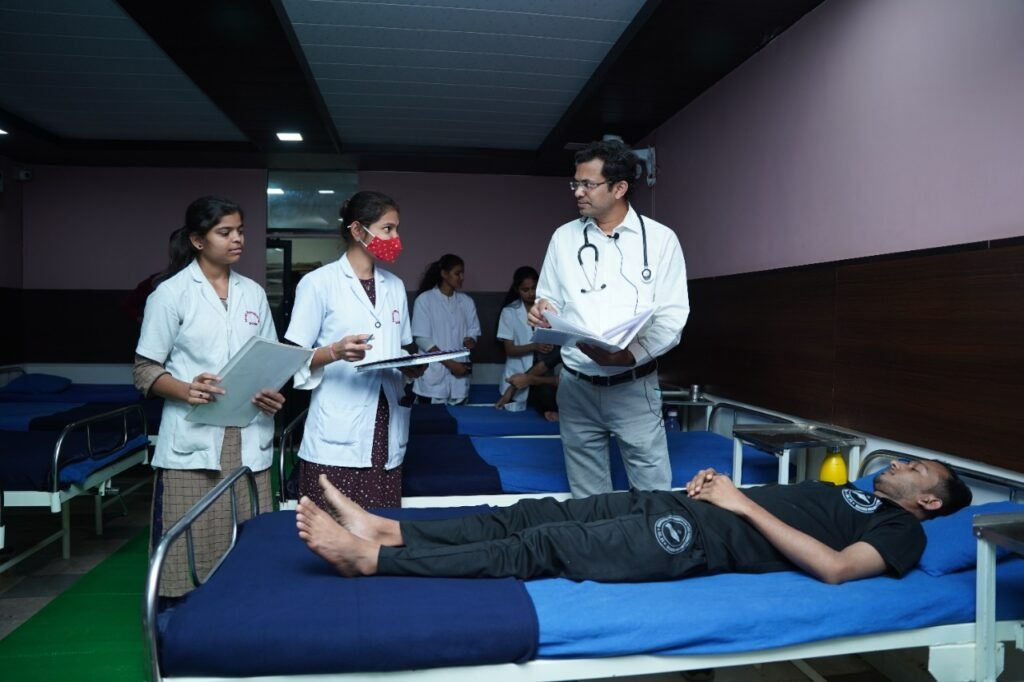
The psychiatrist is resident — present at the centre overnight. For detox cases from the Chambal belt — where afeem and alcohol withdrawal can be medically significant — this overnight availability is clinically critical. A centre with a visiting psychiatrist cannot provide the same safety guarantee. Sanchit’s resident psychiatrist makes safe detox possible regardless of when withdrawal complications arise.
Services at Sanchit Nasha Mukti Kendra
Drug Addiction Treatment
For Guna’s highway-corridor drug cases — cannabis, synthetic opioids, prescription drugs, and harder substances — Sanchit provides medically supervised detox followed by residential rehabilitation with individual CBT, group therapy, and a structured return-to-community plan. Drug dependency from highway corridor exposure requires specific attention to supply chain accessibility in the patient’s home environment — the aftercare plan addresses this directly.
Alcohol De-Addiction Program
Alcohol dependency is the most common case from Guna’s farming and working population. Medical detox — seizure prevention, cardiac monitoring, supervised withdrawal — is followed by 30–90 days of residential CBT-based rehabilitation. For Guna’s Saharia tribal patients, the counselling is calibrated to address the displacement trauma and economic marginalisation driving their alcohol dependency.
Afeem and Opioid De-Addiction
The Chambal belt’s afeem exposure reaches into Guna’s rural communities. Sanchit’s Buprenorphine-based opioid detox protocol — managed by the resident psychiatrist with 24/7 nursing support — addresses the medical complexity of afeem withdrawal safely. The 60–90 day residential program that follows ensures the psychological rehabilitation is as thorough as the medical detox.
Individual and Family Counselling
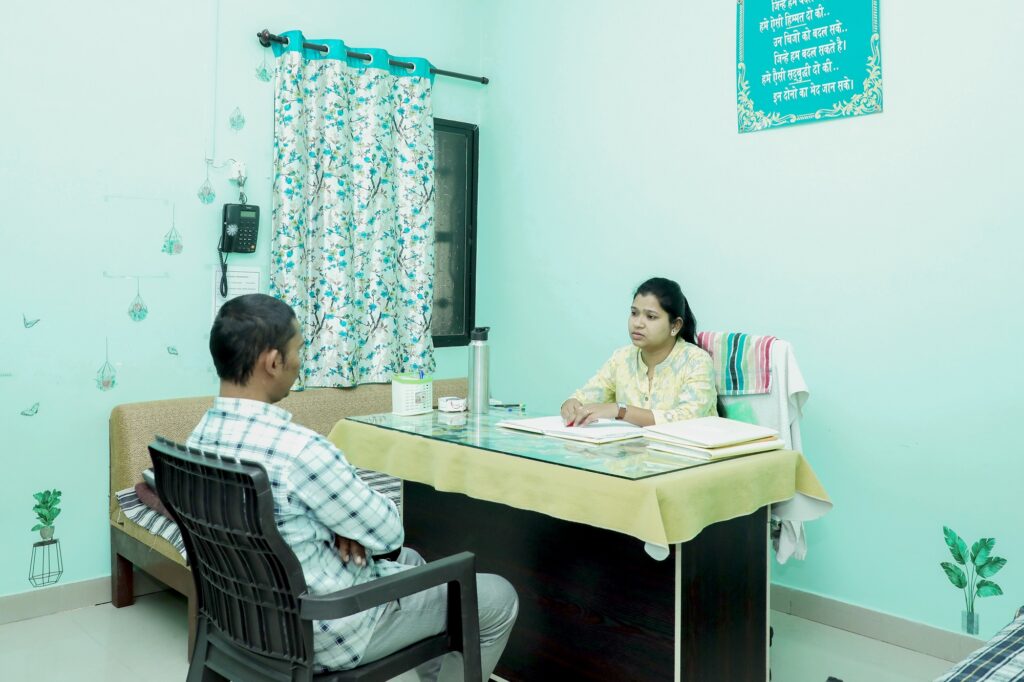
One-on-one CBT sessions personalised to the patient’s specific context — whether highway corridor drug case, farming community alcohol dependency, or tribal community mahua/alcohol case. Family sessions are conducted via video call or in-person on visiting days and address the specific home environment the patient will return to in Guna.
Relapse Prevention — Highway Environment Specific
For Guna patients, relapse prevention has a specific dimension: the NH-3 corridor’s drug accessibility does not disappear after treatment. The aftercare plan builds specific strategies for managing proximity to the highway drug environment — contact management, route avoidance, social support structure — before the patient leaves Sanchit.
Treatment Process at Sanchit
Step 1 — First Call and Clinical Assessment
Call +91-7828991573. A trained counsellor assesses the case — substance type, duration, severity, family situation. Honest guidance without sales pressure. First call is free and commits nothing.
Step 2 — Admission and Day 1 Plan
Senior psychiatrist conducts comprehensive assessment. Personalised treatment plan prepared in writing before detox begins. Guna’s specific environmental context is factored into the plan from the start.
Step 3 — Medically Supervised Detox
7–14 days with 24/7 nursing and daily doctor review. Medication protocols for all substance types. Patient is clinically supported through every phase of withdrawal — not left to manage it alone.
Step 4 — Residential Rehabilitation (30–90 Days)
Individual CBT, group therapy, family sessions, yoga, physical activity, motivational programming, spiritual practice, and structured daily routine. Each component is evidence-based and clinically necessary.
Step 5 — Discharge with Written Aftercare
Discharge when clinically appropriate. Written Guna-specific aftercare plan — NH-3 corridor management, community triggers, follow-up schedule — provided before leaving.
Why Sanchit for Guna Families
The choice for Guna families is clear: Sanchit is the only real, registered, clinically staffed residential rehabilitation option accessible from Guna. 3.5 hours away. Government-registered in MP. 6,000+ proven recoveries. Chambal-Malwa belt clinical experience. The competitors appearing in search results for “nasha mukti kendra Guna” are template pages with Jhansi phone numbers. Sanchit is a real centre that is genuinely accessible.
Personalised care — not generic treatment applied to a Guna patient — is the differentiator. The psychiatrist who assesses a Guna farmer’s alcohol case understands Guna’s agricultural context. The counsellor who treats a Saharia community patient understands the displacement trauma driving addiction. This specificity is what produces recovery that holds beyond the program. Sanchit is among India’s most trusted rehabilitation centres.
Facilities at Sanchit Nasha Mukti Kendra
The centre provides VIP AC rooms, Private AC wards, and shared accommodation — accessible to families across all economic backgrounds. Medical facilities include a 24/7 nursing station, dispensary, detox treatment room, and resident doctor availability. The campus includes therapy rooms, gymnasium, outdoor exercise space, and dedicated spaces for yoga and meditation.
All accommodation is secure, substance-free, and supervised. The daily schedule — structured from 5:30 AM yoga through lights-out at 10 PM — rebuilds the purposeful daily routine that addiction destroys.
Signs That Professional Rehabilitation Is Needed
These signs indicate that home management has passed its limits and residential de-addiction treatment is the appropriate next step:
- Multiple failed attempts to stop on their own — each relapse worse than the last
- Physical withdrawal symptoms when they try to stop — indicates physical dependency requiring medical management
- Increased quantity consumed over recent months despite awareness of the problem
- Neglecting work, family, and health responsibilities due to substance use
- Criminal, financial, or domestic issues arising from addiction-related behaviour
- A doctor has identified health damage from substance use and recommended stopping
Contact Sanchit Nasha Mukti Kendra — Guna Helpline
| Guna Helpline — 24 Hours, 7 Days | |
| 📞 Primary Helpline | +91-7828991573 |
| 📞 Alternate Numbers | +91-8302102094 | +91-9755870972 |
| sanchitrehab@gmail.com | |
| 🌐 Website | sanchitrehab.com |
| 📍 Centre Location | Sanchit Nasha Mukti Kendra, Gwalior, Madhya Pradesh — 200km / 3.5 hours from Guna |
| ⏰ Available | 24 hours a day, 7 days a week |
📞 Call Now — Free Confidential Consultation
Frequently Asked Questions — Sanchit Nasha Mukti Kendra in Guna
Q1. How far is Sanchit Nasha Mukti Kendra from Guna?
200km / 3.5 hours by road or train. Pickup from Guna is arranged after the first call. Call +91-7828991573.
Q2. Why is there no genuine local centre in Guna?
All pages appearing for “nasha mukti kendra Guna” carry Jhansi phone numbers with no physical Guna presence. Sanchit in Gwalior — 3.5 hours away — is the nearest real MP govt-registered option.
Q3. Does Sanchit treat Saharia tribal community patients?
Yes. With specific cultural sensitivity — addressing displacement trauma and economic marginalisation as addiction drivers alongside clinical treatment. The team has specific experience with Guna district’s tribal population.
Q4. How does Sanchit’s aftercare plan address Guna’s highway drug environment?
The written aftercare plan specifically covers the NH-3 corridor’s drug accessibility, contact management strategies, and specific social triggers — built before discharge, not after.
Q5. Is treatment affordable for Guna’s agricultural families?
Yes. Sharing ward options at Sanchit keep costs within reach of farming families. Medical care quality is identical across all accommodation levels. Call for transparent pricing.
Q6. What is Sanchit’s success rate?
Sanchit has 6,000+ documented recoveries over two decades. Success depends on the patient completing the full program and following the aftercare plan. The centre’s track record across Chambal and Malwa belt patients is its strongest credential.