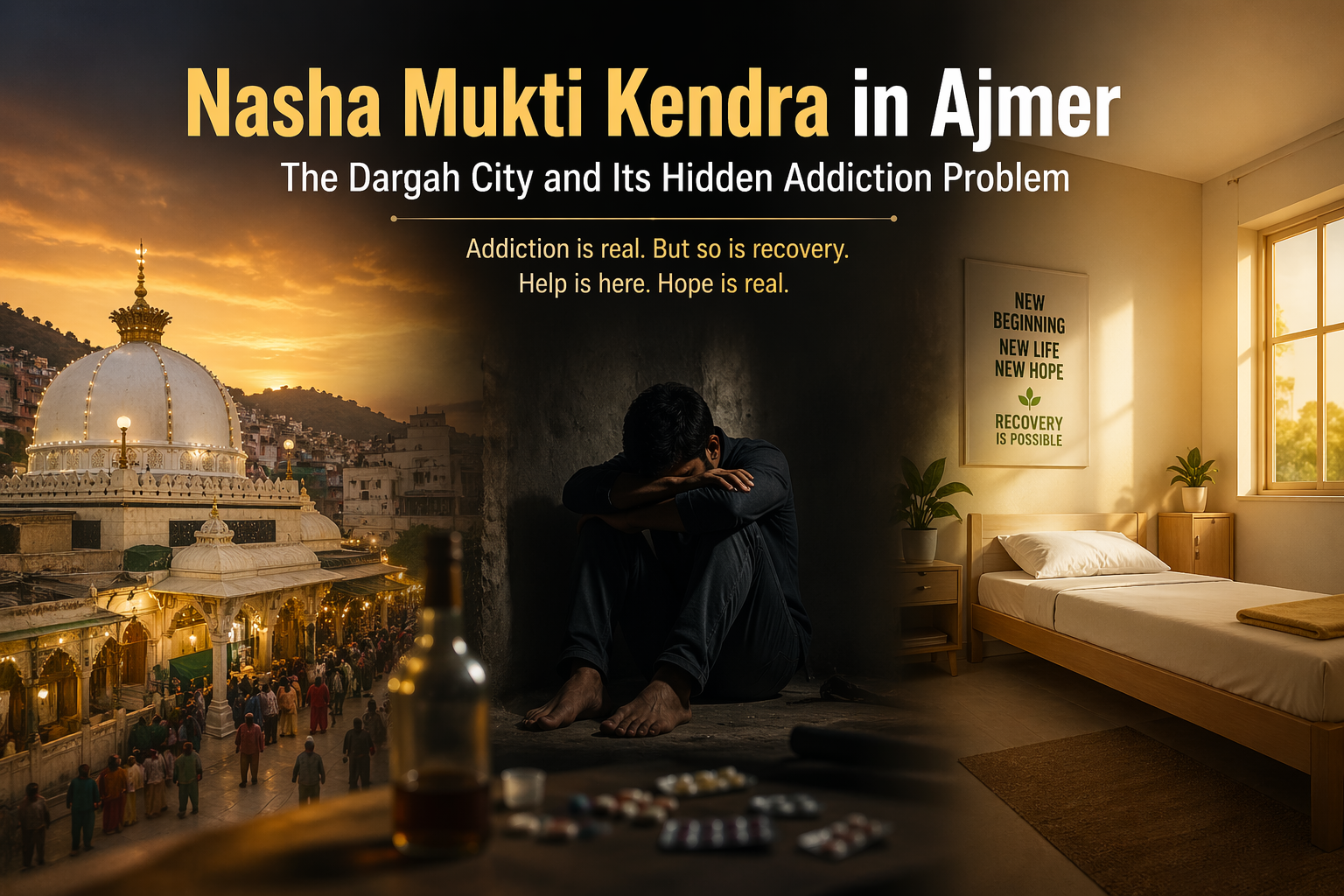
Ajmer is Rajasthan’s spiritual gateway — home to the Dargah Sharif of Khwaja Moinuddin Chishti, the 12th-century Sufi saint whose shrine is among the most visited in South Asia. Hindus, Muslims, Christians, and Sikhs come from across the world to the Dargah. Ajmer is also a railway hub — historically significant as the terminus of Rajputana’s rail network — and a centre for education, with Mayo Medical College and several universities giving the city a substantial student population.
Behind this identity of faith, history, and education is an addiction problem that Ajmer’s families manage in silence — particularly Muslim families for whom the double stigma of addiction (a health failure) and alcohol use (a religious failure) creates a shame barrier that delays treatment for years. Sanchit Nasha Mukti Kendra accepts Ajmer families with specific sensitivity to this context — in Gwalior, outside Ajmer’s community entirely, with prayer times accommodated and faith treated as a resource in recovery.
The Dargah Economy and Ajmer’s Addiction Reality
The Dargah Sharif economy supports tens of thousands of workers — khadims (hereditary caretakers), flower and chadar sellers, ittar (perfume) traders, lodging operators, transport workers, and a vast informal pilgrimage support industry. Like every pilgrimage economy, this workforce is often transient, working long hours, living away from family, and exposed to the substance availability that dense urban environments carry.
Cannabis use is documented as the most common substance in Ajmer’s pilgrimage workforce. Alcohol use — underground, given its cultural prohibition in Muslim communities — is more common than families acknowledge. Prescription drug misuse is rising in Ajmer’s student and professional population. The specific shame of addiction in a city that is the spiritual centre of Indian Islam creates the longest treatment delays of any demographic Sanchit encounters.
Our Approach — Faith-Respecting, Clinically Rigorous
Sanchit’s clinical team has treated patients from Muslim families across UP, Rajasthan, Gujarat, and J&K. The program at Sanchit respects Islamic practice: Namaz times are accommodated in the daily schedule, counselling is conducted with explicit respect for the patient’s faith identity, and the spiritual dimension of recovery — the Islamic concept of tawbah (sincere repentance) and the faith community’s support role — is recognised rather than dismissed.
At the same time, the clinical program is rigorous. Addiction is a medical condition. The medical detox, the CBT counselling, the group therapy, and the aftercare planning are evidence-based and scientifically delivered. Faith and clinical treatment are not in conflict. They are complementary — and for Muslim patients who come from Ajmer’s Dargah community, both are essential dimensions of lasting recovery.
Services at Sanchit Nasha Mukti Kendra
Medical Detox — supervised withdrawal management for cannabis, alcohol, opioid, and prescription drug dependency. The clinical protocols are identical for all patients regardless of background. The medical supervision is 24/7 with a resident psychiatrist.
Faith-Aware Individual Counselling (CBT) — sessions that respect Islamic identity while addressing the addiction patterns clinically. For Ajmer patients, this specifically involves the shame framework — separating the human health condition of addiction from the religious identity of the patient.
Group Therapy — daily structured peer sessions. For Ajmer patients who have never spoken about their addiction outside the immediate family, group therapy creates the first experience of being heard without judgment in a recovery context.
Family Counselling — addressing the specific dynamics of Muslim families dealing with addiction: the honour context, the enabling patterns common in protective family cultures, and the preparation for the patient’s return to Ajmer’s Dargah community environment.
Aftercare — written Ajmer-specific plan covering the Dargah community’s social environment, religious occasion contexts (Urs, Ramadan), specific social trigger management, and follow-up counselling schedule. Built before every discharge.

Addictions Treated — Ajmer and Rajasthan
| Addiction | Ajmer Context | Treatment at Sanchit |
| Cannabis / Ganja | Most common — pilgrimage workforce + youth | CBT + faith-aware motivational therapy |
| Alcohol Dependency | Significant — underground use | Medical detox + faith-aware CBT |
| Opioids / Afeem | Present — Rajasthan afeem belt | Medical detox + long-term residential |
| Prescription Drug Misuse | Rising in students and professionals | Supervised tapering + psychiatric support |
What Sanchit Offers Ajmer Families
- ✅ Govt-Registered and State-Certified — Madhya Pradesh
- ✅ 6,000+ Recoveries Including Muslim Community Patients
- ✅ Complete Confidentiality — Outside Ajmer’s Dargah Community
- ✅ Namaz Times Accommodated in Daily Program
- ✅ Faith-Aware CBT — Respecting Islamic Identity
- ✅ Full-Time Psychiatrist — 24/7 Medical Supervision
- ✅ 8 Hours from Ajmer — Pickup Arranged
- ✅ VIP AC | Private AC | Sharing Ward Options
Contact Sanchit Nasha Mukti Kendra — Ajmer Helpline
| Ajmer Helpline — 24 Hours, 7 Days | |
| 📞 Primary | +91-7828991573 |
| 📞 Alternate | +91-8302102094 | +91-9755870972 |
| 📍 Centre | Sanchit Nasha Mukti Kendra, Gwalior, MP — 500km / 8 hrs from Ajmer |
| ⏰ Hours | 24 hours a day, 7 days a week |
📞 Call Now — Free Confidential Consultation
Frequently Asked Questions
Q1. Is there a Nasha Mukti Kendra for Ajmer’s Muslim community?
Sanchit in Gwalior accepts Ajmer families with faith-respectful, confidential care. Namaz times accommodated. Dargah community will not know. Call +91-7828991573.
Q2. Is cannabis addiction treatable for Ajmer’s pilgrimage workforce?
Cannabis dependency is fully treatable through CBT and motivational therapy. 30–45 days typically. Complete confidentiality from the Dargah community.
Q3. Is treatment confidential from Ajmer’s Muslim community?
Yes. Gwalior is outside Ajmer’s entire social network. No community, religious, or family contact in Ajmer will know. Complete confidentiality in writing.
Q4. Are prayer times (Namaz) accommodated?
Yes. The daily program at Sanchit accommodates Namaz schedules. Faith is treated as a resource in recovery, not a complication.
Q5. How does a Ajmer patient reach Gwalior?
8 hours by road or train via Jaipur or Kota. Sanchit coordinates pickup from Ajmer. Call to plan the journey.
Q6. What aftercare covers return to the Dargah community environment?
Written Ajmer-specific aftercare plan covering Dargah community social triggers, religious occasion management, and follow-up counselling schedule.