

Rewa is best known as white tiger country — the rare white tigers of Rewa’s Govindgarh palace are the origin of all white tigers in the world’s zoos. The city is the administrative and commercial centre of MP’s Vindhya region — a plateau that stretches from Rewa through Satna, Sidhi, and Singrauli to UP’s eastern border. The Vindhyan belt’s economy is dominated by coal, limestone, cement, and agriculture — and its workforce carries a significant, underserved addiction problem.
When Rewa families search for a nasha mukti kendra, they find Laksh’s template page (based in UP, no Rewa presence) and Samarpan’s keyword listing. Neither is a real option. Sanchit Nasha Mukti Kendra in Gwalior — 5 hours by road, government-registered in MP, with a proven 6,000+ recovery track record — is the real option for Vindhya belt families.
The Vindhyan Belt’s Addiction Profile
Rewa’s industrial belt — the Vindhya Nagar power stations, the Satna cement plants, the coal operations that extend to Singrauli — employs a large workforce in shift-based, physically demanding environments. The post-shift alcohol culture of industrial workers is identical across every Indian industrial belt — and Rewa’s is no exception. Long-standing alcohol dependency in this workforce is significant and underreported.
Rewa’s agricultural hinterland — the farming communities of Teonthar, Mauganj, Hanumana, and surrounding tehsils — shows the same agricultural distress-driven alcohol dependency as the wider Vindhyan and Bundelkhand belt. Mahua consumption, debt cycles, and chronic economic uncertainty are the drivers. The Rewa-Sidhi corridor also shows opioid exposure patterns that the Sanchit team has treated extensively.
Why Rewa Has a Growing Addiction Problem
Addiction in Rewa is increasing due to a mix of industrial lifestyle pressures, rural economic stress, and easy access to substances. The Vindhya region’s work culture and social patterns often normalize alcohol use, which gradually turns into dependency. Lack of awareness and delayed treatment further worsen the situation, making addiction a silent but growing crisis.
Key Reasons:
- Long and stressful shift-based jobs in coal, cement, and industrial sectors
- Financial pressure and uncertainty in farming communities
- Social acceptance of alcohol, especially among workers
- Easy availability of alcohol, opioids, and local substances like mahua
- Limited access to proper, government-registered rehab centres
- Lack of awareness that addiction is a medical condition, not a habit

Myths About Addiction in Rewa & Rural India
In regions like Rewa and other rural areas, addiction is often misunderstood due to deep-rooted social beliefs and lack of awareness. Many families treat it as a habit or weakness rather than a medical condition, which delays proper treatment. These misconceptions make recovery more difficult and prevent people from seeking help at the right time.
Common Myths:
- “Willpower alone is enough to quit addiction”
- “Alcohol addiction is not a serious problem”
- “Addiction only happens due to bad company”
- “Rehab centres are only for extreme cases”
- Fear of “what will people say” stops families from seeking help
- “A person can recover at home without medical treatmen
Our Approach for Rewa Patients
Sanchit’s senior psychiatrist assesses every Rewa patient on Day 1 — substance type, duration, physical health, mental health history, and the occupational and social context the patient comes from. A personalised treatment plan is built before detox begins. For coal sector workers, this involves understanding shift schedules and the specific social pressures of an industrial workforce community. For farming families, it involves the Vindhyan agricultural context.
The CBT counselling program addresses the specific thought patterns of the Vindhyan patient: the fatalism common in chronically stressed communities (“there is no point stopping — life will still be this hard”), the masculine identity norms of the coal belt workforce, and the specific shame of a Rewa family that has watched a member’s addiction for years while trying to manage it privately. Recovery from these specific patterns is achievable. Sanchit has done it thousands of times.
Services at Sanchit Nasha Mukti Kendra
Medical Detox — supervised withdrawal management for all substance types. Alcohol, opioids, cannabis, prescription drugs. 24/7 nursing with daily doctor review. Dangerous withdrawal symptoms are managed medically — not endured through willpower.
Individual Counselling (CBT) — sessions calibrated to the Vindhyan coal belt context: industrial worker occupational stress, agricultural distress patterns, and the specific cognitive frameworks around hopelessness and fatalism that drive addiction in economically stressed communities.
Group Therapy — daily structured peer sessions. Hearing recovery stories from others in similar situations — industrial workers, farming community members, UP-MP belt families — breaks the isolation that addiction thrives in.
Family Counselling — video call between visits and in-person on visiting days. For Rewa families, Sanchit’s team helps families understand enabling patterns and prepare practically for the patient’s return to the Vindhyan environment.
Aftercare — written Rewa-specific plan covering the coal belt occupational context, agricultural stress calendar, specific social triggers, and follow-up counselling schedule. Built before every discharge.
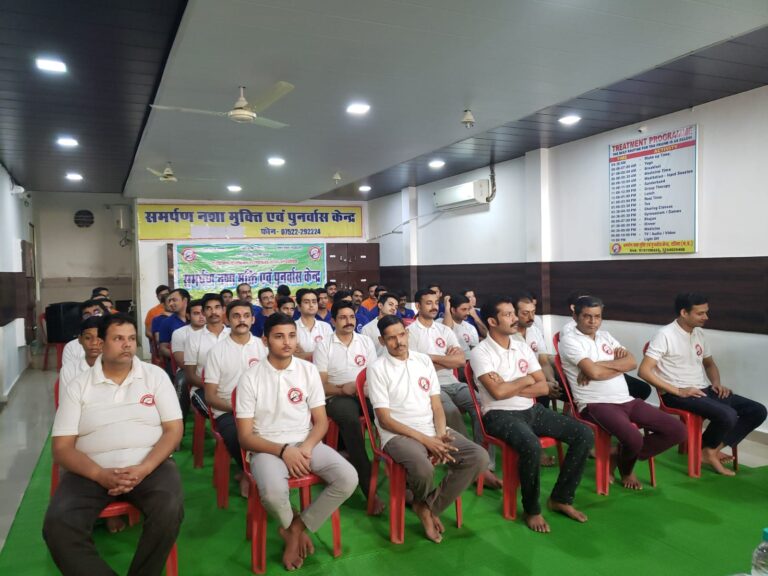
Addictions Treated — Rewa and Vindhya Belt
| Addiction | Rewa / Vindhya Context | Treatment at Sanchit |
| Alcohol Dependency | Most common — coal belt + agricultural | Medical detox + CBT + relapse prevention |
| Opioids / Smack | Present — Rewa-Sidhi-UP corridor | Medical detox + 60–90 day residential |
| Cannabis / Ganja | Widespread — youth and workers | CBT + group therapy + family guidance |
| Drug Addiction | Rising in urban Rewa | Residential detox + behavioural therapy |
What Sanchit Offers Rewa Families
No genuine residential rehabilitation centre exists in Rewa. The template pages appearing in search results are phone numbers with no physical Rewa presence. Sanchit is real, registered by the MP government, and accessible in 5 hours. The team has treated hundreds of patients from the Vindhya belt across two decades.
- ✅ MP Govt-Registered and State-Certified
- ✅ 6,000+ Recoveries Including Rewa and Vindhya Belt Patients
- ✅ Full-Time Senior Psychiatrist — 24/7 Medical Supervision
- ✅ 5 Hours from Rewa — Pickup Arranged from Rewa
- ✅ Coal Belt and Agricultural Context — Team Experience
- ✅ Vindhya-Specific Aftercare Plan Before Every Discharge
- ✅ VIP AC | Private AC | Sharing Ward Options
Contact Sanchit Nasha Mukti Kendra — Rewa Helpline
| Rewa Helpline — 24 Hours, 7 Days | |
| 📞 Primary | +91-7828991573 |
| 📞 Alternate | +91-8302102094 | +91-9755870972 |
| 📍 Centre | Sanchit Nasha Mukti Kendra, Gwalior, MP — 280km / 5 hrs from Rewa |
| ⏰ Hours | 24 hours a day, 7 days a week |
📞 Call Now — Free Confidential Consultation
Frequently Asked Questions
Q1. Is there a real Nasha Mukti Kendra for Rewa families?
Sanchit in Gwalior — 5 hours from Rewa — is the only real MP govt-registered comprehensive residential option. Call +91-7828991573.
Q2. Why are there no genuine local rehab centres in Rewa?
Template-listing centres like Samarpan and Laksh appear in search results with Rewa pages, but their phone numbers trace to Jhansi and UP — they have no physical Rewa presence. Sanchit in Gwalior is the closest real centre.
Q3. What is most common addiction in Rewa?
Alcohol dependency in the coal belt and farming communities. Medically supervised alcohol treatment is Sanchit’s most-delivered program for Vindhya belt patients.
Q4. How does a Rewa patient get to Gwalior?
5 hours by road or the Rewa-Gwalior rail route. Sanchit arranges pickup from Rewa. Call +91-7828991573 — the team coordinates all logistics.
Q5. Is treatment affordable for working-class Rewa families?
Yes. Sharing ward at Sanchit is affordable for coal belt and agricultural families. Call for transparent pricing — no pressure.
Q6. What aftercare protects a Rewa patient after discharge?
Written Vindhya-specific aftercare plan covering occupational stressors, agricultural calendar, social triggers, and follow-up counselling access. Built before every discharge.