
At some point, most Faridabad families stop looking. They tried the local centre once — or maybe twice. They tried keeping the alcohol out of the house. They tried locking the room, pouring bottles down the drain, bargaining, threatening. Nothing held. And so quietly, without ever making a formal decision, they stopped believing that recovery was possible for their person. The problem continued. They managed around it. Life became smaller.
If this is where a family in Faridabad is right now — not actively searching anymore, just surviving — this article is for you. Because the failure was not yours, and it was not theirs. The failure was the approach. Good residential treatment has a fundamentally different success rate from the alternatives that most Faridabad families have access to. And it is available — just a few hours away.
Nasha Mukti Kendra in Faridabad — Why Families Get Stuck and How to Move Forward
Understanding what proper rehabilitation actually looks like helps explain why previous attempts may have failed. De-addiction is not achieved by removing access to the substance for a few days. It requires medical detoxification, structured psychological treatment, a complete change of environment, and a detailed plan for what happens after discharge. Most local or informal approaches only address the first part — and sometimes not even that.
The question is not whether recovery is possible. It is whether the right conditions for recovery have been created. Sanchit Nasha Mukti Kendra provides those conditions — with 6,000+ successful recoveries as proof that the approach works.
Faridabad’s Specific Addiction Problem
Faridabad sits on the edge of two worlds. It is technically Haryana, yet it functions as southern NCR — absorbing Delhi’s overflow of industry, migrants, and informal labour. Faridabad’s industrial sector — textiles, auto parts, electronics manufacturing — employs hundreds of thousands of workers who live far from their home states, away from family networks, with high physical work demands and limited recreational infrastructure. This combination is a well-documented recipe for alcohol dependency.
Haryana itself has a specific relationship with opioids and synthetic drugs — the state’s proximity to Punjab’s drug crisis means that smack and other opioids circulate more freely here than in states further from that supply chain. Recognising the specific signs of addiction in a Faridabad household — alcohol, opioids, or a combination — is the critical first step that determines what kind of treatment is needed.
Why Local and Home-Based Attempts Fail Most of the Time
The pattern is consistent. A Faridabad family notices the problem. They try to handle it at home. They try removing access, persuasion, religious intervention, promises. It works for days or weeks. Then the person finds access again. The family tries a local outpatient or day-care centre. The person comes home to the same environment each evening — the same street, the same contacts, the same triggers. Within weeks or months, the cycle restarts.
This is not weakness on anyone’s part. It is the structural reality of addiction recovery: the environment where the addiction lives must be removed entirely for treatment to work. That means residential inpatient care — where the person is fully separated from their triggers, their contacts, and their local environment for the duration of treatment. This is why a centre in Gwalior — outside NCR, outside Haryana, in a different state entirely — creates the conditions that local options simply cannot.
Affordable Quality Treatment — What Faridabad Families Should Know
Many Faridabad families are immediately put off by addiction treatment centres because the ones they encounter online are luxury facilities with prices that are out of reach for a working-class or middle-class household. This creates a false impression that good treatment is expensive, and that affordable centres are inadequate. Neither is true.
Sanchit offers room categories at multiple price points — VIP AC, private AC ward, and group sharing wards — ensuring that the quality of medical care, therapy, and program is the same across all, while accommodation cost varies. The quality markers that matter — government registration, a qualified psychiatrist, 24/7 medical supervision, individual counselling, family sessions, and aftercare — are present in every case at Sanchit, regardless of which room category a family chooses.
Addictions Treated — Faridabad and Haryana Context
| Addiction Type | Faridabad / Haryana Status | Treatment at Sanchit |
| Alcohol Dependency | Highest — industrial and migrant worker culture | Medical detox + CBT + relapse prevention |
| Smack / Opioids | Significant — Haryana-Punjab corridor | Long-term residential detox + therapy |
| Drug Addiction | Present across age groups | Residential detox + behavioural therapy |
| Cannabis / Ganja | Widespread in youth | CBT + group therapy + family guidance |
| Nicotine / Tobacco | Very common in workforce | Craving management + lifestyle coaching |
What Recovery Looks Like — The Full Journey for a Faridabad Patient
When a patient from Faridabad arrives at Sanchit, the first 48–72 hours are the medical phase. The doctor conducts a complete assessment, determines the exact substances and duration of use, and builds a personalised treatment plan. Medically supervised detox begins immediately, with withdrawal managed by medication and round-the-clock monitoring. This phase is the one that most home attempts bypass — and it is the reason home attempts fail.
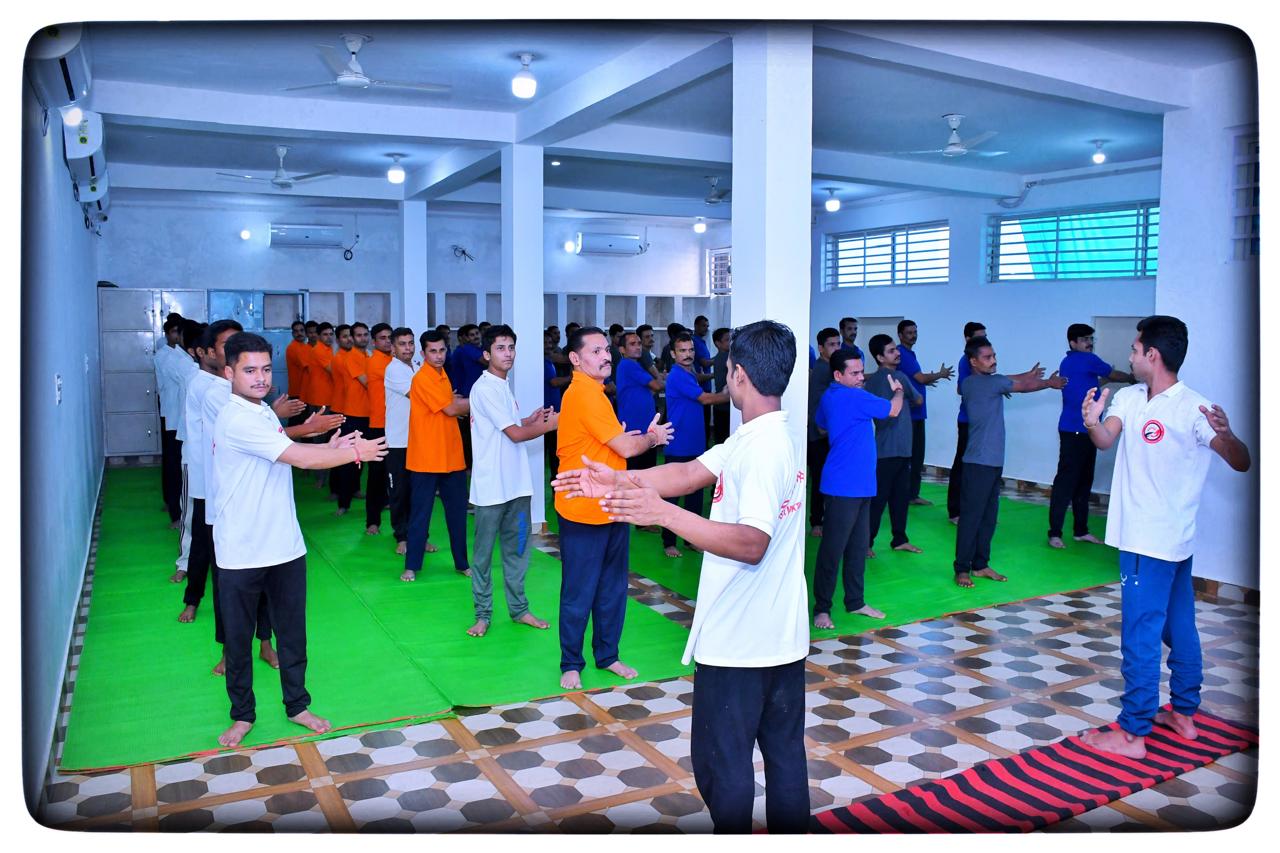
After detox, the residential rehabilitation phase begins. Daily life at Sanchit is structured — morning yoga and meditation, individual counselling, group therapy, motivational sessions, gym and physical fitness, indoor games, spiritual sessions, and cultural activities. Throughout the stay, family counselling sessions are conducted to prepare both the patient and family for the return home. A specific aftercare plan is built before discharge — covering relapse triggers, follow-up schedule, and emergency contact protocols.
Sanchit Nasha Mukti Kendra — The Right Choice for Faridabad
Sanchit Nasha Mukti Kendra in Gwalior has helped patients from across NCR and Haryana. The centre understands the specific addiction patterns of industrial populations, the social barriers Haryana families face in seeking help, and the importance of making treatment genuinely accessible — not just in name but in practice. It is among India’s most trusted rehabilitation centres — with a 6,000+ track record and a fully staffed medical team.
For Faridabad families who have tried before and stopped hoping — one more call to the right number changes everything.
What Sanchit Offers Faridabad Patients
- ✅ Government-Registered and State-Certified
- ✅ 6,000+ Successful Recoveries
- ✅ 29+ Years of Combined Team Experience
- ✅ Medical Detox Under Full Doctor Supervision
- ✅ 24/7 Medical Supervision Throughout Stay
- ✅ Faridabad Pickup Available 24×7
- ✅ Multiple Room Options at Different Price Points
- ✅ Family Counselling Integrated Into Program
- ✅ Full Confidentiality Guaranteed
Contact Sanchit — Faridabad Helpline
| Faridabad Helpline — 24×7 Available | |
| 📞 Helpline | +91-8302102094 |
| 📞 Alternate | +91-7828991573 | +91-9755870972 |
| sanchitrehab@gmail.com | |
| 🌐 Website | sanchitrehab.com |
| 📍 Location | Sanchit Nasha Mukti Kendra, Gwalior, MP — ~4–5 hours from Faridabad |
| ⏰ Available | 24 hours a day, 7 days a week |
📞 Free Confidential Consultation — Call Now
Frequently Asked Questions
Q1. Is there a good Nasha Mukti Kendra option for Faridabad families?
Yes. Sanchit in Gwalior — 4–5 hours away — offers government-registered residential treatment at multiple price points. Call: +91-8302102094
Q2. Why do so many Faridabad families give up after one or two failed attempts?
Because those attempts usually involved home-based or outpatient approaches that keep the patient in their trigger environment. Residential inpatient care removes all triggers completely — and has a fundamentally higher success rate.
Q3. Is good treatment affordable for a working-class Faridabad family?
Yes. Sanchit has sharing ward options that keep costs manageable without compromising the quality of medical care, therapy, or program structure. Call to discuss options.
Q4. What addictions are treated at Sanchit?
Alcohol, drugs, opioids, smack, cannabis, nicotine, and gambling — all through personalised residential programs.
Q5. What if the person refuses to go?
This is very common. Call Sanchit’s helpline — the counselling team guides families through structured approaches to help a resistant person accept treatment. Call: +91-8302102094